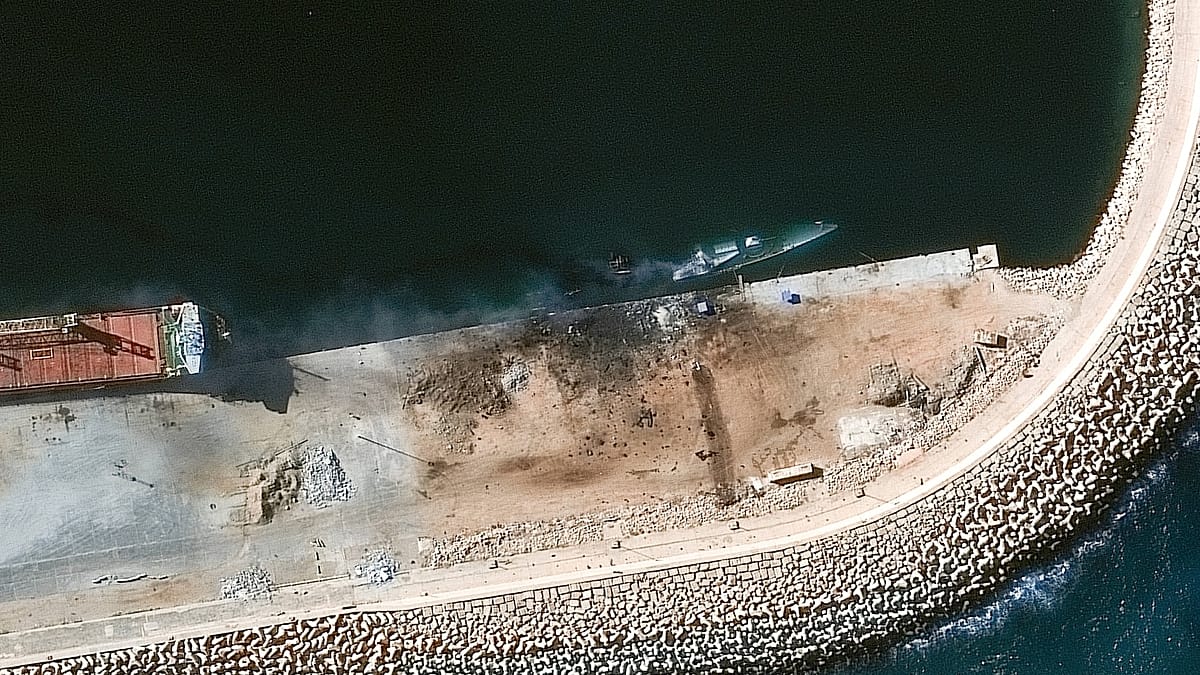
The United Nations mission in Libya has urged an immediate and transparent investigation after drones struck two ships off the coast of Benghazi on Sunday, including a Russian vessel. The attacks, which occurred near the eastern Libyan port, have heightened fears that the war in Ukraine is spilling into the Mediterranean.
In a statement posted on X, the UN Support Mission in Libya (UNSMIL) expressed "serious concern" over the incidents and called for "an immediate, independent and transparent investigation." The mission warned that "Libya cannot afford, and must not become a battleground for foreign conflicts."
Authorities in eastern Libya said all crew members were rescued and treated for minor injuries after drones hit a Russian ship and another vessel, whose nationality was not immediately confirmed. Reports indicated the second ship was sailing under a Maltese flag. The eastern administration did not identify who was behind the attack but stressed that Libya is "not a party to the Russian-Ukrainian war."
The strikes came just a day after a drone hit a Russian cargo ship in the Gulf of Finland, near Finnish waters, an attack that Finland's border guard attributed to Ukraine. That incident, reported earlier, has already raised alarms about the reach of the conflict into the Baltic region.
Shadow fleet in the crosshairs
Initial reports suggested a fire had broken out inside an ammunition depot at a naval base, but authorities in eastern Libya later clarified that "the explosion occurred on board a Russian ship docked in the port." An official statement said the vessel was "en route back to Russia and its stop was for refuelling and resupply," and that it was suspected of having been attacked by drones.
The eastern administration, which is aligned with the Libyan National Army under Khalifa Haftar, said it would launch a joint investigation with Russia. The rival UN-recognised government in Tripoli, meanwhile, expressed alarm at "risks posed by involving civilian ports and facilities in activities linked to external conflicts."
The Russian ship is believed to be part of Moscow's so-called "shadow fleet" — tankers and cargo vessels used to transport oil and gas while circumventing Western sanctions. Ukraine has at times acknowledged targeting such vessels, including in the Mediterranean last December. In March, a Russian liquefied natural gas carrier sank off the Libyan coast following an attack that Russian President Vladimir Putin blamed on Ukraine.
Libyan media outlet Libya Alhadath reported that naval and air force units intercepted more than a dozen "explosive-laden sea drones" off Benghazi after the initial strikes. The eastern administration said it had taken measures to secure the port and surrounding waters.
The Tripoli government said it rejected any attempt to turn Libya into "an arena for international conflicts" and the use of its territory "for any military or logistical activities that could jeopardise" national security or sovereignty. The statement underscored the fragility of a country that has been plagued by violence and instability since the overthrow of Muammar Gaddafi in 2011.
The attacks off Benghazi come as Ukrainian forces have stepped up long-range strikes against Russian assets far from the front lines, a strategy that has increasingly targeted the shadow fleet. The suspected drone strike on a Russian ship at Benghazi port has stoked concerns across the Mediterranean, where several European nations have naval assets and economic interests.
For Europe, the incident underscores the widening geographical reach of the conflict, which began with Russia's full-scale invasion of Ukraine in 2022 and has killed hundreds of thousands of people. The UN's call for an investigation reflects a broader worry that Libya, already fractured, could become a new theatre for proxy confrontations. As the war grinds on, the risk of escalation beyond Ukraine's borders remains a pressing concern for Brussels and other European capitals.