Shipping moves over 80% of global trade by volume and accounts for roughly 2.3% of worldwide CO2 emissions—about the same as Japan's annual output. Yet it remains one of the most difficult sectors to decarbonise. A year after the Trump administration derailed a global agreement on shipping emissions, the International Maritime Organization (IMO) is preparing to try again.
From 23 November to 4 December, the UN agency will meet to discuss its future Net-Zero Framework. The decisions made will shape the emissions profile of the world's fleet for the next two decades and beyond. A framework including a global fuel standard and a pricing mechanism on greenhouse gas emissions from ships was already approved by the IMO's Marine Environment Protection Committee in spring 2025. It was scheduled for formal adoption in October 2025—until the then-US president threatened tariffs on any country that supported it, prompting a year-long postponement.
Now, with the US midterm elections having shifted the political landscape, there is renewed hope that a deal could be reached by the end of 2026. But as stakeholders prepare for tough negotiations, the question remains: can the Net-Zero Framework finally set sail, or will it run aground once more?
Why shipping is so hard to clean up
About 90% of the global fleet runs on oil-based fuels. Tankers, container ships and bulk carriers are the biggest polluters, followed by cruise ships and general cargo vessels. Together, these five vessel types emit 664 million tonnes of CO2 annually. Europe accounts for 14% of those emissions, behind China (17%) and ahead of the US (9%).
Most emissions come from large deep-sea vessels. There are currently around 6,000 container ships, 8,200 oil tankers, 13,000 bulk carriers and 960 cruise ships plying the world's oceans and rivers.
“Shipping is one of the hardest to abate sectors,” says Dr Peter Schniering, CEO and co-founder of Future Cleantech Architects (FCA), a science-based non-profit think tank based in Germany. His colleague, FCA Cleantech Analyst Pauline Leroi, provided much of the data and analysis below.
Wind, batteries and e-methanol: the toolbox
There is no single silver bullet. Instead, experts point to a jigsaw puzzle of solutions that can be combined. Efficiency improvements—better hydrodynamics, smarter logistics, upgraded machinery, digitalisation—can cut emissions by 5–20%. Wind-assisted propulsion systems, such as rotor sails, suction sails or wing sails, could reduce emissions by up to 30% per nautical mile on favourable routes, particularly across the Atlantic and Pacific.
“There's lots of wind around there, usually,” Leroi notes. However, wind assistance is less suited to container ships, which already have containers stacked high, leaving little room for towering sails. “But it would be good for tankers and bulk carriers.” Around 150 ships already use wind assistance today. For tankers, combining wind with shore power—plugging into the port's electricity grid instead of running onboard generators while docked—could save up to 70 million tonnes of CO2 per year.
The biggest potential reductions, however, lie in changing fuels and propulsion technologies. “The biggest GHG reduction could come from changing marine fuels—up to 90% reduction—as well as from new propulsion technologies, up to 100% (battery-electric, battery hybridisation, nuclear),” Leroi says.
E-methanol and the Danish example
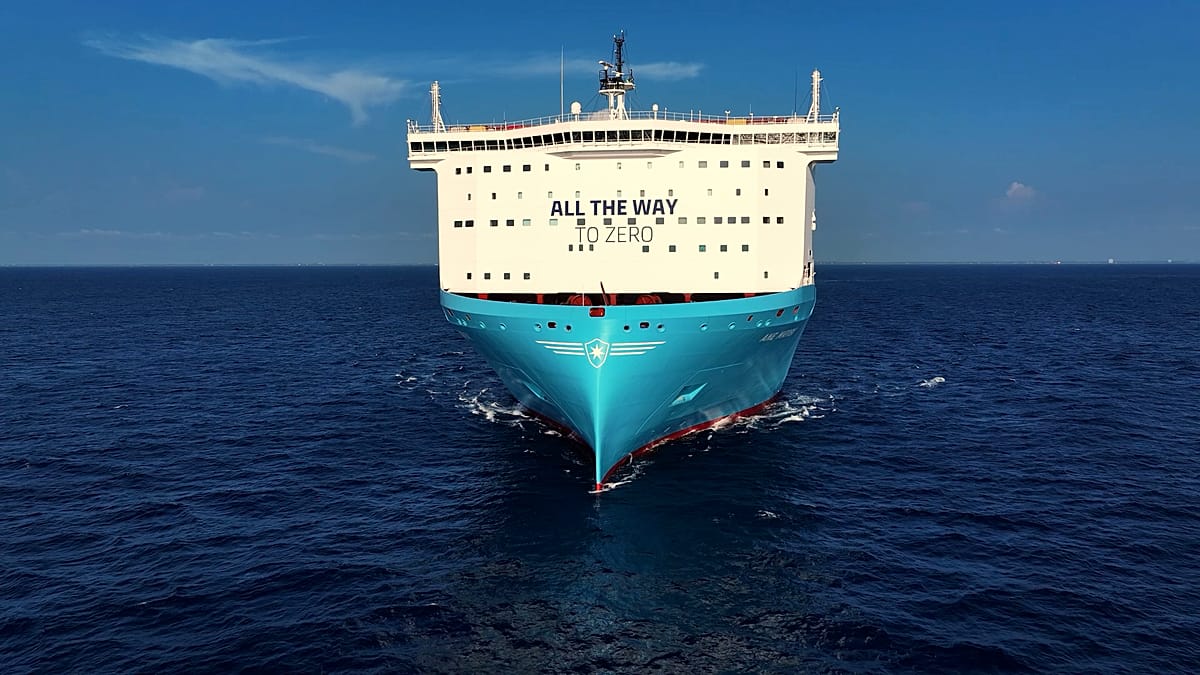
One promising alternative fuel is e-methanol, produced from renewable hydrogen and captured CO2. Denmark's Kassø plant, the world's largest e-methanol facility, is already demonstrating that this fuel can decarbonise shipping and plastics. The plant, located near the German border, uses wind power to produce hydrogen and combines it with biogenic CO2 to create methanol. Maersk, the Danish shipping giant, has ordered a series of methanol-capable container ships, signalling commercial confidence in the fuel.
Yet scaling e-methanol requires massive investment in production capacity and port infrastructure. “The infrastructure is the bottleneck,” Leroi explains. “We need bunkering facilities at major ports, and we need to ensure the fuel is produced sustainably.”
Batteries and the electric future
For smaller vessels, battery-electric propulsion is already viable. China operates a 120-metre all-electric container ship on the Yangtze, and Leroi argues that “specifically smaller cargo vessels should all go electric.” In a second wave, shorter and medium-distance routes could adopt battery systems as well. This would require a container battery-swapping system at ports along the route, similar to how ships currently bunker fuel.
“The technology exists,” Leroi says. “What's missing is the political will and the investment.”
Politics and the path forward
The IMO's Net-Zero Framework is a critical piece of the puzzle. Without a global price on carbon and a fuel standard, the economics of green shipping remain uncertain. The US withdrawal from the process under Trump was a major setback, but the midterm elections have changed the calculus. “There is a fresh chance to get a global deal by the end of 2026,” says Schniering. “But it will require leadership from Europe and other major shipping nations.”
Europe, with its strong maritime tradition and commitment to climate action, has a key role to play. The EU has already included shipping in its Emissions Trading System, and several member states are pushing for ambitious IMO targets. As the world's largest trading bloc, Europe can set an example by investing in green shipping infrastructure and supporting innovation.
The stakes are high. The decisions made in the coming months will determine whether the shipping industry can meet the Paris Agreement goals. As Leroi puts it, “We have the tools. We just need to use them.”