A Danish autopsy has confirmed that Timmy, the humpback whale that repeatedly stranded along Germany's Baltic coast last spring, died of starvation. The animal had been unable to feed for months after becoming entangled in a heavy fishing net, which remained lodged in its mouth.
The whale, nicknamed after Timmendorfer Strand where it first came ashore, became a global media sensation as crowds gathered to watch its struggles. But the case also drew sharp criticism from animal rights groups, who questioned the handling of the rescue efforts by local authorities.
An investigation by the German weekly Die Zeit has now shed new light on the whale's ordeal, revealing both the likely origin of the net and serious flaws in the rescue operation.
Net likely from the Kattegat, not a ghost net
According to the report, Timmy had been caught in a gillnet of a type legally used for cod fishing at depths of around 50 metres in the waters between Denmark and Sweden. Two experts who examined fragments of the net for Die Zeit ruled out the possibility that it came from Baltic Sea fishermen, suggesting the whale had dragged it across the region.
Fisheries biologist Daniel Stepputtis told the newspaper that Timmy had probably torn the net from its anchors, dragging a section roughly 150 metres long and three metres wide. “And that costs an awful lot of energy,” he said.
Fishing-net dealer Eike Peters added that the obstruction in the whale's mouth would have made feeding impossible. The autopsy, led by pathologist Tim Kåre Jensen, found Timmy's stomach completely empty, indicating the animal had not eaten for months.
The report found no underlying illness that could explain the death, and it remains unclear when exactly the whale became entangled.
Rescue operation under scrutiny
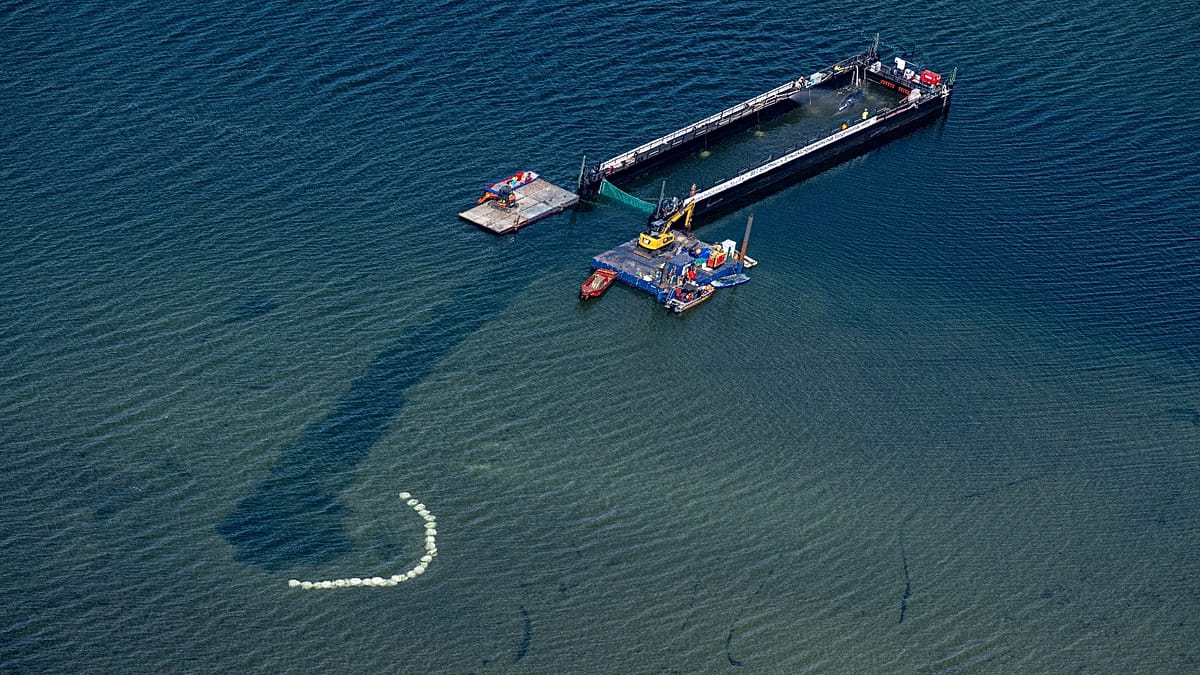
Die Zeit also detailed serious mistakes in the rescue operation, with indications that Timmy endured considerable suffering during the attempts to free it. Local authorities approved a private rescue mission under mounting public pressure, despite warnings from experts that the operation could do more harm than good.
The case has reignited debates about how such strandings should be managed, particularly when public attention and emotional responses collide with scientific advice. Similar concerns have been raised in other European waters, where marine mammals increasingly fall victim to fishing gear and ship traffic.
While the Baltic Sea is not a typical habitat for humpbacks, sightings have become more frequent in recent years, possibly linked to changing ocean conditions. The loss of Timmy underscores the broader challenges facing marine conservation in European seas, where efforts to restore damaged ecosystems are still in their infancy.
For now, the autopsy provides a definitive answer to the question of how Timmy died, but it also leaves a troubling legacy: a charismatic animal that became a symbol of both public fascination and institutional failure.