In the vast expanse of the Pacific Ocean, two remote coral atolls—Bikar and Bokak—have become the focus of an ambitious scientific effort to document life in one of the planet's last largely untouched marine environments. The work, led by marine ecologist Dr Alan Friedlander of the University of Hawai'i and supported by the Pristine Seas project, aims to establish a comprehensive ecological baseline that could guide conservation strategies far beyond these isolated shores.
The atolls, which became the Marshall Islands' first national marine sanctuaries in 2025, lie hundreds of kilometres from the nearest inhabited island. Their isolation has preserved ecosystems that offer a rare glimpse of what the ocean looked like before intensive human exploitation. As Friedlander puts it, they are "among the best ecological reference systems we have to better understand what we have lost elsewhere and to provide fundamental insights needed for effective conservation and restoration efforts."
The findings carry particular weight for Europe, where decades of overfishing, coastal development, and rising sea temperatures have degraded marine habitats. The planetary boundaries report has already highlighted the strain on ocean systems, and European waters are no exception. The intact reefs of Bikar and Bokak serve as a stark contrast—and a potential template for restoration.
A living archive of ocean health
During the expedition, scientists used scuba diving, underwater video, deep-sea cameras, and a submarine to survey the atolls from the surface to the abyss. They recorded 15 breeding or likely breeding seabird species, more than 260 species of reef fish, and a wealth of open-water predators including sharks, jacks, and wahoo. Two of the fish species may be new to science, underscoring how much remains unknown even in well-studied groups.
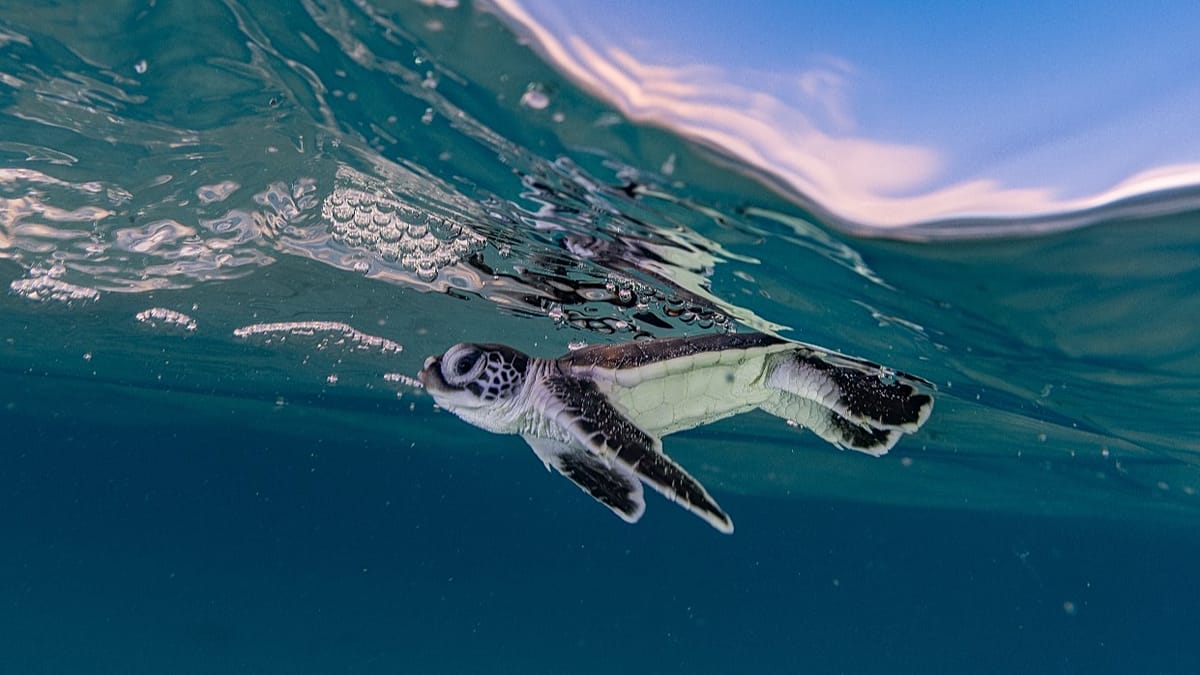
The deep-sea communities proved "surprisingly diverse and poorly known," according to the researchers. Nesting green sea turtles were also observed on Bikar, a sign of healthy nesting grounds that have become rare across the Pacific.
These observations are not merely academic. They provide a benchmark against which scientists can measure the health of other reefs, including those in the Mediterranean and the Atlantic coasts of Europe. As Friedlander notes, "As human activities increasingly threaten biodiversity, areas devoid of intense human impacts serve as vital refugia."
Community-led stewardship as a model
The protection of Bikar and Bokak did not come from top-down decree alone. It is rooted in the Marshall Islands' national framework for community-led conservation, which incorporates traditional practices such as 'mo' or 'taboo' areas—zones where human activity is restricted to allow nature to recover. This approach, long used by the community of Utirik Atoll, has been formalised in the national strategy.
"Bikar and Bokak are not just treasures for the Marshall Islands but for the entire planet, a gift from the community of Utirik Atoll, which has traditionally and vigilantly safeguarded these fragile ecosystems for decades," Friedlander says. The researchers argue that such community-based models could inspire similar initiatives in Europe, where local fishing communities and conservation groups often work together to manage marine reserves.
Contrast with global declines
The health of these atolls stands in sharp contrast to global trends. According to the WWF's 2026 Living Planet Report, monitored wildlife populations have fallen by an average of 73 per cent since 1970, with marine populations down 59 per cent. Between January 2023 and May 2025, bleaching-level heat stress affected 84 per cent of the world's coral reefs, and only about 3.5 per cent of the ocean is fully or highly protected.
In Europe, the situation is similarly pressing. The Mediterranean's coral communities have suffered repeated bleaching events, and overfishing has depleted many fish stocks. The climate-driven changes affecting mountain and marine systems alike underscore the urgency of understanding intact ecosystems as a reference point.
The researchers also noted ecological differences between Bikar and Bokak—Bokak's reefs are dominated by coral with roughly twice the fish biomass of Bikar, where seaweed covers more than half of some deeper slopes. The reasons remain unclear, but the variation highlights the complexity of reef ecosystems and the need for site-specific management.
Looking ahead, the team emphasises the importance of studying ecosystems in their entirety, including nutrient transfer and ecological connectivity between habitats. Such holistic assessments are essential for tracking future climate-driven changes and for designing effective conservation strategies—lessons that resonate as much in European waters as in the remote Pacific.