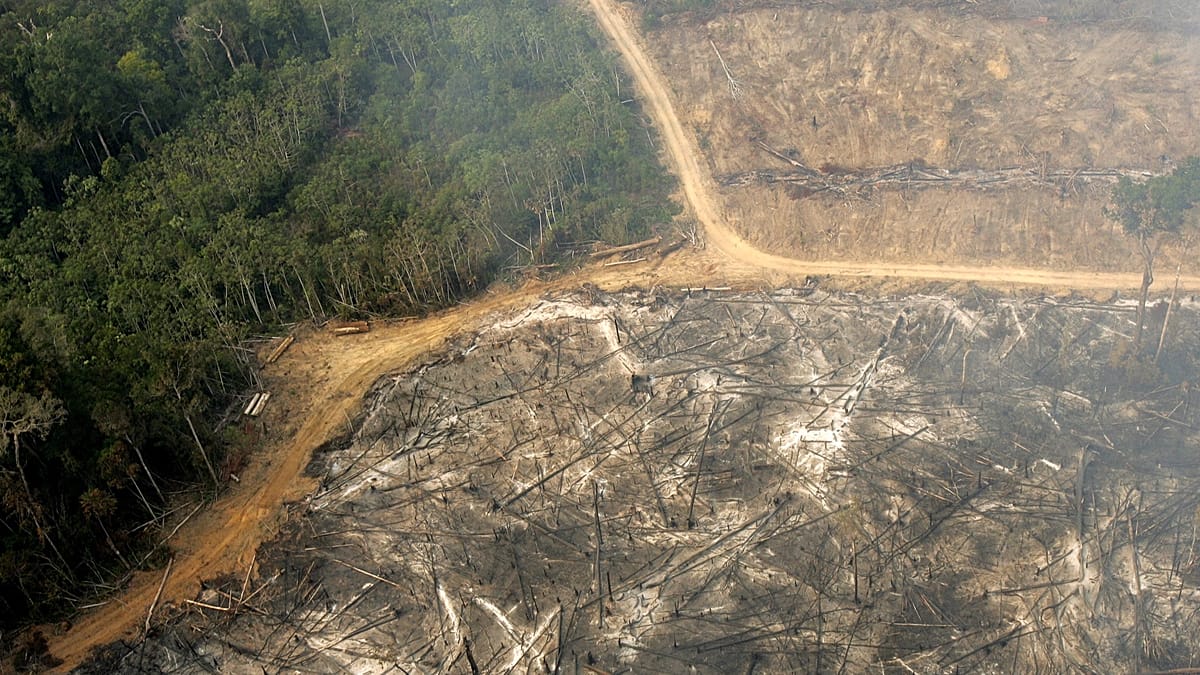
Humanity has now pushed seven of the nine planetary boundaries beyond their safe operating limits, and every one of those breached thresholds is at its worst recorded level. That is the central finding of the latest Planetary Health Check, produced by the Potsdam Institute for Climate Impact Research (PIK) with contributions from more than 60 scientists, following a year marked by record ocean temperatures, severe flooding, wildfires and heatwaves.
"The diagnosis is unambiguous," said Boris Sakschewski, a PIK researcher and lead author of the report. "Pressure is rising across every planetary boundary already outside the safe operating space. It means that the risk of large-scale, persistent and potentially irreversible change is increasing while our margin for error in tackling these problems is shrinking."
What the nine boundaries measure
The planetary boundaries framework, launched in 2023, defines nine Earth-system processes that must stay within safe limits to keep human societies secure and ecosystems resilient. Scientists have tracked these indicators for decades.
The seven boundaries now transgressed are climate change, biosphere integrity, land-system change, freshwater change, modification of biogeochemical flows, the introduction of novel entities such as microplastics, and ocean acidification. The last of these was breached only in the past year, after researchers established that the pH of the ocean surface has fallen by roughly 0.1 units since the industrial era began — a 30 to 40 per cent rise in acidity.
Only two boundaries remain within safe limits: stratospheric ozone depletion and atmospheric aerosol loading. Both have improved over the past decade, though scientists caution that as air pollution is curbed globally, unsafe aerosol concentrations persisting in certain regions could become more visible.
Carbon sinks under strain
The report singles out natural carbon sinks — oceans, forests and peatlands — as indispensable to reaching net zero. Vegetation and soils currently absorb a large share of human-caused carbon dioxide emissions, but repeated extreme weather, itself made more likely by climate change, is degrading these systems. In some regions, ecosystems have flipped from carbon sinks to carbon sources, releasing more CO2 than they take up.
Sakschewski warned that the planet risks losing its "buffering capacity against the increasing pressures" being placed upon it, arguing that the resilience of land carbon sinks may be overestimated.
"We do not have the luxury of time but we do have the knowledge, capacity and solutions to change course," said Johan Rockström, PIK director and co-author of the report. "Accelerating action to return to the safe operating space across all planetary boundaries is essential to protect lives and livelihoods and to deliver on the promise of shared future prosperity."
The findings land amid a broader scientific reckoning with how climate change destabilises natural systems, from melting mountain regions to the accelerating loss of Arctic ice — a subject of intense diplomatic activity, as shown by twelve EU states pressing for a stronger Arctic role and Brussels resisting pressure to relax its drilling ban.
Solutions exist, but time is short
Separate research from The Earthshot Prize and the University of Exeter has identified 51 interventions capable of triggering rapid, transformative change within five years. Five priority clusters — dubbed "Earthshots" — were singled out: cutting fossil fuel reliance through clean energy, reducing solid fuels for cooking, ocean conservation, and halting deforestation.
"To reverse damage to our ecosystems before it's too late, we need to unlock positive tipping points where progress builds on itself, costs fall with scale and recovery becomes self-propelling," said Tim Lenton, chair in climate change and earth system science at the University of Exeter.
For Europe, the report's implications are direct. The continent is warming faster than the global average, and its carbon sinks — from Scandinavian forests to Mediterranean soils — are under mounting stress. The political response will be tested in the coming months, as EU member states weigh emissions targets against energy security and agricultural pressures. Whether the bloc can convert the report's diagnosis into policy at the speed the science demands remains the open question.