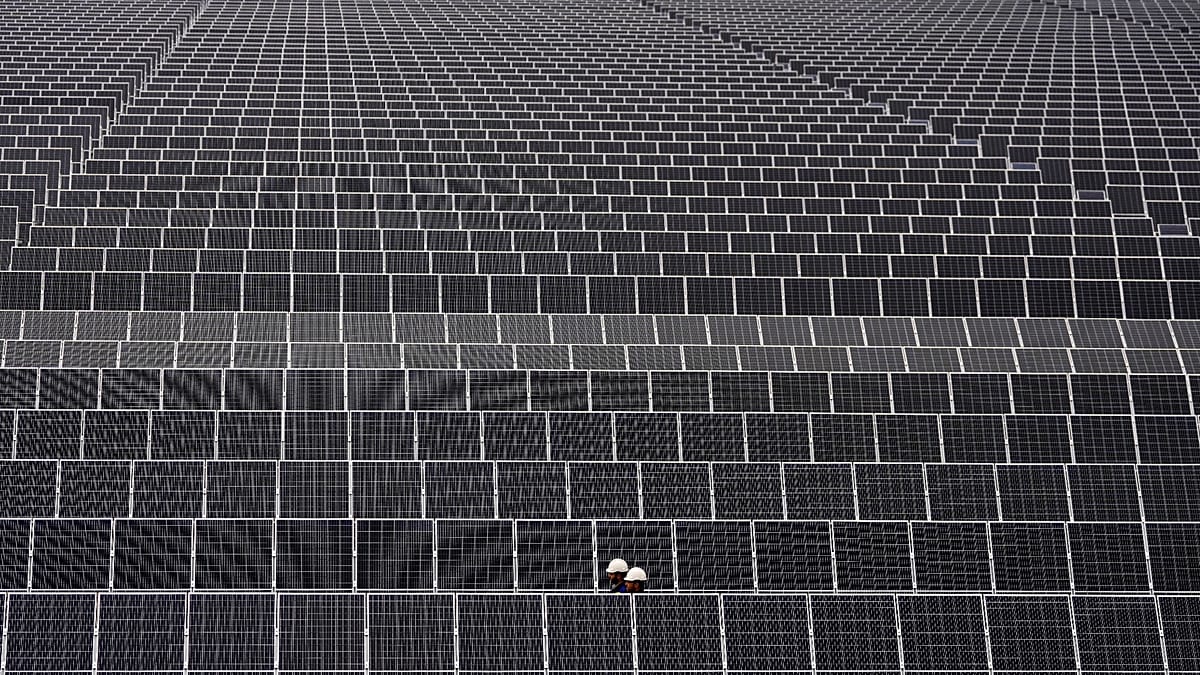
In the arid plains of Konya province, central Anatolia, more than three million solar panels stretch across an area equivalent to 2,600 football pitches. The Kalyon Karapınar YEKA-1 plant, operational since 2023, is one of Europe's largest solar installations. Its director, Burak Dogru, says it prevents roughly 1.75 million metric tons of carbon emissions annually and meets about 0.7 percent of Türkiye's electricity demand.
This showcase of renewable ambition comes as Türkiye prepares to host COP31, the UN climate summit, in Antalya from 9 to 20 November. But environmental advocates argue that the country's clean-energy push is undermined by its continued reliance on coal, which remains the largest source of electricity generation.
Coal still dominates the mix
According to Türkiye's Energy Ministry, coal accounted for 33 percent of electricity generation last year, while solar and wind together contributed nearly 23 percent. The government points to rapid growth in renewables, but campaigners say there is no credible roadmap to phase out coal, gas, or oil.
Duygu Kutluay, a campaigner with the Beyond Fossil Fuels advocacy group, told the Associated Press that Türkiye's renewable plans lack any concrete timeline for ending coal use. “These plans contain neither a roadmap for a coal phase-out, nor any planning for a phase-out of other fossil fuels, including gas,” she said, adding that this is “not compatible” with Türkiye's pledge to reach net-zero emissions by 2053.
Türkiye's total greenhouse gas emissions in 2024 reached 584.5 million tonnes of CO2 equivalent, according to the Turkish Statistical Institute. The country is also pursuing nuclear power, with its first plant under construction on the Mediterranean coast and additional reactors under consideration.
COP31: a test of credibility
The summit in Antalya comes amid heightened energy security concerns linked to the Iran war, which has pushed up gas and oil prices. Many experts argue that the global climate process has been failing, with the last two COPs ending without strong commitments on fossil fuels. The United States, under President Donald Trump, will again be absent.
Türkiye's environment minister, Murat Kurum, who will preside over the summit, has said the focus should be on implementing existing pledges rather than setting new targets. He has proposed a “climate implementation bridge” to connect countries with financing, technology, and other support. “Today, the world is not merely waiting for new decisions,” Kurum said. “What the world wants is to see past decisions put into practice.”
President Recep Tayyip Erdoğan has cast Türkiye as an environmental steward, and first lady Emine Erdoğan has championed a “zero waste” campaign. Yet the Climate Action Tracker, which assesses countries' progress against the Paris Agreement goals, describes Türkiye's climate targets and policies as “critically insufficient”.
Human rights groups also accuse Ankara of arresting environmental activists and dismissing ecological concerns. Earlier this year, a court annulled an environmental impact assessment for a planned expansion of a coal plant at Afşin-Elbistan in the southeast—a victory for campaigners—but plans soon emerged to expand another coal facility in Çanakkale.
Like other Mediterranean nations, Türkiye faces mounting risks from heatwaves, drought, wildfires, and flooding. Last month, the heaviest rains in over 80 years caused severe floods in Istanbul, killing eight people.
The decision to award COP31 to Türkiye followed a contest with Australia, which will lead consultations to help shape the summit's agenda. As delegates gather in Antalya, the gap between Türkiye's solar showcase and its coal reality will be hard to ignore.