As air travel demand grows across the Caucasus and beyond, Azerbaijan is trying to square a familiar circle: how to keep expanding connectivity while shrinking the industry's environmental footprint. The country's flag carrier, Azerbaijan Airlines (AZAL), and its air navigation provider are both rolling out measures aimed at making flying cleaner and more efficient.
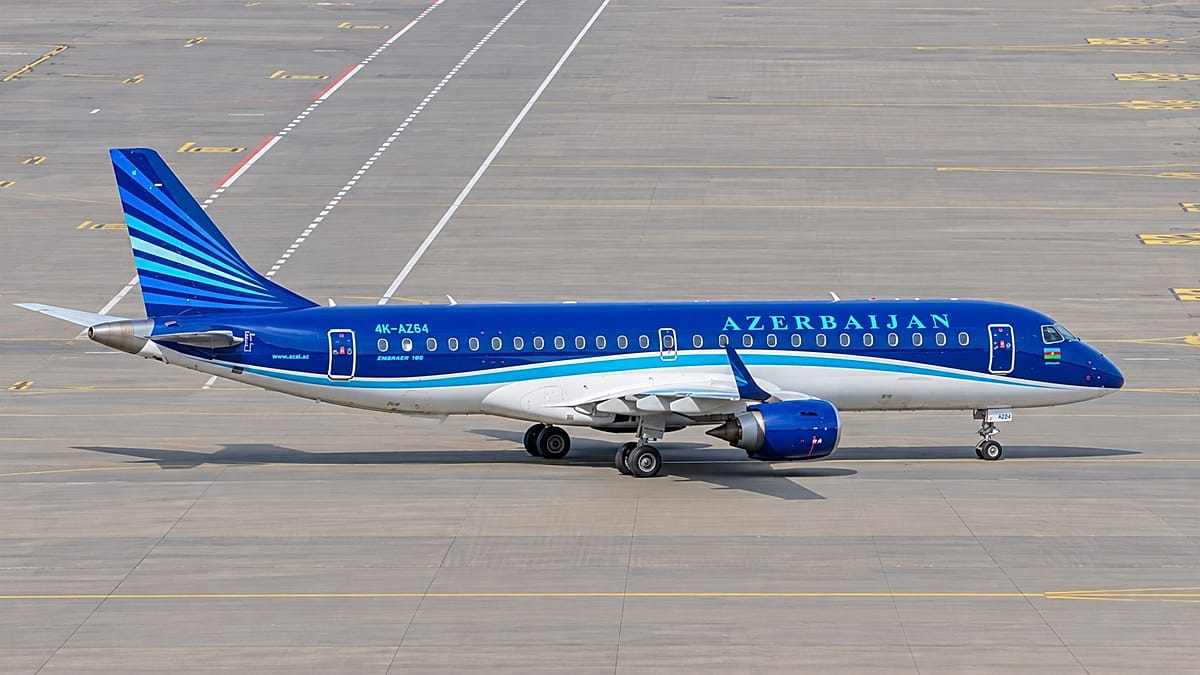
Speaking on the Business Horizons programme, Gurban Karimbayli, AZAL's Head of Sustainable Development, outlined the airline's strategy. Central to it is the introduction of new Airbus A320neo aircraft, which he said have reduced carbon emissions by more than 17% compared with earlier models. The neo's fuel-efficient engines and improved aerodynamics are part of a broader push to update a fleet that has long relied on older Soviet-era and early post-independence jets.
At Heydar Aliyev International Airport in Baku, the sustainability effort extends beyond the runway. The airport has achieved Level 3 of the Airport Carbon Accreditation programme, a global scheme run by the Airports Council International that certifies airports for measuring, reducing, and offsetting their carbon emissions. Level 3 means the airport is not only cutting its own emissions but also engaging airlines and other partners on the ground to do the same.
Digital skies over the Caspian
On the air traffic control side, Farhan Guliyev, Director of the Azeraeronavigation Air Traffic Department, described how automation, artificial intelligence, and improved controller training are reshaping navigation services. Azerbaijan's airspace saw an 11% increase in summer traffic in 2026, a sign of the region's growing role as a transit hub between Europe and Asia. Managing that growth without adding delays or unnecessary fuel burn requires more precise routing and better real-time decision-making.
Guliyev noted that digital tools are helping controllers handle more aircraft with the same or even fewer staff, while also reducing the distance planes fly. Shorter, more direct routes mean less fuel consumed and fewer emissions per flight. The combination of new aircraft, smarter ground operations, and digital air traffic management is the industry's standard answer to the sustainability challenge, and Azerbaijan is following that playbook closely.
The push for greener aviation in Baku comes as the European Union itself is wrestling with how to decarbonise air travel. In a recent policy shift, EU lawmakers eased the 2035 car emissions target, a reminder that political and economic pressures often temper environmental ambitions. For aviation, the EU has been pushing for greater use of sustainable aviation fuels and more efficient air traffic management across the bloc, but progress has been uneven.
Azerbaijan's efforts are also part of a wider regional story. The country has been investing in modern infrastructure, from its Caucasus ski slopes to its capital's growing skyline, as it seeks to position itself as a hub for business and tourism. The aviation sector is central to that ambition, and making it greener is seen as essential to attracting international partners and meeting global standards.
Still, the challenges are significant. Aviation is one of the hardest sectors to decarbonise, with no easy substitute for jet fuel on long-haul routes. Azerbaijan's geography, straddling Europe and Asia, means its airlines operate both short regional hops and longer transcontinental flights. The new A320neos are well-suited to the former, but the latter will require either more efficient wide-body aircraft or, eventually, sustainable aviation fuels that are not yet available at scale.
For now, the focus is on incremental gains. Airport carbon accreditation, fleet renewal, and digital air traffic control are all proven measures that can be implemented without waiting for breakthrough technologies. They also send a signal to passengers, regulators, and investors that Azerbaijan is serious about its environmental commitments.
As air traffic continues to climb, the pressure to do more will only intensify. But the steps taken so far show that the country is at least moving in the right direction, even if the destination remains a long way off.