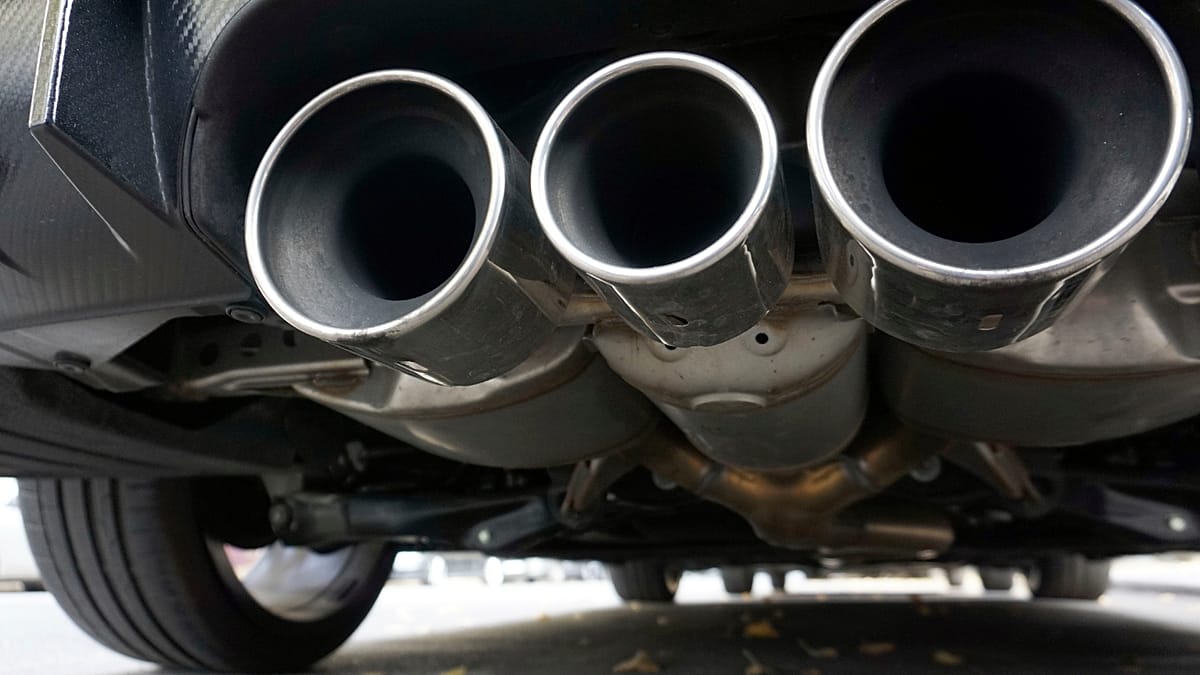
In a decisive move that underscores the European Union's shifting climate priorities, lawmakers on the European Parliament's environment committee voted on Wednesday to relax the bloc's 2035 car emissions target. The decision lowers the required reduction in CO2 emissions from new cars from 100% to 87.5%, a concession to an automotive industry struggling with high energy costs and fierce global competition.
The vote goes beyond the European Commission's own proposal, which had suggested a 90% cut. Under the parliamentary compromise, manufacturers using climate-friendly steel would receive an additional 7.5% credit, while the target for vans would be eased from 90% to 80%. This flexibility is intended to give carmakers more room to meet their climate obligations without sacrificing profitability.
The reversal marks a striking political U-turn from 2023, when the EU agreed to effectively end sales of new petrol and diesel cars by 2035. That decision was hailed as a cornerstone of the European Green Deal, the flagship policy of Commission President Ursula von der Leyen. But with soaring energy costs and a sluggish electric vehicle market, pressure has mounted from both industry and national governments to soften the targets.
EU car production remains roughly 19% to 20% below pre-pandemic levels, according to the think tank Bruegel, and the sector faces intense competition from Chinese manufacturers. The compromise was negotiated by the centre-right European People's Party (EPP), the centre-left Socialists and Democrats (S&D), and the centrist Renew Europe group, reflecting a growing consensus that industrial competitiveness must be balanced with climate goals.
EPP's push for technological flexibility
The EPP, which has long argued that carmakers need more technological leeway, hailed the vote as a victory. Italian MEP Massimiliano Salini, the EPP's lead negotiator, said: "The EPP Group managed to bring Europe's political centre together behind a clear objective: backing our car industry, protecting European jobs and giving manufacturers the freedom to develop the best technologies."
Veteran German MEP Peter Liese, the EPP's climate policy spokesperson, echoed that sentiment, emphasizing that the agreement ensures both climate and technology neutrality. "We want climate neutrality, but with the rules we have now agreed on, we are also ensuring technology neutrality. I am personally convinced that the future belongs to electric cars. But electric vehicles with range extenders and plug-in hybrids with a long electric range will also have a role to play in 2035 and beyond," Liese said.
The vote marks a significant shift in the balance of power in the European Parliament, where a broad cross-party consensus once supported progressively tighter CO2 standards. The Greens, who were among the strongest defenders of the 2035 target, have warned that the move threatens the fragile coalition that underpinned the Green Deal. German Green MEP Michael Bloss described the vote as a "bad deal" for the European car industry, arguing that the political back-and-forth is more harmful than high production costs.
The Commission's original proposal, rolled back in December 2025, had already weakened the 2035 target from a 100% to a 90% reduction in tailpipe emissions, with the remaining 10% compensable through credits linked to EU-made low-carbon steel and sustainable fuels. This would have allowed plug-in hybrids and even petrol and diesel vehicles to remain on the market beyond 2035. The parliamentary compromise goes further, reflecting the growing unease among EU governments and lawmakers about the speed and cost of the automotive transition.
Germany and France, home to two of Europe's largest automotive industries, have been among the most vocal advocates for greater flexibility, carving out their own Franco-German car deal in which climate-friendly steel plays a much smaller role. The pressure from these countries, combined with the lobbying efforts of carmakers, has clearly influenced the Parliament's decision.
While the vote is a setback for the Green Deal, it is not the first. The EPP, which previously helped sustain EU climate legislation alongside the Socialists, Liberals, and Greens, has increasingly challenged the pace and design of the green transition, at times joining forces with the far right. The Greens, who held 18 more seats in the 2019–2024 Parliament, have seen their influence wane.
The decision also comes amid broader concerns about the EU's ability to compete globally, particularly in the face of climate-related challenges and the need to secure affordable energy. As the EU navigates these pressures, the balance between environmental ambition and industrial reality remains a delicate one.
The full Parliament is expected to vote on the compromise in the coming months, and the outcome will be closely watched by both environmental groups and the automotive industry. For now, the message from Brussels is clear: the transition to electric mobility must be managed in a way that does not undermine Europe's industrial base.