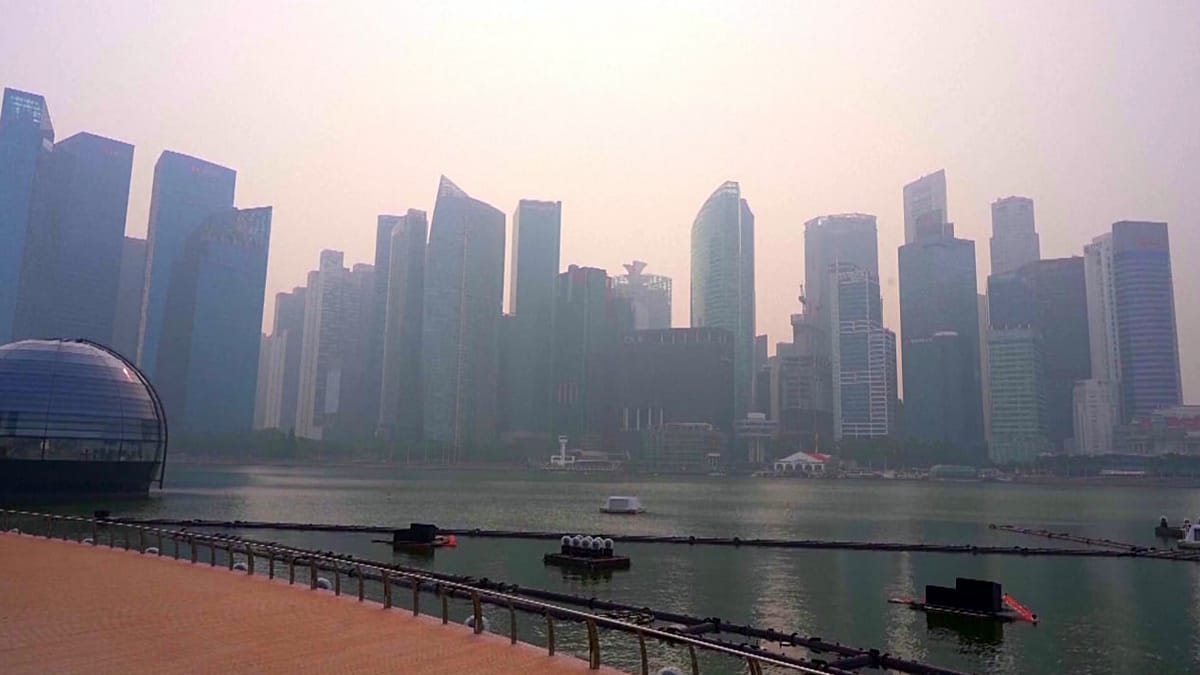
Air pollution remains one of the most pressing environmental health challenges worldwide. The World Health Organization (WHO) attributes 4.2 million premature deaths in 2019 to outdoor air pollution, with fine particulate matter (PM2.5) linked to cardiovascular and respiratory diseases as well as cancers. But the sources of this pollution are far from uniform, and strategies to combat it must be equally diverse.
In Turkey, the focus is on cleaning up the maritime sector, particularly the smaller vessels that operate close to densely populated coastal areas. In Uzbekistan, a landlocked Central Asian nation, the challenge is more diffuse, involving heating, transport, industry, and natural dust. Both countries are pursuing distinct approaches, offering valuable lessons for the rest of Europe.
Electrifying the workhorses of the sea
Shipping is the backbone of global trade, but conventional marine fuels emit nitrogen oxides, sulphur oxides, and particulate matter. While large container ships crossing oceans attract much attention, it is the tugboats, ferries, and pilot boats that spend most of their time near ports and coastal communities—often right in the heart of cities.
“The vast majority of the ports are inside the cities, so these are also very important for the community health,” said Mehtap Karahalla Özdemir, Secretary General of the Turkish Shipbuilders' Association.
Turkish shipbuilders have already developed fully electric tugboats that produce zero exhaust emissions when running on batteries charged from renewable sources. The technology is being explored for other short-distance maritime transport as well. A study published in September by the International Maritime Organization examined 67 ferry operations in Turkey's Sea of Marmara and found that electric or hybrid propulsion is technically feasible for all of them.
However, wider deployment faces hurdles. The cost of new vessels, the availability of charging infrastructure, and the need to upgrade electricity networks around ports are significant barriers. Özdemir also highlighted financing as a key obstacle.
“The private sector has some abilities but unfortunately there should be a finance mechanism in order to support this transition from conventional vessels to alternative fuels, battery vehicles and other wind-assisted propulsion systems,” she said.
This challenge resonates across Europe, where many ports are also located in urban areas. The European Union has been pushing for cleaner shipping through initiatives like the FuelEU Maritime regulation, but the financial mechanisms to support the transition remain a work in progress.
Tashkent's multi-source pollution problem
More than 3,000 kilometres away, the Uzbek capital faces a different mix of pollutants. A World Bank assessment published in 2024 found that Tashkent's annual average PM2.5 concentration was more than six times the WHO guideline.
PM2.5 particles, with a diameter of 2.5 micrometres or less, can penetrate deep into the lungs and enter the bloodstream. In Tashkent, heating contributes an estimated 28 per cent of annual PM2.5 concentrations, followed by transport at 16 per cent and industry at 13 per cent. The picture changes with the seasons: heating dominates in winter, while windblown dust becomes the largest source in summer. Construction dust and re-suspended road particles add to the burden.
Weather also plays a crucial role in how pollution accumulates. “On windless days and during temperature inversions, higher levels of pollution can be recorded,” said Hojiakbar Odilov, a chief specialist at Uzbekistan's Hydrometeorological Service Agency (UzHydromet). This means that the same level of emissions can result in very different air quality from one day to the next.
Controlling pollution at the source
Some emissions can be captured before they enter the atmosphere. At UzAuto Motors Powertrain, an automotive engine plant in Tashkent, environmental manager Ozoda Shorustamova points to the dry and wet scrubbers and bag filters used to capture pollutants produced during manufacturing. The factory has also installed an automated monitoring station that continuously measures dust emissions from part of its production process.
Such monitoring is being rolled out more widely across Uzbekistan's industrial sector. In March, the country launched a national Clean Air programme for 2026 to 2030, with targets to reduce overall pollutant emissions by 10.5 per cent and transport emissions by 10 per cent by the end of the decade. The programme also mandates automatic monitoring and dust and gas treatment equipment at industrial facilities with a higher environmental impact.
Whether these targets translate into sustained improvements will depend on other sources of pollution and factors that cannot be directly controlled, such as wind and naturally occurring dust. This is a reminder that air quality management is not just about reducing emissions but also about understanding the complex interplay of sources and meteorological conditions.
From measuring to predicting
Monitoring provides a more detailed picture of how pollution changes across cities and over time. UzHydromet operates fixed stations as well as mobile laboratories that can be taken to different locations to measure pollutants alongside meteorological conditions. Industrial monitoring is also expanding: Alisher Khudoyberdiyev, a specialist at Uzbekistan's National Committee on Ecology and Climate Change, said monitoring equipment has been installed at around 600 industrial enterprises.
Researchers are now exploring another use for the growing volume of data: short-term forecasting. Khudoyberdiyev said Uzbek and international scientists are developing a system designed to predict air quality in major cities several hours ahead. Increasing the number of monitoring points should give those forecasts more local data to draw on.
These efforts in Turkey and Uzbekistan highlight the importance of tailored approaches to air pollution. While electrification of maritime transport is a promising path for coastal nations, landlocked countries must grapple with a more diverse set of sources. Both strategies underscore the need for investment, innovation, and international cooperation—values that are also central to the European Union's own efforts to address heating costs and its broader environmental agenda.
As Europe looks to improve air quality, it can draw lessons from these examples. The transition to cleaner technologies requires not only technical feasibility but also financial support and political will. And as Uzbekistan shows, even in the absence of coastal breezes, monitoring and forecasting can empower communities to understand and respond to the air they breathe.