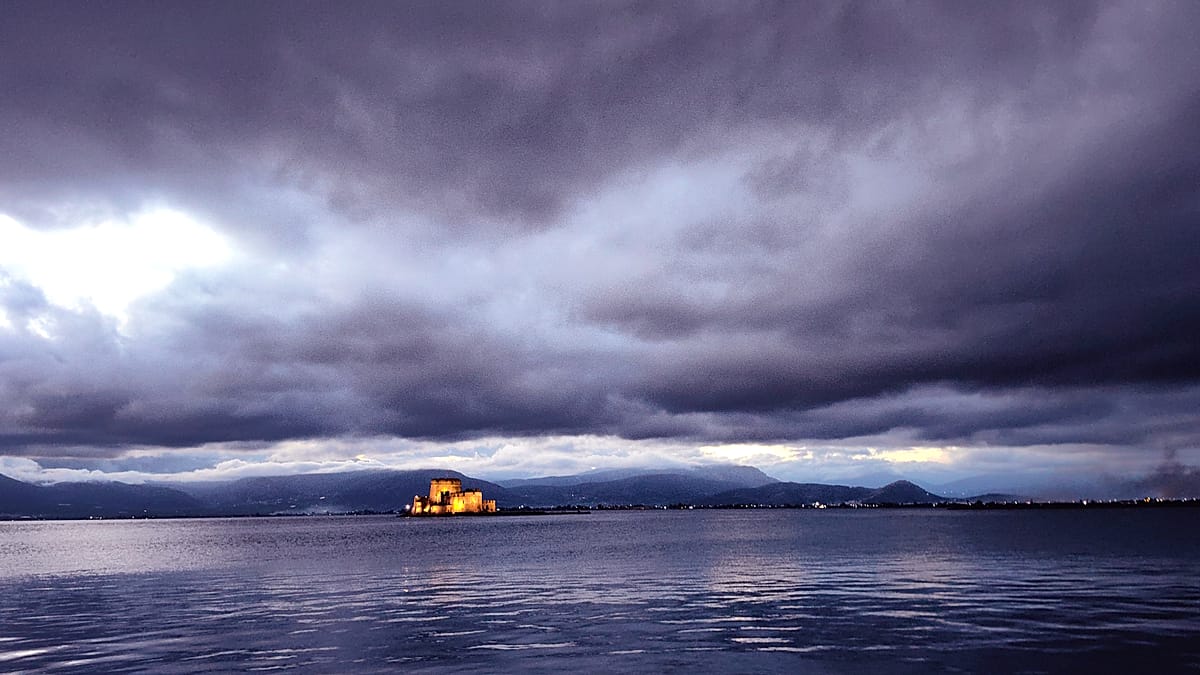
A fresh bout of severe weather has swept across parts of Greece, bringing torrential rain and thunderstorms that have caused significant disruption on several Aegean islands. The worst impacts were felt on Rhodes, where flash flooding turned roads into rivers and damaged property, while on Kalymnos a large boulder dislodged by the rain crashed into a garage.
The storm system, which is expected to persist through Tuesday, has prompted authorities to close schools in two municipal units on Rhodes and to send emergency alerts via the 112 number, urging residents and visitors to limit movement and follow local instructions.
Rhodes: Flash floods and stranded vehicles
On Rhodes, the heaviest rainfall occurred overnight, particularly in villages on the eastern side of the island. The area of Archangelos was hit hardest, where an overflowing river turned streets into fast-moving torrents. Cars were swept away by the water, and shops and other businesses suffered water damage.
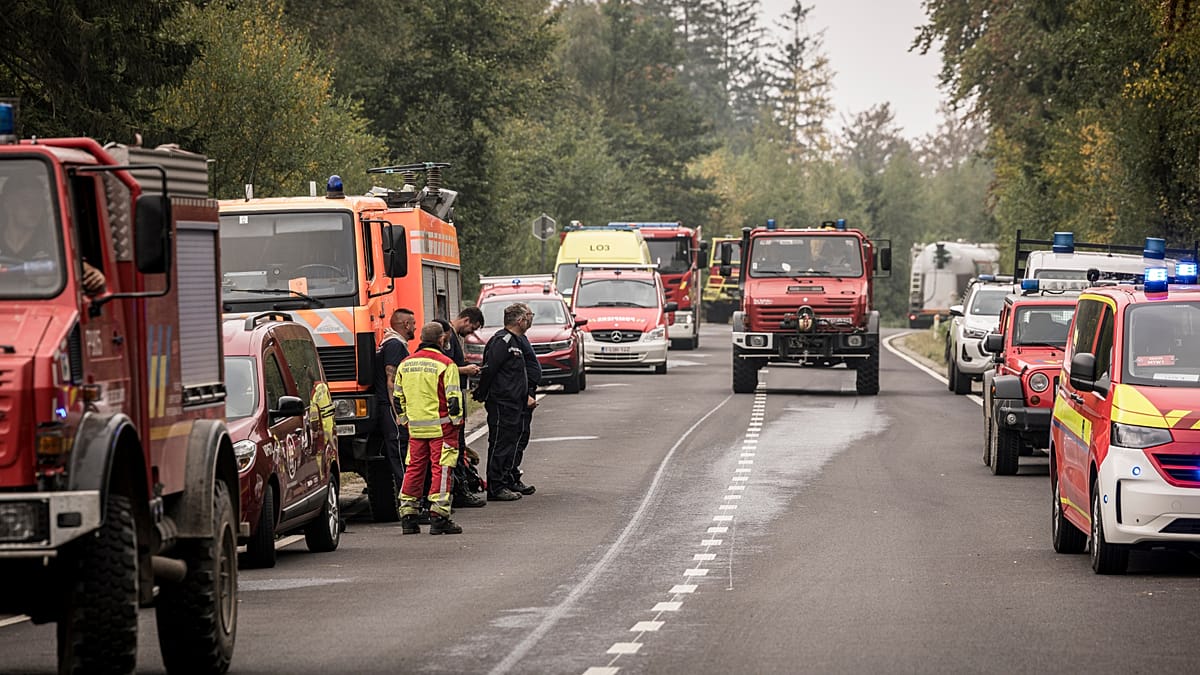
Flooding was also reported on a smaller scale in Afantou and in villages in the south of the island, where the downpours caused problems on the road network. Civil Protection services, working with crews from the South Aegean Region and the Municipality of Rhodes, have been mobilised since the early hours. Their efforts are focused on removing vehicles that were carried away by the water, clearing drains, and restoring the flow of streams where debris has formed blockages.
Interventions are also underway on the road network to restore traffic and reduce risks for residents. Although the intensity of the weather eased during the morning, emergency services remain on high alert, as further rain and thunderstorms cannot be ruled out during the day.
Schools closed and 112 alert
In the early hours of Monday, a warning message was sent via the emergency number 112 to residents and visitors on Rhodes. Civil Protection called on citizens to limit their movements and follow the instructions of local authorities to avoid danger from the severe weather.
By decision of the local authorities, schools in the municipal units of Archangelos and Afantou on Rhodes will remain closed on Monday. The move is a precautionary measure, with the safety of pupils and teachers as the main priority, as well as avoiding unnecessary travel in the current conditions. In an announcement, the Municipality of Rhodes stressed that protecting the school community is paramount, to avoid risks during journeys to and from school.
Kalymnos: Boulder crashes into garage
On the island of Kalymnos, heavy rainfall led to a large rock breaking away from a slope in the area of Agios Vasileios, creating a serious hazard for homes below. The boulder fell and crashed into a garage, damaging a car parked inside.
Giannis Mastrokoukos, the mayor of Kalymnos, told the Athens-Macedonian News Agency: "If the garage had not stopped it, below there is a cluster of houses. And no one knows what would have happened." His comments underscore the narrow escape for residents in the area.
Forecast and rainfall totals
According to the National Observatory of Athens/meteo.gr, the most intense phenomena on Monday are expected in the Ionian Islands, mainly in the north. From the afternoon, heavy rain and thunderstorms are forecast for Epirus, Western Central Greece, and the western and southern Peloponnese. In Attica and Thessaloniki, rain is expected at times, but without particular intensity.
Tuesday is expected to be the last day with intense weather, as conditions are set to improve significantly from Wednesday. On Sunday, heavy rainfall was recorded mainly in Central and Eastern Macedonia, the Dodecanese, and Crete. By 17:40, the greatest cumulative precipitation was measured at Limenas Thasou (144 millimetres), while more than 125 millimetres fell at Megisti Lavra on Mount Athos.
The repeated storms across the Aegean in recent weeks have highlighted the growing strain on infrastructure and emergency services, as climate change amplifies extreme weather events. For more on how Europe is adapting, see our report on the EIB's increased climate adaptation funding.