Over the past decade, Uzbekistan has made significant strides in expanding its drinking water infrastructure, yet the benefits remain unevenly distributed. Government data released in July 2026 show that nationwide access to centralized water supplies has climbed from 63% in 2017 to 83%, with roughly 39,000 kilometres of pipelines built or renovated in that period.
This progress stems from a national investment strategy that blends state funding with loans from international financial institutions. One notable example is the autonomous republic of Karakalpakstan in the northwest, which includes part of the Aral Sea region. There, the Asian Development Bank (ADB) is financing a $145 million (€129.5 million) project covering six districts, with an additional $27.3 million (€24.4 million) from Uzbekistan, largely through tax and customs exemptions. The total cost is estimated at $172.3 million (€153.9 million).
From communal taps to household connections
For residents like Muslima Erimbetova, the change is tangible. Her household in the Nukus district now receives water directly through the network. “We used to carry water with a shoulder pole and containers. We collected it from neighbours and public taps. Now, thank God, we have water,” she said.
The ADB-supported works in Nukus district include upgrades to distribution facilities, pipelines, and local water quality monitoring. According to the regional water utility, more than 31,000 residents have benefited, and the district's coverage has risen from 68% to 90%. A new local water testing laboratory has also reduced the need to transport samples to the regional capital for analysis.
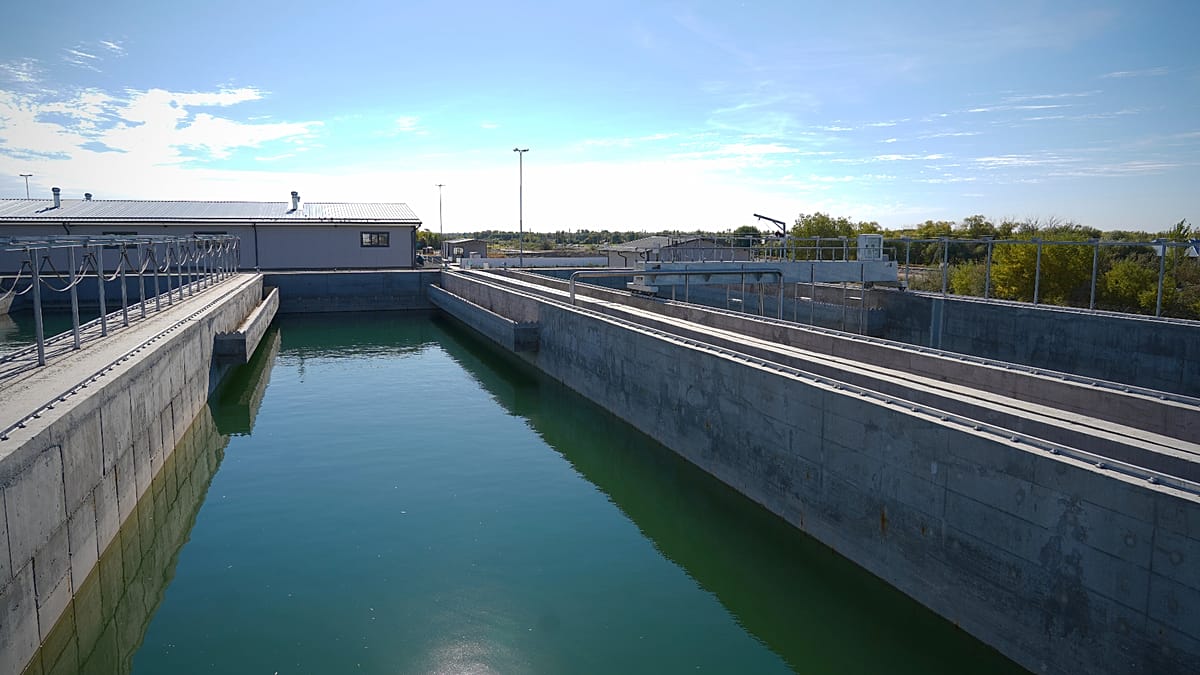
In Mang‘it, a new treatment plant draws water from the Amu Darya River. It currently supplies around 20 million litres per day, though it was designed to handle significantly more. Sohib Akramov, the ADB's drinking water project coordinator in Uzbekistan, explained: “The capacity of 40,000 cubic metres was calculated based on projected population growth, business expansion and industrial development by 2040.”
The gap between production capacity and household connections remains a challenge. Local officials reported that before the latest improvements, only about half of the population in the surrounding Amudaryo district had access to the drinking water network. A separate project involving approximately 355 kilometres of pipelines is underway, with the goal of raising coverage to 80% once completed.
The ADB is also in discussions with the Uzbek government about a proposed $200 million (€178.6 million) project. According to Akramov, around $70 million (€62.5 million) would be allocated to Karakalpakstan, including plans to reconstruct the Tuyamuyun water treatment plant.
While the expansion of water access is a clear achievement, the disparities between urban and rural areas highlight the need for continued investment. Similar challenges are being addressed elsewhere in Europe, such as Puglia's experiment with treated wastewater to combat drought, and Gallipoli's efforts to remove stubborn pollutants. These examples underscore the broader European focus on sustainable water management.
For Uzbekistan, the journey from communal taps to household connections is far from over. The ADB's ongoing projects aim to bridge the remaining gaps, but as Akramov noted, the infrastructure must be built with an eye to future demand. “The capacity was calculated based on projected growth,” he said, emphasizing the need for long-term planning.
As the country continues to modernize its water systems, the benefits are becoming more visible in daily life. Yet the uneven progress serves as a reminder that access to clean water is not just a matter of pipes and pumps, but of equitable development across all regions.