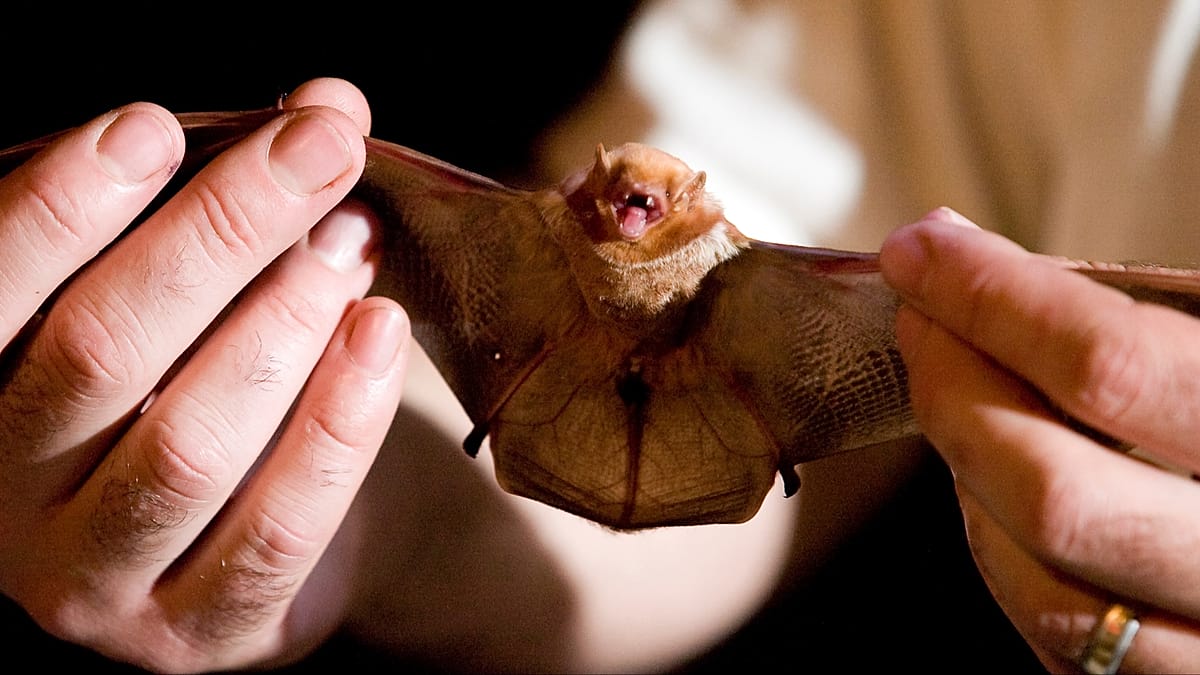
Wind energy is often hailed as a cornerstone of Europe's clean energy transition, but a new study from the United States underscores a troubling side effect: the spinning blades are killing bats in numbers that researchers describe as "shocking."
The most comprehensive analysis to date, published in the Proceedings of the National Academy of Sciences, estimates that 18.7 million bats from 28 species have died at US wind facilities between 1981 and 2024. The annual death toll has surged from around 100,000 two decades ago to 1.5 million in 2021, driven by the rapid expansion of wind power.
Why bat deaths have been underestimated
Bats often collide with turbine blades, but scientists are still uncertain why. Some theories suggest they are attracted by the noise or mistake the structures for trees. Others propose that bats may not detect the blades in time or are drawn to them for reasons not yet understood.
Most fatality estimates rely on searches conducted by wind farm operators, but these can miss carcasses that are quickly removed by scavengers or hidden in tall grass. To address this, the study authors developed a statistical model that accounts for missing data and extrapolates to unmonitored sites.
"Despite using modern statistical methods, the state of data remained a limiting factor in our analysis," the study states.
Mitigation strategies that work
The research suggests that siting wind farms away from rivers and other bat habitats could reduce fatalities. Turbines with greater ground clearance also appear to be less deadly.
A separate study in the Journal of Applied Ecology, which examined 141 wind farms in Europe—where bats are protected under the EU Habitats Directive—found that curtailing turbine operation during conditions favorable for bat flight can reduce mortality by more than 80 percent.
Countries like Germany have mandated mitigation measures since around 2010, including risk assessments at the planning stage and operational restrictions during migration seasons or when bats are most active. These measures are not yet universal across Europe, and the new findings add urgency to calls for broader adoption.
As Europe accelerates its wind energy build-out, balancing renewable goals with biodiversity protection will be critical. The lessons from the US study, and the proven effectiveness of curtailment in Europe, offer a path forward that could help safeguard bat populations while still meeting climate targets.