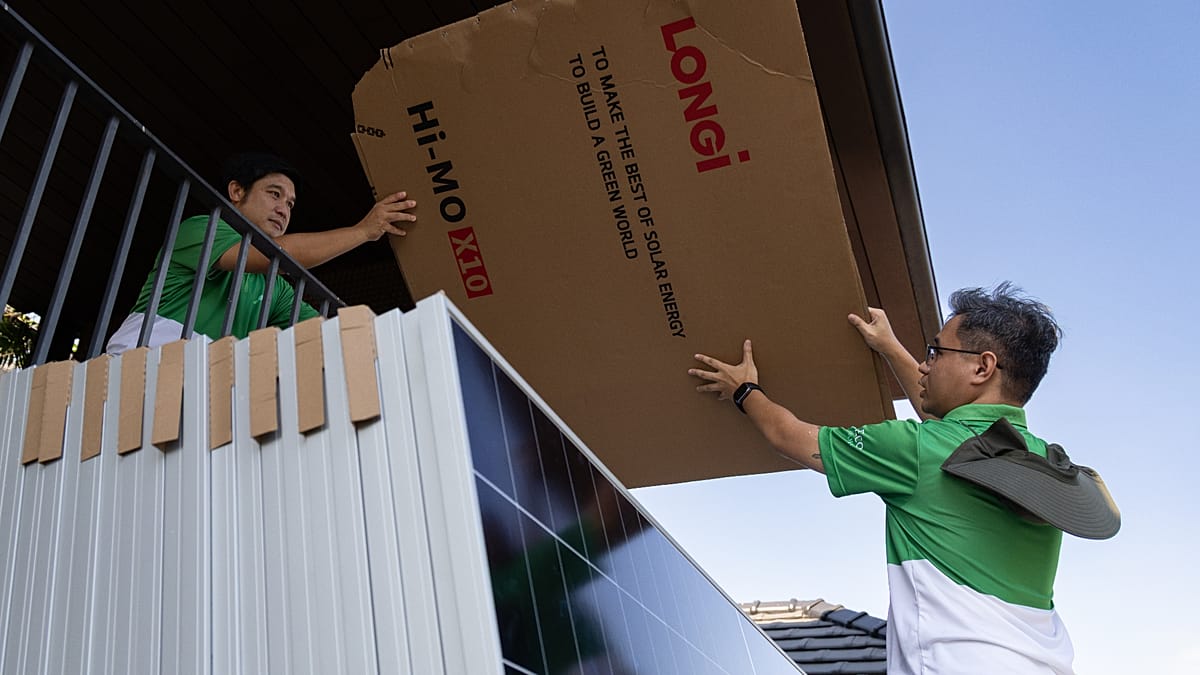
China is exporting record volumes of renewable energy equipment and electric vehicles, a trend that could significantly curb global greenhouse gas emissions, according to a report released on 29 October by the Finland-based Centre for Research on Energy and Clean Air (CREA). The analysis finds that the clean technology shipped in 2026 will, once installed, avoid around 450 million tonnes of carbon dioxide annually—roughly equivalent to Brazil's yearly emissions.
This progress comes as global climate efforts struggle to keep pace with the scale of the challenge. In November, Türkiye will host the annual UN climate talks, where electrification is expected to be a central theme. The report's authors describe the current moment as a turning point for the world's energy systems.
“This is a pivot point for the outlook of global energy and global emissions,” said Lauri Myllyvirta, a senior analyst at CREA. “We’re seeing growth in clean energy that is much, much faster than anyone predicted just a few years ago.”
Record-breaking year for Chinese exports
China remains the world's dominant supplier of solar panels, wind turbines, electric vehicles, and batteries. While most of its production is consumed domestically, a substantial share is exported. In the first nine months of 2026, CREA tracked a 61 per cent increase in electric vehicle exports, a 45 per cent jump in wind turbine shipments, a 39 per cent rise in battery exports, and 22 per cent growth in solar equipment sales compared to the same period last year.
Southeast Asia has emerged as a major destination, with Chinese clean energy exports to the region soaring nearly 160 per cent year-on-year, according to Ember, an independent energy think tank. The value of China's electric vehicle exports reached $72.8 billion (€65 billion) in the first three quarters, up from $39.7 billion (€35.5 billion) a year earlier, data from Atlas Public Policy shows.
The surge is partly a response to the energy crisis triggered by the Iran war, which has disrupted shipping through the Strait of Hormuz—a route that normally carries a fifth of the world's oil and gas. Import-dependent Asian countries have been hit hardest, prompting a renewed focus on renewable alternatives.
Chinese clean tech dents emissions
If current export trends continue for the rest of 2026, CREA estimates that the clean technology shipped this year will avert approximately 8,400 million tonnes of carbon dioxide over its operational lifetime. That figure represents about 24 per cent of annual global emissions—more than the combined emissions of the United States and India.
The analysis is based on export data, the electricity mix of destination countries, and emissions from Chinese manufacturing. Independent experts said the estimate aligns with the scale of China's exports, though they could not fully verify the underlying data.
Despite higher tariffs imposed by the Trump administration, Chinese clean tech exports to the United States rose 13 per cent in January–September compared to a year earlier. “The demand is much stronger than I expected,” Myllyvirta said. “That’s certainly noteworthy.”
China is both the world's largest provider of clean energy equipment and its biggest source of carbon emissions. Muyi Yang, a senior policy analyst at Ember, likened China's energy transition to replacing the engine of a ship while it is still at sea—a delicate balancing act between economic growth and decarbonisation.
Interest in renewables likely to persist
The war-related disruptions to energy supplies have accelerated interest in clean energy across Southeast Asia, and experts believe this momentum will outlast the conflict. Yu Sun Chin of Zero Carbon Analytics noted that consumers in the region are facing higher electricity and fuel costs, prompting many to adopt rooftop solar and electric vehicles.
Laos, Thailand, and Vietnam have introduced incentives for solar installation and EV purchases to reduce reliance on imported fossil fuels. The Philippines has implemented similar policies and became the second-largest destination for Chinese solar exports in the first quarter of 2026. Indonesia has pledged to install 100 gigawatts of solar power by 2029.
“The surge in clean energy policies in Southeast Asia shows there is a paradigm shift happening,” Chin said. “Considering Southeast Asia is one of the most vulnerable regions to climate impacts, every emission cut matters in limiting a rise in global temperatures.”
The findings come as the European Union continues to weigh the costs of de-risking from Chinese supply chains, a debate that has gained urgency amid the energy transition. While Europe has its own clean tech ambitions, the sheer scale of Chinese manufacturing capacity means its exports will play a crucial role in global decarbonisation for years to come.