Brussels is preparing a new tool to reduce the European Union's strategic dependencies on a single country, a move widely seen as targeting China. The European Commission is expected to present the proposal in early December, just before EU leaders meet to discuss economic security. The instrument would push companies to diversify their suppliers, but European businesses are already warning that such a shift could come at a significant cost.
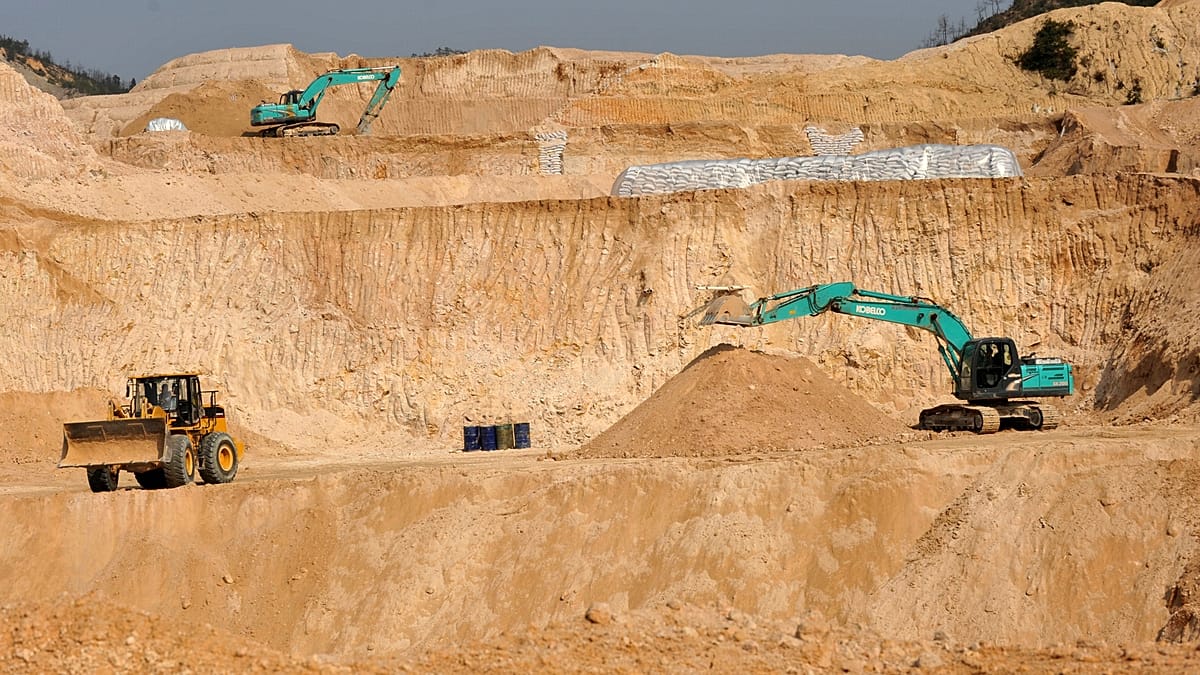
Although the proposal does not explicitly name Beijing, it is a direct response to China's actions in recent years. In 2025, Beijing blocked exports of rare earths—materials essential for green technologies, digital industries, and defence—amid a trade war with the United States. The EU's car industry was also hit when China cut off access to strategic chips during a dispute with the Dutch government over chipmaker Nexperia. These episodes have underscored how vulnerable the bloc can be when a single supplier controls critical inputs.
The Commission's consultation with EU businesses, which closed on Tuesday, stated that the new instrument would aim “to address cases where a high level of strategic dependencies on a single supplier country creates a risk for the EU's security of supply and thus its economic security.” The wording leaves room for interpretation, but the direction is clear: diversification is no longer optional.
Cost concerns and industry pushback
In their responses to the consultation, several companies warned that finding alternative suppliers would increase their costs. Luisa Santos, Deputy Director General at BusinessEurope, told Euronews: “Companies are already doing the maximum to have a cost-effective structure. If they are working with certain suppliers it is because they are the ones that have the best offer in terms of the product, regarding its cost and performance.”
However, EU Trade Commissioner Maroš Šefčovič has made it clear that industry must bear part of the responsibility. In a speech on 5 June 2026, he said that economic security is a shared responsibility and that industry stands “on the front line.” He added: “We must have their back, but industry also must do its part. That means diversifying rapidly and strategically, and it means integrating the cost of resilience into business models and treating geopolitical risks as what it is, the core business risks.”
The Commission has not yet specified which sectors will be covered or what criteria will be used. Santos stressed that not all dependencies should be considered problematic. “We should be focusing more on the areas where we are seeing weaponization. I don't think that our dependency on Chinese electric appliances for instance should fall within the scope,” she said. She also noted that for products within the instrument's scope, alternative suppliers must be available—which is not the case for some critical raw materials, including rare earths, where China dominates production and processing. “Diversification in that case is not an option, and this needs to be considered unless new sources come into the picture,” she added.
Lessons from the energy crisis
Šefčovič has suggested that the Commission could draw inspiration from the Energy Union, which pushed companies to diversify their energy supplies away from Russia after the outbreak of the war in Ukraine. He recalled the debates about investing in energy terminals and interconnectors, which were unpopular at the time because Russian gas was cheaper. “With the hindsight, it was vital for us,” he said.
The EU's REPowerEU plan, launched in May 2022, banned Russian oil imports and set deadlines to end contracts for Russian gas and LNG by 2026 and 2027. European businesses had to adapt, investing in renewables, finding new suppliers, and accepting higher prices. The experience shows that diversification is possible, but it comes with costs that are ultimately borne by consumers and companies.
Tobias Gherke, a senior policy fellow at the European Council on Foreign Relations, sees the energy approach as the “minimalist” scenario for the December tool. “The minimalist scenario would be to restrict diversification to a couple of sectors, like they made it mandatory for European energy utilities to diversify,” he told Euronews. He pointed to the US defence industry, which was pushed to diversify its suppliers to reduce dependence on Chinese minerals. Other critical sectors could include dual-use industries and infrastructure such as healthcare and energy grids.
A second, “maximalist” scenario, according to Gherke, would be to say: “Everyone who is buying more than a certain threshold of a specific product from a single source would face tariffs. Therefore they would be incentivized to buy from a different source.” Such a broad approach would cover many sectors, and if tariffs made critical raw materials more expensive, the impact would ripple across green technologies, defence, and digital industries simultaneously. “Everyone would be captured,” the expert said.
The debate comes at a time when Europe is already grappling with soaring energy costs and a slowing Chinese market that is hurting key industries. The Commission's proposal will need to strike a balance between reducing vulnerabilities and avoiding excessive burdens on businesses that are already struggling to remain competitive globally.
As Brussels negotiates with Beijing to rebalance trade relations, the new instrument is likely to be a central piece of the EU's economic security strategy. But the details will matter: which sectors are targeted, what thresholds are set, and whether companies have viable alternatives. The answers will determine whether the EU can reduce its reliance on China without paying too high a price.