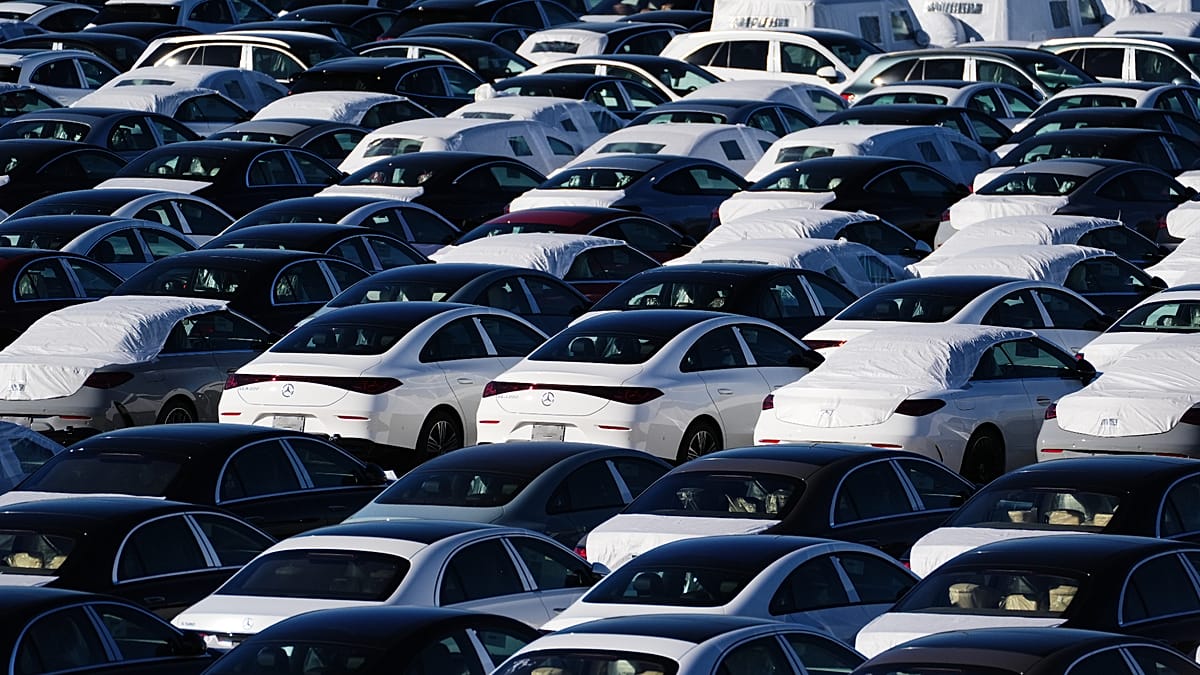
Mercedes-Benz has become the third major German carmaker to slash its full-year profit forecast, underscoring the deepening structural crisis in Germany's automotive sector. The Stuttgart-based company now expects its core profit for 2026 to remain flat at around €5.8 billion, a sharp reversal from its earlier projection of at least 15% growth.
The downgrade, announced on Tuesday, reflects persistently weak demand in China and rising material costs. Mercedes-Benz also trimmed its expected profit margin for its core car business to between 2% and 3%, down from the previous range of 3% to 5%.
Preliminary results and market reaction
In preliminary third-quarter figures, the carmaker reported core profit of €1.77 billion, with a profit margin of just 2.5% in its car division. Full quarterly results are due on Wednesday, but investors have already reacted sharply: Mercedes-Benz shares fell more than 4% in Frankfurt, while rivals Volkswagen and BMW each declined about 2%.
Both BMW and Volkswagen had already lowered their annual forecasts, as weak demand and intense competition from Chinese electric-vehicle makers such as BYD and Xiaomi continue to erode profitability. The pressure is particularly acute in China, where Mercedes-Benz's vehicle deliveries dropped a further 29% in the first nine months of 2026, following last year's lowest sales tally since 2016.
CEO Ola Källenius has urged German employees to work additional hours without extra pay, while the company expands production in Hungary, where he says costs are around 70% lower than in Germany. This cost-cutting drive reflects the broader challenges facing the German auto industry, which is also grappling with the transition to electric vehicles and supply-chain disruptions.
Volkswagen, for its part, plans to cut 120,000 jobs worldwide by the end of the decade, a restructuring that would be the largest in automotive history, surpassing the 50,000 jobs lost after General Motors' 2009 bankruptcy.
The troubles at Mercedes-Benz and its peers are not isolated. The entire European automotive sector is under pressure from global overcapacity, shifting consumer preferences, and the rise of Chinese competitors. As China's tech-driven wealth boom continues, its automakers are leveraging advanced software and battery technology to challenge established European brands.
Analysts note that the German carmakers' reliance on the Chinese market has become a double-edged sword. While China remains a vital source of revenue, the intensifying competition there is forcing companies to rethink their strategies. Some are investing heavily in local production and partnerships, while others are seeking to diversify into other regions.
The broader implications for Europe are significant. The automotive industry is a cornerstone of the German economy, employing hundreds of thousands of workers and supporting a vast network of suppliers. The current downturn could have ripple effects across the continent, from the Balkans to Western Europe, as supply chains and investment decisions are reassessed.
Despite the bleak outlook, some experts see room for cautious optimism. The push for cost efficiency and innovation could ultimately make European automakers more competitive. However, the immediate future remains uncertain, and the coming months will be critical in determining whether the industry can adapt to a rapidly changing global landscape.