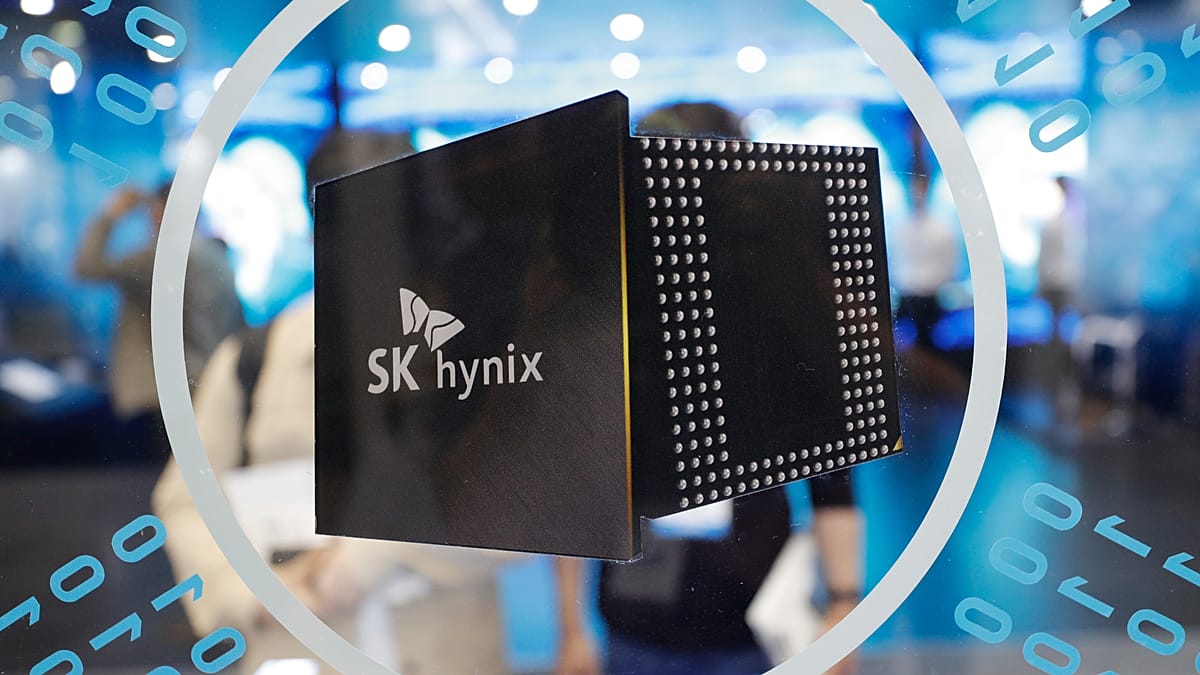
South Korea's economy expanded at more than three times the expected pace in the third quarter, propelled by an insatiable global appetite for semiconductors used in artificial intelligence systems. Preliminary data from the Bank of Korea (BOK) released on Tuesday showed gross domestic product (GDP) rose 1.0% quarter-on-quarter in the July-to-September period, comfortably beating the central bank's own August projection of 0.3%.
The surprise acceleration was underpinned by a 2.3% increase in exports, which the BOK attributed to strong shipments of semiconductors, machinery, and electrical equipment. Facility investment also climbed 4.1%, largely reflecting spending on chip-making machinery. The figures validate the BOK's upbeat assessment that booming demand for chips is keeping both exports and investment robust, noted Kwon Hyo-sung of Bloomberg Economics.
Government statistics show semiconductor exports soared by 218.7% year-on-year to $148 billion (€127 billion) in the third quarter. On an annual basis, the economy grew 3.4%, slightly down from the 3.7% recorded in the previous quarter but still a robust performance. Real gross domestic income (GDI), a measure of purchasing power, surged 18.8% year-on-year—its fastest increase in nearly 49 years—supported by rising semiconductor prices.
This is not the first time in 2025 that chips have powered South Korean growth. The economy had already posted its quickest expansion in more than five years in the first quarter, with GDP rising 1.7% quarter-on-quarter on the back of strong semiconductor demand.
Concentration risk
Yet the very factor driving this outperformance also raises concerns. Analysts warn that South Korea's growth is becoming dangerously dependent on a single industry. "The risk is that growth stays heavily concentrated in the semiconductor sector, leaving South Korea exposed to a slowdown in global AI spending," said John Bromhead, a senior economist at Moody's Analytics. His caution echoes broader worries across Asia, where economies like Taiwan and Japan are also riding the AI wave but face similar vulnerabilities.
The semiconductor boom has also swelled South Korea's current account surplus to record levels, reaching $116.6 billion (€100 billion) in the second quarter. While that bolsters the country's external position, it also underscores the lopsided nature of the recovery. For European policymakers and investors, the pattern is familiar: a single high-tech sector can drive headline numbers while masking structural imbalances. The eurozone's recent growth struggles offer a contrasting picture, where a lack of such a dynamic export engine has left the bloc more reliant on domestic consumption.
South Korea's experience also highlights the global ripple effects of AI investment. The surge in chip demand has lifted not only Korean exporters but also suppliers and equipment makers worldwide, including several European firms. However, as the shifting tastes of Chinese consumers test European luxury brands, so too could a potential slowdown in AI spending test the resilience of chip-dependent economies.
For now, the BOK remains cautiously optimistic, but the concentration of growth in semiconductors leaves little room for complacency. If global AI spending falters—whether due to tighter monetary policy, geopolitical tensions, or a technological plateau—South Korea's economy could quickly lose its momentum. The country's policymakers may need to consider diversifying its export base and boosting domestic demand to cushion against such a shock.
As Europe watches these developments, the lessons are clear: innovation-driven growth is powerful but fragile. The recent job cuts at Volvo Cars after a third-quarter loss serve as a reminder that even established industries can stumble. South Korea's semiconductor juggernaut, for all its current strength, is no exception.