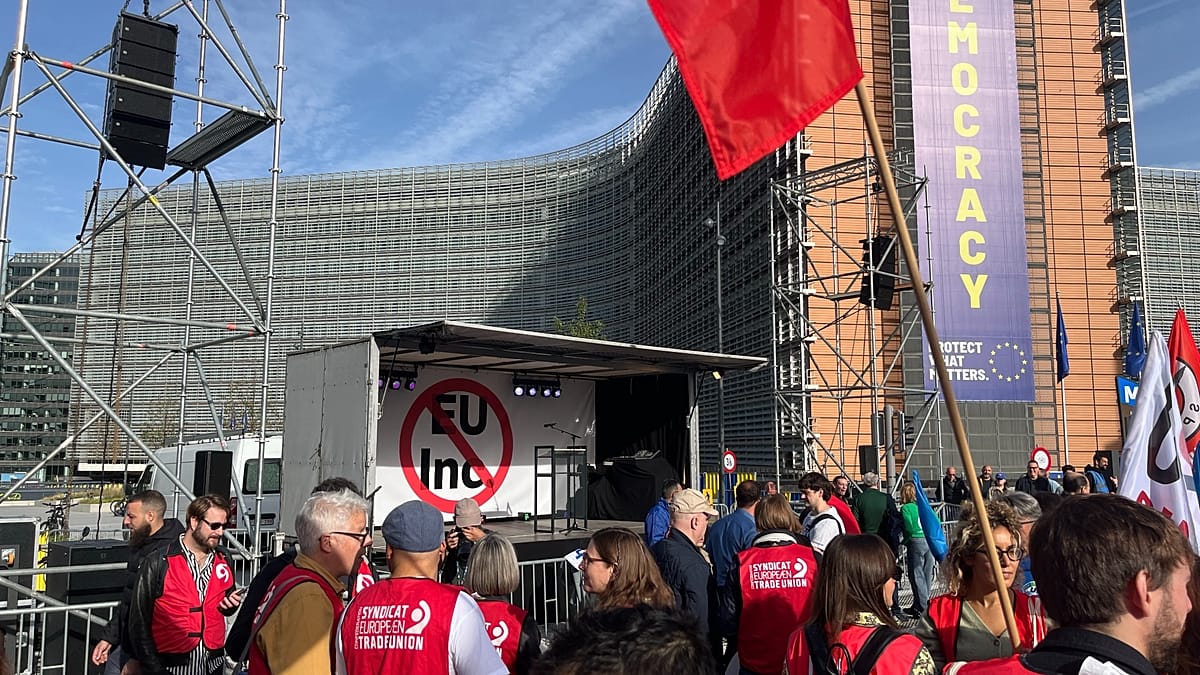
The European Commission's ambitious plan to create a unified company structure for startups across the EU, known as EU Inc, is facing significant hurdles. The European Parliament's Committee on Legal Affairs (JURI) failed to vote on its draft report on October 19, casting doubt on the proposal's adoption by 2026.
EU Inc, often dubbed the "28th regime," aims to reduce fragmentation across the EU's 27 legal systems by offering a single, pan-European digital company form. It would allow founders to register a business in any member state within 48 hours, with a minimum capital of just €1 and no notary fees. The proposal also includes a harmonised European Employee Stock Option to make equity compensation consistent across borders.
However, the initiative has drawn sharp criticism from trade unions and some lawmakers. The European Trade Union Confederation (ETUC) warns that loopholes in the current proposal could trigger a "race to the bottom" in pay and workers' protections. Isabelle Schömann, ETUC Deputy General Secretary, argues that companies might register in member states with weaker labour laws and then operate elsewhere, evading stronger regulations. She also notes that the proposal lacks clear safeguards to prevent businesses from replacing wages with stock options or avoiding employee consultation.
René Repasi, the European Parliament's rapporteur for the file, acknowledged progress but stressed the need for "legal certainty and safeguards for workers against misuse." He warned that if EU Inc becomes a "vehicle for circumventing labour law rather than a driver of high-quality innovation, it will have failed to deliver on its promise."
Negotiations Stalled
The Commission presented its proposal on 18 March 2026, aiming for an agreement by year-end. But co-legislators appear far apart. The Council has been reviewing a compromise text from the Irish Presidency, while parliamentary negotiations have stalled after JURI failed twice to secure a majority for Repasi's draft report.
Workers' rights remain the biggest sticking point. ETUC has protested in Brussels and Strasbourg, demanding stronger protections. Repasi insists that the final text must ensure that employee stock options never replace fair wages, pensions, or social security contributions. He also calls for clear rules on insolvency to protect creditors and employees' claims.
For startups, the appeal of EU Inc lies in its simplicity and speed. But some founders and investors worry that months of negotiations are watering down the original vision. The EU-INC campaign, backed by more than 26,000 founders, investors, and entrepreneurs—including figures from Stripe, Klarna, and Mistral AI—issued an urgent warning on 15 October. They argue that the proposal is being weakened, and that the EU Inc they championed—one that would enable Europe to compete at scale—may no longer exist.
Simon Schaefer, co-initiator of the EU-INC campaign, told Euronews that the original ambition was to create a genuinely European legal framework, not one dependent on national exceptions. He fears that the current negotiations are producing a diluted version that fails to deliver the promised benefits.
Despite the challenges, some see room for compromise. Repasi calls on the Commission to act as an "honest broker" and facilitate a fair process. Schömann, while critical, acknowledges that access to investment is crucial for startups and scale-ups, but insists that it must not come at the expense of workers' rights.
The clock is ticking. If co-legislators cannot find common ground by year-end, EU Inc may miss its 2026 target. The question remains: can the 28th regime survive the political and social pressures? Or will it become another casualty of the EU's complex legislative machinery?