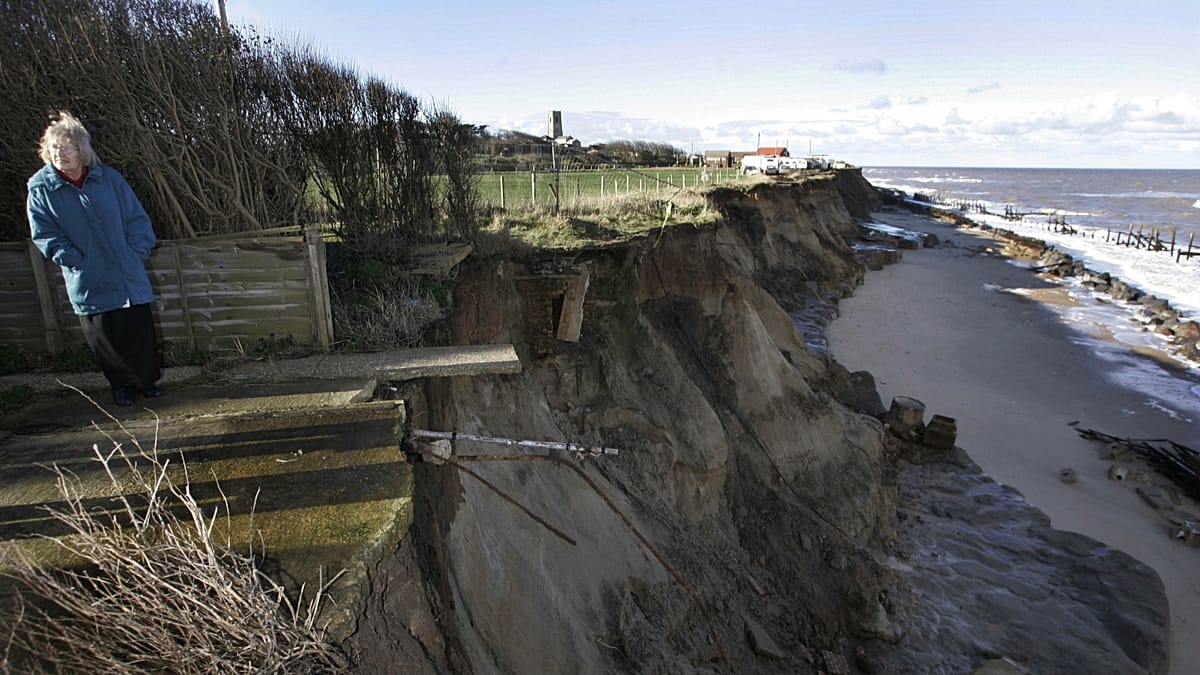
Nearly half of all Europeans live within 50 kilometres of the sea, yet the future of these coastal communities is increasingly uncertain. As global temperatures rise, so do sea levels, and the continent's shorelines are paying the price. Erosion is eating away at homes, infrastructure, and cultural heritage from the Baltic to the Mediterranean.
According to a new report by the Council of Europe, economic losses from coastal erosion across 28 European countries already exceed €1 billion per year. If no decisive action is taken, that figure could skyrocket to €800 billion annually by the end of the century. The report, titled 'How can we cope with coastal erosion?', argues that Europe must begin preparing for a managed withdrawal from its most vulnerable coastlines.
Planned retreat: a hard but necessary choice
The report's central recommendation is a shift towards 'planned retreat'. This would involve banning or restricting new construction in high-risk zones, and gradually relocating homes, businesses, and critical infrastructure such as roads and railways to safer inland areas. The idea is not to abandon the coast entirely, but to make a strategic, orderly move before nature forces a chaotic one.
France offers a glimpse of what this might look like. An estimated 900 kilometres of its mainland coastline are receding, affecting more than 500 municipalities. In the Normandy village of Quiberville-sur-Mer, a €9 million project moved a public campsite inland. The result? Municipal revenue rose by 25 per cent, proving that retreat can be economically viable.
Of course, relocating a campsite is far simpler than moving entire villages or historic landmarks. But for some places, it may be the only long-term solution. Venice, for example, faces a stark choice. Experts predict that the city's engineered dikes will only be effective up to 0.5 metres of sea-level rise, which could occur by 2100 even under optimistic emissions scenarios. Reinforcing the lagoon with a super levee could protect against up to 10 metres of rise, but at an initial cost exceeding €30 billion. Relocating the city itself—residents, businesses, and treasures like St. Mark's Basilica—would be necessary beyond 4.5 metres of rise, a scenario projected for after 2300, and could cost up to €100 billion.
Traditional defences like sea walls are becoming less sustainable as sea levels rise dramatically, argues Anthony Buchanan, co-author of the report. The sheer scale of the challenge means that hard engineering alone cannot save every coastline.
Planning for the inevitable
The report calls on authorities to update risk maps, establish and periodically review no-build zones and buffer areas, and develop adaptation plans that weigh the legal, social, and financial consequences of different choices. Crucially, this planning must involve the people most affected. Transparent consultation, public information, and sustained political support are essential, alongside measures to protect livelihoods, coastal heritage, and vulnerable communities.
The stakes are enormous. Coastal regions generate 40 per cent of Europe's GDP, and 80 per cent of low-elevation coastlines are at risk of future erosion. Investing in better planning and relocation now would save significant money later.
"Europe's coastlines are among our most valuable assets," says Fanis Spanos, a Greek politician and co-author of the report. "They host major infrastructure, support vital economic activity and are centres of cultural and natural heritage." He warns that continued occupation of high-risk zones puts livelihoods at risk.
Some European countries are already grappling with similar dilemmas in other policy areas. For instance, Spain's housing crisis shows how difficult it is to balance development pressures with long-term sustainability. And as EU ministers weigh energy demand cuts in response to global crises, the need for forward-looking planning becomes ever clearer.
The message from the Council of Europe is blunt: the coast is not a permanent frontier. It is a dynamic zone that will shift, and Europe must adapt. The question is not whether to retreat, but how to do it in a way that is fair, affordable, and timely.