Brazil has published the first global roadmap for phasing out fossil fuels, a voluntary framework designed to guide countries as they shift away from coal, oil, and gas. The document, released on 3 November, was the final major initiative of Brazil's COP30 presidency, which hosted the UN climate summit in Belém in 2025. It will now be handed over to Türkiye and Australia, who will co-lead the upcoming COP31 talks in Antalya.
The roadmap comes after the COP30 final agreement failed to explicitly mention fossil fuels, following strong opposition from major oil producers such as Saudi Arabia and Russia. As an alternative, the Brazilian hosts offered to launch a voluntary plan for countries to transition away from fossil fuels on their own terms.
“Taken together, the evidence and analysis in this Roadmap lead the COP30 Presidency to a clear conclusion that transitioning away from fossil fuels is urgent, inevitable and yet possible,” the document states. It acknowledges that “there is no unique solution for this complex puzzle” and encourages countries to tailor measures to their specific circumstances.
A three-phase collective agenda
The roadmap proposes a “collective agenda” in three phases from 2028 to 2033, during which countries should draw up plans and transform their energy systems. “Countries differ in how fast they can move and in the support they need, but every country gains from immediately planning its transition away from fossil fuels,” the document says.
This approach echoes the landmark agreement at COP28 in Dubai in 2023, where nearly 200 nations called for “transitioning away from fossil fuels in energy systems.” However, the COP30 presidency notes that current policies and announced plans “still leave the world short of the energy outcomes agreed in Dubai.”
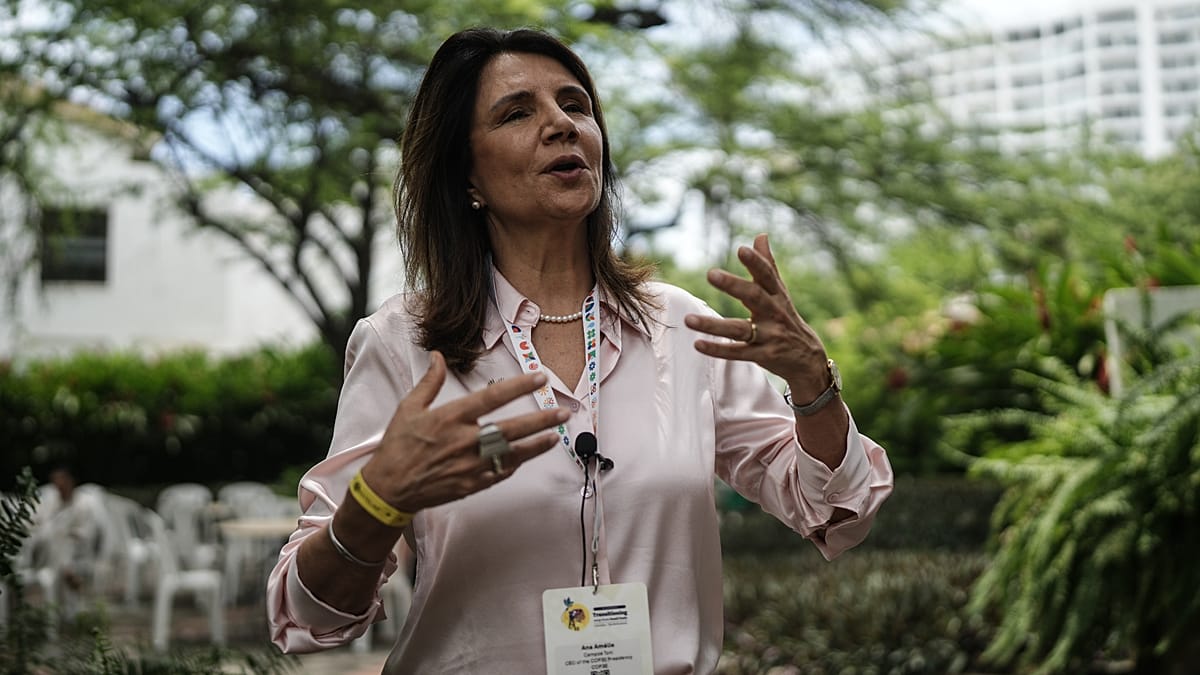
“The transition is inevitable, so start planning now and as soon as possible, because this will be good for your country, for your society, for your economy,” said Ana Toni, CEO of COP30, during a media briefing.
What to expect at COP31
At COP31, which begins on 9 November in Antalya, a new binding agreement on fossil fuels is unlikely. Instead, Türkiye and Australia are championing a voluntary programme aimed at boosting “electrification” to cut emissions. Critics warn that the text fails to specify the energy source, meaning electrification could be used as a guise for fossil fuel expansion rather than being powered by clean renewables.
Brazilian officials stress that their roadmap is a call to action, not a document to be negotiated. “We are not suggesting negotiations,” said André Corrêa do Lago, COP30 president. “Everyone can start to act now,” he added, noting that the knowledge and technology are already available. “The agreements already exist. What's important is to implement them.”
Climate campaigners have welcomed the Brazilian initiative. “The roadmap must not end up as just another report gathering dust on a shelf,” said Fanny Petitbon, a policy analyst at 350.org.
Brazil has also published a separate roadmap on halting deforestation by 2030, reinforcing its commitment to environmental action. The country's leadership on these issues comes as global attention increasingly focuses on the need for a just and equitable energy transition, a theme that resonates strongly across Europe, where nations are grappling with their own energy security and climate goals.
For European readers, the roadmap offers a potential framework for aligning national energy policies with the Paris Agreement goals. While the EU has already committed to climate neutrality by 2050, the Brazilian initiative could provide a template for accelerating the phaseout of fossil fuels in a way that respects national circumstances. As China's clean industry lead reshapes global power dynamics, Europe faces increasing pressure to maintain its competitive edge in clean technologies.
The voluntary nature of the roadmap means its success will depend on political will. Yet, as the document itself argues, the transition is inevitable. The question is not whether it will happen, but how quickly and how fairly. With global travel set to hit record levels, the pressure on emissions is mounting, making the roadmap's call for immediate planning all the more urgent.
As the world's attention shifts to Antalya, the Brazilian roadmap will be discussed on 10 November, but it is not on the negotiating table. Instead, it serves as a reminder that climate action can proceed even when consensus is elusive. For Europe, which has often been a leader in climate diplomacy, the roadmap offers an opportunity to reinforce its commitment to a clean energy future, while also addressing the challenges of energy security that remain a priority for many member states.