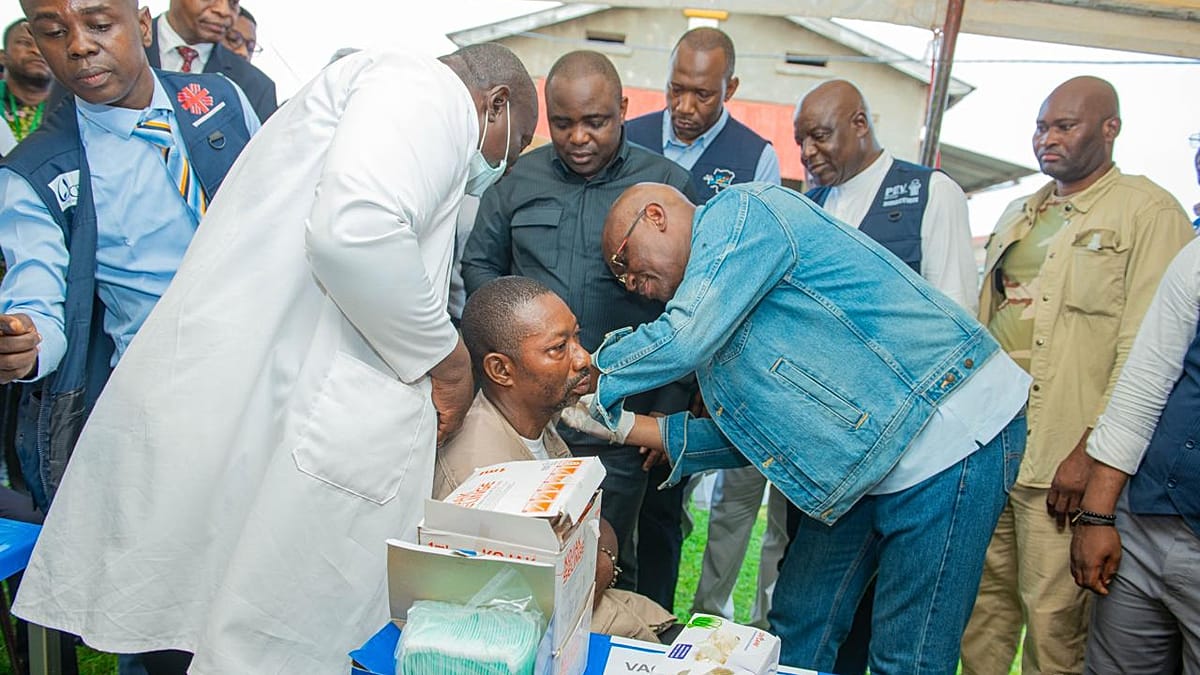
Health authorities in the Democratic Republic of Congo (DRC) launched an Ebola vaccination campaign on Thursday, aiming to curb what is now the fastest-growing outbreak of the disease ever recorded. The first doses are being given to health workers and other frontline responders in Kisangani, the capital of Tshopo province, one of six eastern provinces affected by the epidemic.
“We have decided to use the Ervebo vaccine to protect first those who are on the front line,” said Health Minister Roger Kamba at the launch event. The vaccine, developed by Merck, has been proven effective in previous Ebola outbreaks caused by the Zaire strain, but the current outbreak is driven by the Bundibugyo virus, a less common variant for which no licensed vaccine or treatment exists.
As of Tuesday, the DRC had recorded 5,713 confirmed cases and 2,744 deaths, according to government figures. The epicentre is in Ituri province, and the outbreak has already surpassed the country's 16 previous Ebola epidemics in both scale and lethality. The World Health Organization (WHO) has described the situation as “out of control” and warns it could soon overtake the 2014–2016 West Africa outbreak, which killed more than 11,000 people across Guinea, Liberia, and Sierra Leone.
Vaccination under difficult conditions
The response is being hampered by insecurity, displacement, a strike by health workers, and significant population movements. The WHO has approved 70,000 doses of Ervebo for use in the DRC, of which more than 50,000 have already been delivered. An additional 20,000 doses will be set aside for a clinical trial to assess whether the vaccine offers protection against the Bundibugyo virus.
The vaccine is being administered under a compassionate-use protocol, which permits the use of an unapproved medical product in serious disease situations. Health authorities believe Ervebo may offer some cross-protection because the two Ebola strains are related, but its effectiveness against Bundibugyo remains unproven.
Placide Mbala Kingebeni, director for research, clinical trials, and innovation at Africa CDC, said data collected during the vaccination campaign will help measure the vaccine's real-world performance. The rollout is expected to cover 14 health zones across Tshopo, Bas-Uele, and Haut-Uele provinces.
Minister Kamba strongly encouraged health workers to get vaccinated, noting that the jab could protect them from the disease and prevent them from carrying the virus into their communities. The campaign comes as the Red Cross warns that attacks on health workers are undermining the Ebola response.
Trials for a targeted vaccine
In parallel, efforts are under way to develop a vaccine specifically designed for the Bundibugyo virus. The University of Oxford's Vaccine Group and Moderna have both begun Phase I human trials, which will evaluate safety, tolerability, and immune response. These trials are still in early stages, and a licensed vaccine is likely years away.
The current outbreak is a stark reminder of the fragility of health systems in conflict-affected regions. The DRC has faced repeated Ebola outbreaks, but none have spread so quickly or claimed so many lives. The international community, including European partners, has pledged support, but the challenges remain immense.
As the vaccination campaign gets under way, health officials are racing against time to contain the virus. The use of Ervebo, even with its uncertain efficacy against Bundibugyo, represents the best available tool to protect those most at risk. The coming weeks will be critical in determining whether the outbreak can be brought under control.