Twenty-five years ago, Dubai made a calculated wager: it set aside land, crafted a regulatory framework, and invited the world's media to establish a regional foothold. At the time, it was a bold statement of faith in the power of an open, connected media environment to drive a young economy forward.
Today, the numbers tell the story of that gamble paying off. The media sector's contribution to Dubai's GDP reached 1.42% in 2025, foreign direct investment into the industry hit US$1.62 billion in 2024, and media exports climbed to US$25 million in 2025. The city now hosts 25,000 private media companies, employing 120,000 people—a workforce drawn from one of the most international talent pools in the region. What began as an invitation has matured into a full-fledged industry.
A platform for a changing industry
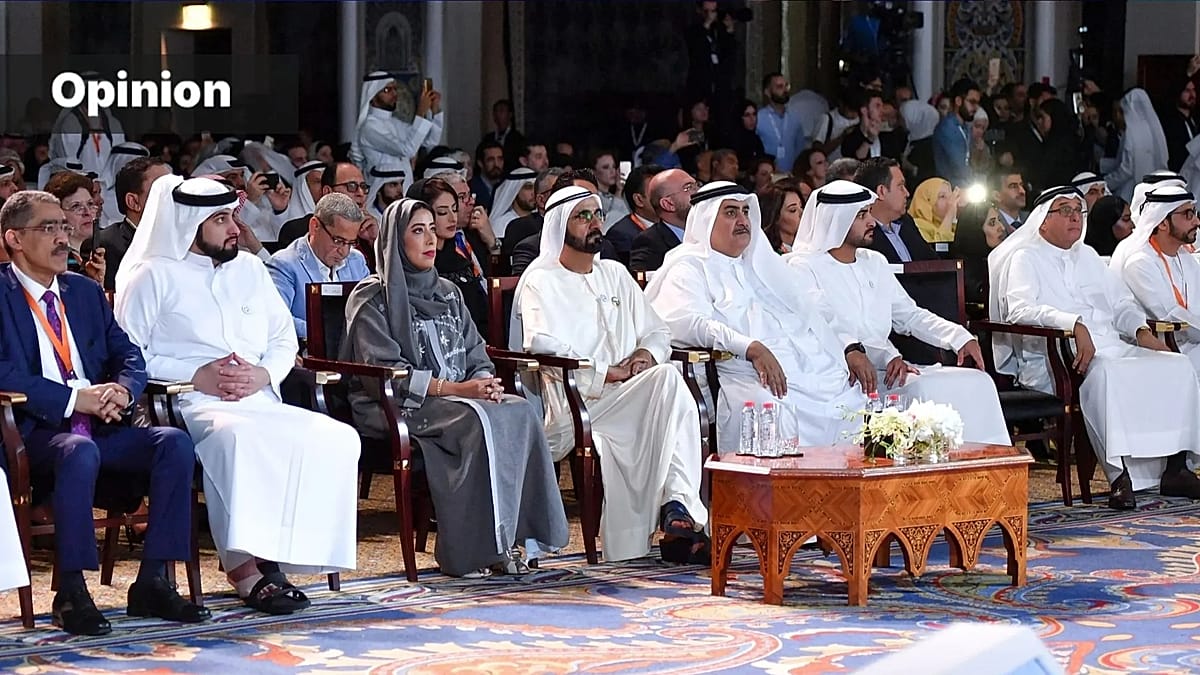
The Arab Media Summit, running from tomorrow until 17 September, is where this ambition becomes a conversation. This year marks its largest edition to date, transforming what was once a single conference into a constellation of specialised forums: an Arab Media Forum, a Government Communication Forum, a youth forum, a Films Forum, a Games Forum, Dubai PodFest, and a summit for social media creators and influencers, alongside international forums with global partners. The Arab Media Award also celebrates its 25th edition.
This breadth is intentional. Media is no longer a monolithic industry. It spans traditional newsrooms and television studios, but also gaming, podcasting, digital platforms, and individual creators whose audiences now rival those of established broadcasters. Facilitating dialogue across these disparate segments is essential.
The shift reflects a deeper change in the global balance of media power. For much of the modern era, influence was concentrated in a handful of long-established capitals. That is rapidly changing. Broadcasters and digital platforms from the Arabian Gulf, Turkey, Central and Southeast Asia, and Africa are now reaching international audiences directly, producing in their own languages, setting their own editorial agendas, and investing heavily in production, digital distribution, and AI-driven newsrooms.
This should not be seen as a contest between media capitals. Rather, it is an expansion of the global conversation. The more societies can tell their own stories and offer their own perspectives, the richer our collective understanding becomes.
European and Arab media: closer than ever
International partnerships are central to this evolution. On 16 September, Dubai will host the Euronews Forum as part of the Summit—the first time it has been held outside Europe. Sessions will explore how regional media organisations build global audiences, how governments and media interact in a transformed information environment, and how verification and artificial intelligence are reshaping newsrooms.
Europe and the Arab world are close neighbours. Economic and cultural ties continue to deepen, and audiences increasingly consume the same stories on the same platforms. Our newsrooms should reflect that reality. Bringing European and Arab media professionals into the same room is not merely about dialogue; it leads to coproductions, new commercial partnerships, shared professional standards, and relationships that endure long after the Summit closes.
Dubai's media bet has paid off. The city is no longer just a base from which international media covers the region; it is increasingly a place where the future of media itself is debated, built, and tested. As the Summit welcomes its regional and global community, it has become more than a gathering hosted by the city—it is a shared platform for an industry that is more diverse, more global, and more interconnected than ever.