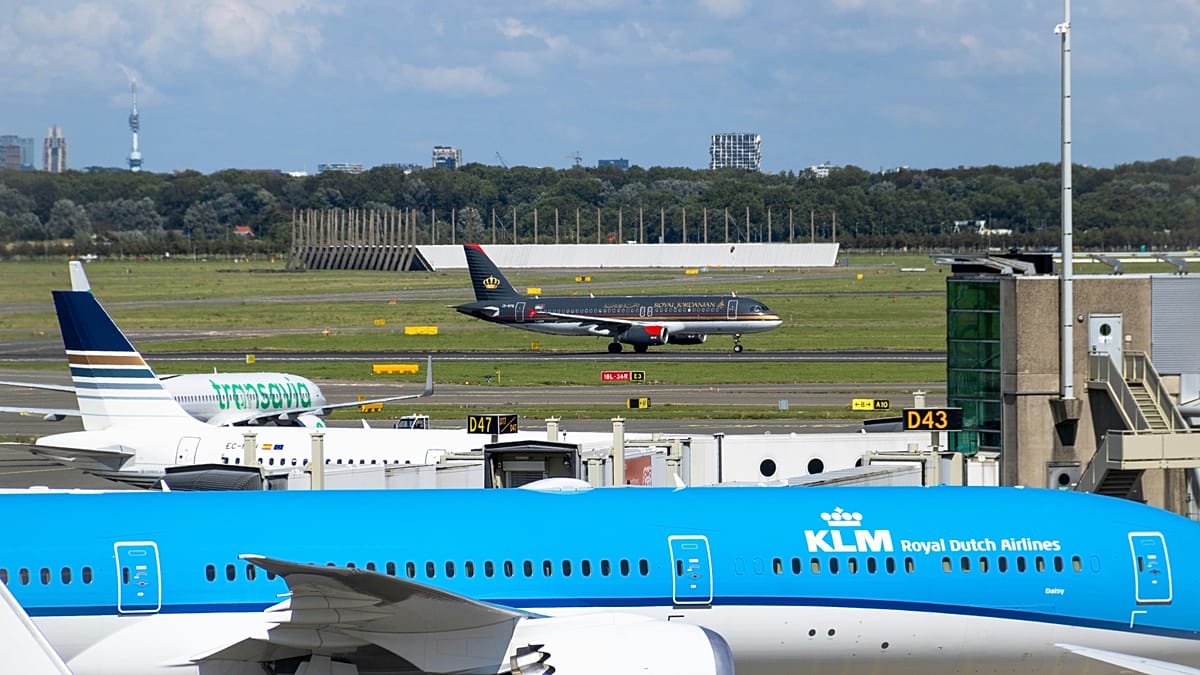
Travel companies and airlines in the Netherlands are pushing back against government plans to introduce what would become the European Union's highest flight taxes. The industry warns that the steep increases could price ordinary families out of holidays and drive passengers to airports in neighbouring countries.
The campaign, named Gelijke Vliegtaks (Equal Air Travel Tax), is led by ANVR, the Dutch Association of Travel Agents and Tour Operators, and backed by major carriers including KLM, Transavia, Corendon, and TUI. They are calling on The Hague to reconsider the tax rises, which are set to take effect in stages and reach their peak by 2027.
Tax hike could reshape Dutch travel patterns
Under current proposals, the Dutch air travel tax for long-haul flights would increase from roughly €30 to €72 per ticket by 2027 — a 140% rise. For a family of four flying from the Netherlands to Turkey, that would mean over €190 in aviation taxes alone. By contrast, the same family departing from Belgium would pay only around €40 for a comparable trip.
“For many people, the annual vacation is an important moment to relax and spend time together,” said ANVR Director Frank Radstake. “By 2027, the Dutch air travel tax for long-haul flights will rise from around €30 to €72 per ticket, a 140% increase. That places a significant financial burden on travellers, especially compared to neighbouring countries.”
Radstake warned that the disparity is not always obvious to consumers but quickly adds up. “Dutch travellers will pay significantly more for comparable flights than travellers departing from airports just across the border,” he said.
KLM President and CEO Marjan Rintel echoed those concerns, arguing that the tax could backfire. “Dutch travellers will either be hit hard financially or choose to depart from airports across the border instead,” she said. That would mean lost revenue for Dutch airports and businesses, while doing little to reduce overall emissions — since flights would still take off from nearby hubs in Belgium or Germany.
The industry argues that aviation taxation should be coordinated at the European level rather than imposed unilaterally. A patchwork of national taxes, they say, distorts the single market and penalises countries like the Netherlands that act alone. The issue is particularly acute for the Netherlands, which has a dense network of airports in neighbouring countries — including Brussels, Düsseldorf, and Weeze — all within a few hours' drive.
The campaign comes as a survey of 1,000 Dutch citizens by Markteffect found that two-thirds of travellers are worried about the affordability of flying from the Netherlands. 71% of respondents said air travel should remain accessible for people on lower incomes.
If the tax rise goes ahead, the Netherlands would have the highest aviation taxes in the EU, potentially reshaping travel patterns across the region. The industry is urging the government to reconsider the scale and speed of the increases, and to engage with European partners on a more coordinated approach.