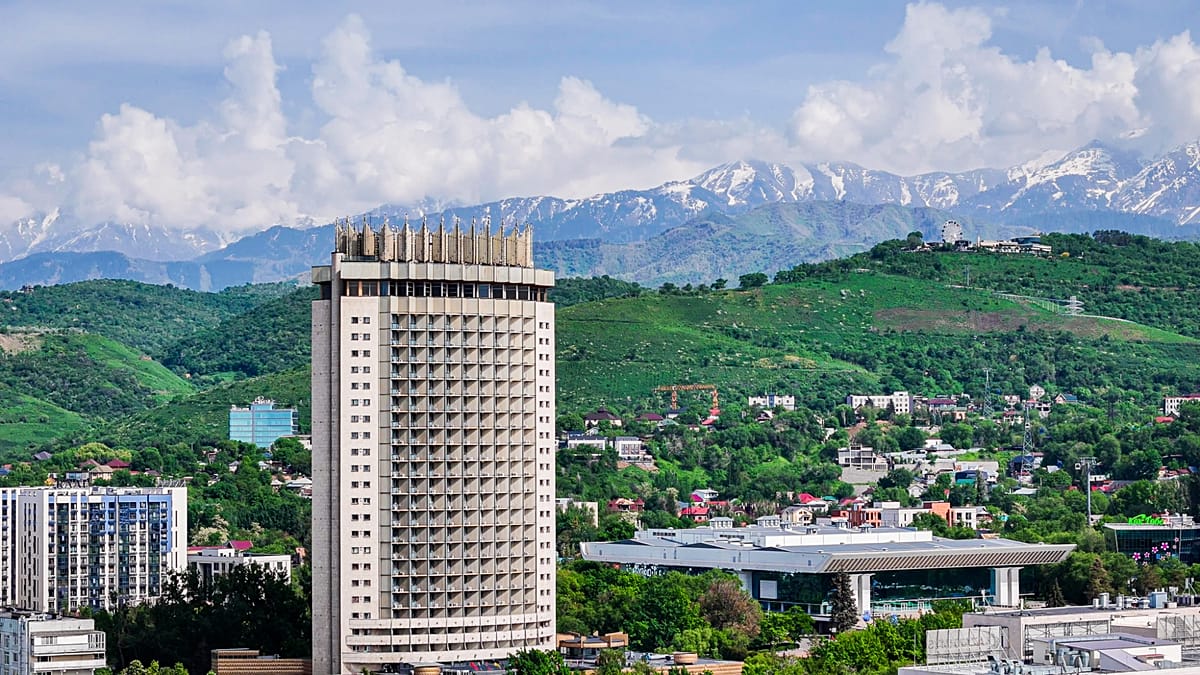
Almaty, Kazakhstan's largest city and former capital, sits at the foot of the Zailiysky Alatau range, part of the Tian Shan mountain system. This geography gives the city a rare combination: within half an hour from the centre, visitors can reach the Medeo valley, home to one of the world's highest ice rinks and panoramic views of the peaks above. The city welcomed nearly 2.5 million visitors in 2025, a 6.3% increase from the previous year, including more than 754,000 international tourists, according to the Almaty Mayor's Office.
Mountains within reach
For locals, the ease of access to nature is a defining feature. The Medeo valley offers not only the ice rink but also the "Health Stairs" — 842 steps that reward climbers with sweeping views of the city and the snow-capped Zailiysky Alatau. Another popular destination is Kok Tobe, or "Green Hill" in Kazakh, which rises 200 metres above the city and is reachable by a six-minute cable car ride. "I really love the mountains," says Julia Wottschal, who left Kazakhstan in 1991 but returns regularly. "We have mountains in Germany too, but they're nothing like the ones here." Kok Tobe also features walking paths, family-friendly rides, cafés, and a monument to The Beatles.
A new cultural landmark
Opened in September 2024, the Almaty Museum of Arts (ALMA) has quickly become a cultural hub. Dedicated to modern and contemporary art, it houses more than 700 works from Kazakhstan and across Central Asia. Highlights include a retrospective by Almagul Menlibayeva titled "I Understand Everything," and "Qonaqtar," a group exhibition exploring nomadic culture. International names such as Anselm Kiefer, Yayoi Kusama, Jaume Plensa, Yinka Shonibare, Alicja Kwade, video art pioneer Bill Viola, and Richard Serra are also represented. Serra's monumental steel installation "Junction" dominates one of the museum's halls. According to Dayana Vafina, exhibition project manager at ALMA, Kusama's immersive works have become audience favourites for their "Instagrammable" quality, while Serra's sculpture has sparked particular interest among male visitors. "I was surprised to learn how popular Richard Serra's installation is among men," Vafina said. "They are really interested in how such a massive structure was installed inside the museum."
Reading the city through architecture
Almaty's architectural identity is a layered story. Within a compact centre, visitors encounter late 19th-century mansions, Soviet-era monumental classicism and constructivism, and modern glass skyscrapers. Local lawyer and amateur photographer Alen Shayakhmetov, who published a photo book on the city's overlooked architectural details after the pandemic, also highlights the growing street art scene. "They definitely make Almaty feel unique and give the city its atmosphere," he says. "I think this could become a separate tourist attraction in itself, because interest in street art definitely exists around the world." Murals include "A Girl with Petroglyphs," inspired by ancient rock carvings, and "Van Gogh" by the REPAS collective, which depicts a Kazakh cosmonaut as a nod to the Baikonur Cosmodrome. Another popular work is "Father of Apples," a pop-art mural referencing the city's name, derived from the Kazakh word for apple.
With tourism numbers rising and international recognition growing, Almaty remains Kazakhstan's leading tourist destination. Its mild climate and proximity to nature sustain an active tourism season for up to eight months a year. For those interested in how cities balance urban growth with cultural identity, the World Urban Forum in Baku recently highlighted similar challenges across Europe and Central Asia. Meanwhile, the Urban Art Biennale in Völklingen shows how industrial heritage can be reimagined through public art, a parallel to Almaty's own street art revival.