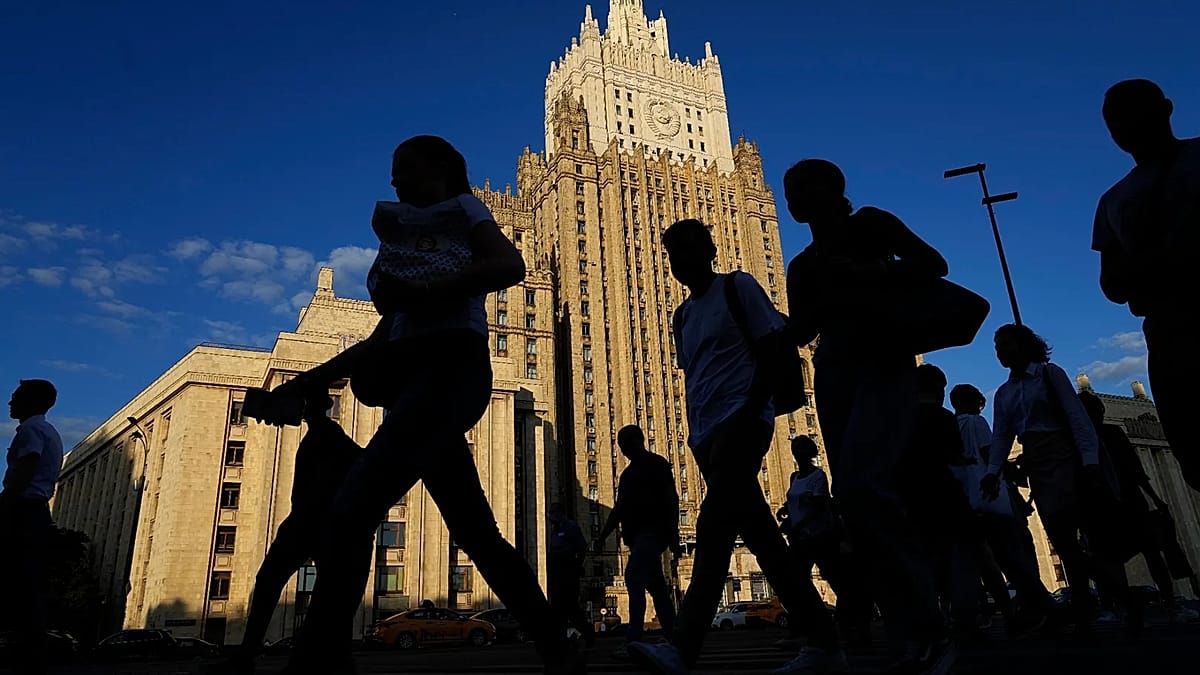
On Thursday, the ambassadors of France, Germany, and the United Kingdom held a rare meeting at the Russian foreign ministry in Moscow with Deputy Foreign Minister Mikhail Galuzin. The talks come days after a summit in London where British Prime Minister Keir Starmer, French President Emmanuel Macron, and German Chancellor Friedrich Merz expressed support for Ukrainian President Volodymyr Zelenskyy's proposal for direct negotiations with Russia to end the war.
France's envoy Nicolas de Rivière described the discussion as constructive, telling reporters outside the ministry: "We just had a good discussion and we will release a statement later today." However, the Russian foreign ministry quickly contradicted that assessment. Spokeswoman Maria Zakharova accused the ambassadors of promoting a "dead-end Zelenskyy formula," claiming that European leaders are "pretending, through their statements, to be calling for peace, but in reality they are putting forward unacceptable conditions." She further alleged that they are "increasing the production of long-range weapons for Kyiv and generally taking steps towards the militarisation of Ukraine and Europe."
Moscow's Rejection of European Mediation
Russia's foreign ministry stated that the envoys were informed of their countries' "destructive" policy on Ukraine, accusing them of wanting to "continue the war against Russia on behalf of and at the expense of" European nations. This meeting follows President Vladimir Putin's earlier rejection of Zelenskyy's offer for a face-to-face meeting to end the fighting. In London, the three European leaders had endorsed Zelenskyy's proposal, suggesting that the current frontline should serve as a "starting point for negotiations."
European ambassadors have rarely held direct talks with Russian authorities since the full-scale invasion began over four years ago. They have often been summoned to the foreign ministry for reprimands rather than substantive dialogue. The meeting on Thursday marks a notable exception, reflecting a broader push by several Western European countries, including France, to restart a diplomatic channel with Moscow. The war in Ukraine remains Europe's deadliest conflict since World War II, and the US-led peace talks have so far yielded no results, especially as they have been overshadowed by the ongoing Iran war.
Moscow has consistently preferred to negotiate with the Trump administration, sidelining European involvement. The Kremlin has made clear it does not want European countries at the table, viewing them as biased actors. This dynamic complicates the E3's efforts, as the three European powers seek to maintain a unified stance while facing Russian intransigence.
The meeting in Moscow underscores the persistent divide between Russia and European capitals. While the E3 envoys attempted to present a united front, Moscow's dismissive response highlights the challenges of any diplomatic breakthrough. The war continues to exact a heavy toll on Ukraine, and European leaders are under pressure to find a path to peace without ceding ground to Russian demands.
As the conflict enters its fifth year, the E3's peace push remains a high-stakes gamble. The outcome of this meeting may influence future diplomatic efforts, but for now, the prospects for a negotiated settlement appear dim.