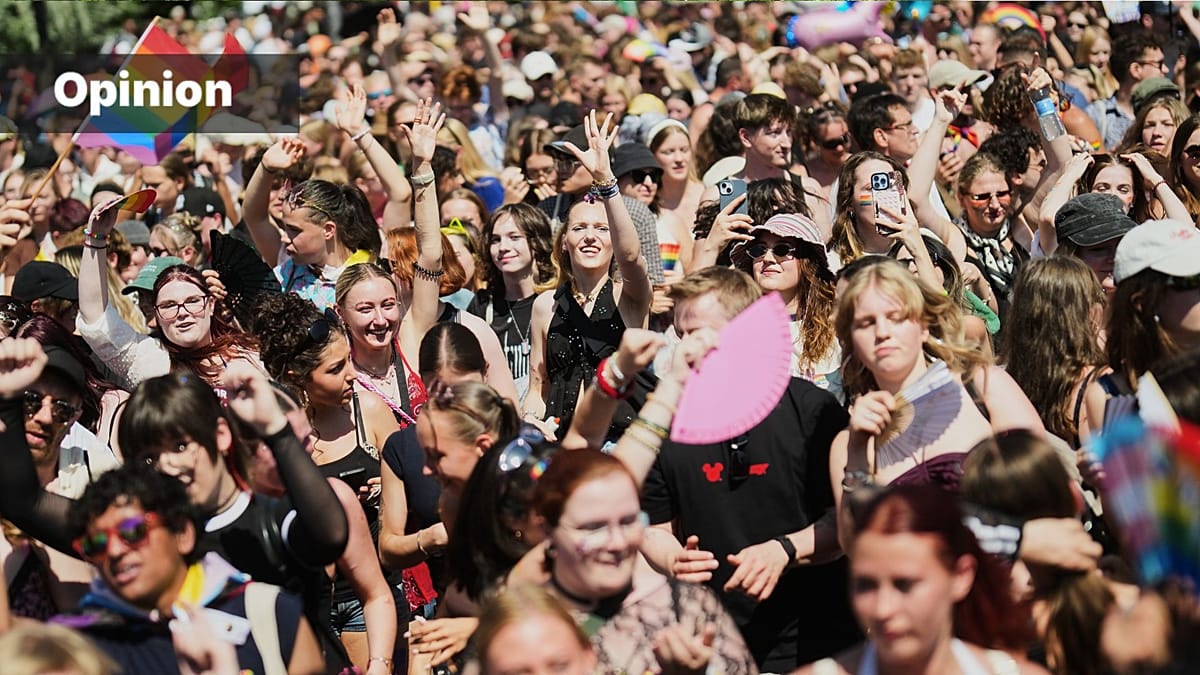
Wolfgang Kubicki, the parliamentary leader of Germany's liberal Free Democratic Party (FDP), has issued a stark warning following the deadly car attack at Berlin's Christopher Street Day parade. Writing for Euronews, Kubicki argues that the assault was not an isolated incident but part of a broader pattern of Islamist violence aimed at eroding the freedoms that define European liberal democracies.
The attack, which killed one person and left several critically injured, occurred on 12 June 2026 — exactly ten years after the Pulse nightclub massacre in Orlando, Florida, where 49 people were murdered in an Islamist attack targeting a gay club. Kubicki draws a direct line between that atrocity, the 2020 knife attack in Dresden that killed a gay man and injured his husband, and the Berlin incident. All three, he contends, were motivated by Islamist ideology and deliberately aimed at LGBTQ+ people.
Kubicki notes that the sense of security among sexual minorities in Germany has deteriorated sharply. According to the Federal Criminal Police Office (BKA), there were 284 violent offences motivated by the victim's sexual orientation in 2025, a figure that has remained persistently high after rising from just 54 such offences in 2015. He reminds readers that Germany's own record on LGBTQ+ rights is far from spotless: gay men were prosecuted under criminal law until relatively recently, and thousands were deported to concentration camps under the Nazi regime. The decriminalisation and eventual equal rights for same-sex couples, he says, were a victory of humanist reason over prejudice.
But today, Kubicki argues, the threat no longer comes from the state. Instead, it comes from Islamism, which he describes as the single greatest danger to a liberal, open society. He points out that the erosion of freedom affects not only LGBTQ+ people but also Jews, whose schools and nurseries require ever tighter security, women who feel unsafe travelling alone at night, and anyone who hesitates before attending a Christmas market or public festival.
Kubicki is sharply critical of what he sees as a refusal among left-wing circles to name the real enemy. He cites the example of this year's Christopher Street Day in Kiel, where the far-left group TurboKlimaKampfGruppe Kiel (TKKG) disrupted the parade with anti-police chants such as "No Cops" and "All Cops Are Bastards." He argues that such groups, along with more moderate left-wing voices, cling to a misguided understanding of tolerance that prevents them from confronting Islamism directly. "There is nothing tolerant about making common cause with those who fundamentally reject and seek to destroy every form of openness," he writes.
The FDP leader insists that the Berlin attack was not aimed solely at a specific group but at all of German society. "They cannot bear the lightness of Western life and therefore want to destroy it," he says, referencing earlier attacks such as the one at the Ansbach music festival, the 2025 attack at the Holocaust memorial, and the assault on the Nazi Documentation Centre in Munich.
Kubicki also warns that Islamism is no longer just an imported threat but is taking root in German neighborhoods, partly because of failures in integration policy and the toleration of parallel societies. He calls for a more decisive use of legal tools to confront these developments, pointing to Denmark as a model for how to address the problem politically.
The article comes amid heightened debate in Germany about security and migration. Chancellor Friedrich Merz has already vowed to defend freedom after the attack, while other commentators have argued that political Islam poses a direct threat to open society. The attack itself, in which a car ploughed into the crowd, left one dead and 16 injured, with the suspect still at large, as reported earlier.
Kubicki's intervention is likely to reignite a fraught debate in Germany about the balance between civil liberties, security, and immigration. His message is blunt: the greatest threat to a liberal way of life is not from the far right or the far left, but from Islamism — and it must be confronted head-on.