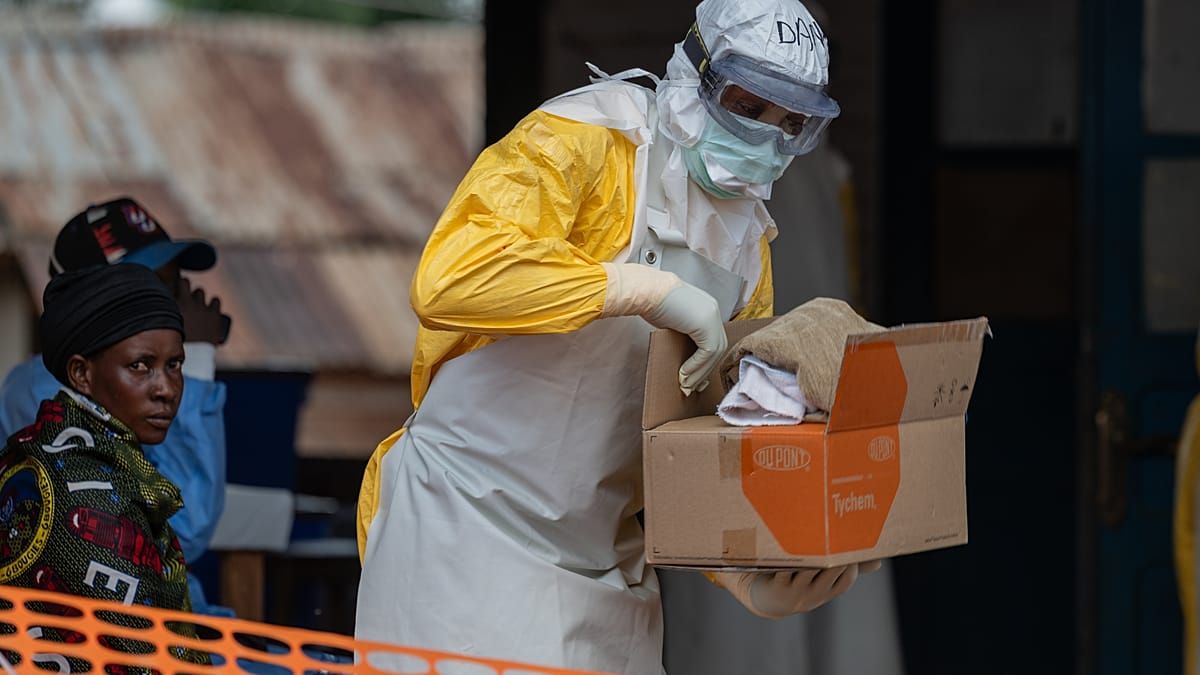
The World Health Organization has reported a sharp escalation in the Ebola outbreak in central Africa, with confirmed cases now exceeding 470 across the Democratic Republic of Congo and Uganda. The surge has prompted warnings that the epidemic could rival the devastating 2014 West Africa outbreak, which claimed over 11,000 lives.
In its latest update, the WHO confirmed 452 cases and 82 deaths in the DRC, where the outbreak was officially declared on 15 May. Neighbouring Uganda has recorded 19 cases and two deaths, bringing the combined total to 471 cases and 84 fatalities. The figures represent an increase of 100 cases and 20 deaths in just 24 hours, underscoring the rapid spread of the virus.
Rare Strain Poses Unique Challenges
The outbreak is linked to the Bundibugyo strain of Ebola, a rare variant first identified in Uganda in 2007. Unlike the more common Zaire strain, there are currently no approved vaccines or treatments for Bundibugyo, complicating containment efforts. Health officials believe the virus had been circulating undetected for some time before the official declaration.
“The outbreak is moving fast, and we are still playing catch-up,” said WHO Director-General Tedros Adhanom Ghebreyesus. “We need to stop the outbreak where it is, support countries that are responding today, and ensure that neighbouring countries are ready to detect and act quickly if cases appear.”
On Friday, the WHO and the Africa Centres for Disease Control and Prevention launched a $518 million (€449.5 million) response plan. The funding is intended to strengthen surveillance, laboratory testing, and infection prevention measures across the affected region.
Jason Asher, director of the US Centers for Disease Control and Prevention’s Center for Forecasting and Outbreak Analytics, warned that the outbreak could reach the scale of the 2014 epidemic. “That scale is possible,” he said, referring to the potential for widespread transmission.
The crisis has already been declared a Public Health Emergency of International Concern by the WHO, triggering a coordinated international response. European health authorities are monitoring the situation closely, given the continent’s historical involvement in Ebola response efforts and the risk of imported cases through travel links.
The DRC has faced multiple Ebola outbreaks in recent years, including a major epidemic in North Kivu province that ended in 2020. However, the current outbreak is concentrated in the northeastern region near the border with Uganda, a densely populated area with significant cross-border movement.
For European readers, the outbreak highlights the ongoing need for robust global health surveillance and rapid response mechanisms. The EU has previously contributed funds and expertise to Ebola containment, and the current crisis may prompt renewed discussions about pandemic preparedness in Brussels and national capitals.
As health workers race to contain the virus, the lack of a specific vaccine for the Bundibugyo strain remains a critical gap. Researchers are exploring potential treatments, but none have yet been approved for emergency use. The WHO has called for accelerated clinical trials and international cooperation to address the shortfall.