Kenyan health authorities have confirmed an eighth case of Ebola in the country, as the outbreak in the Democratic Republic of the Congo (DRC) continues to expand geographically. The latest patient, a 49-year-old man, had been in quarantine since 9 October after caring for the country's first Ebola patient.
Patrick Amoth, chief of Kenya's Health Ministry, said on Sunday that the man tested positive after showing symptoms including fever, headaches, and muscle pain. "Today we tested 38 persons; one turned positive," Amoth told reporters, adding that the patient had been isolated since his exposure.
Kenya reported its first-ever Ebola death on 5 October, when a man who had been living in the DRC died shortly after returning to Nairobi. The other seven confirmed cases are relatives of that initial patient or health workers who treated him; Amoth said they are in stable condition. The ministry is monitoring 128 contacts of the first patient, all of whom remain in quarantine.
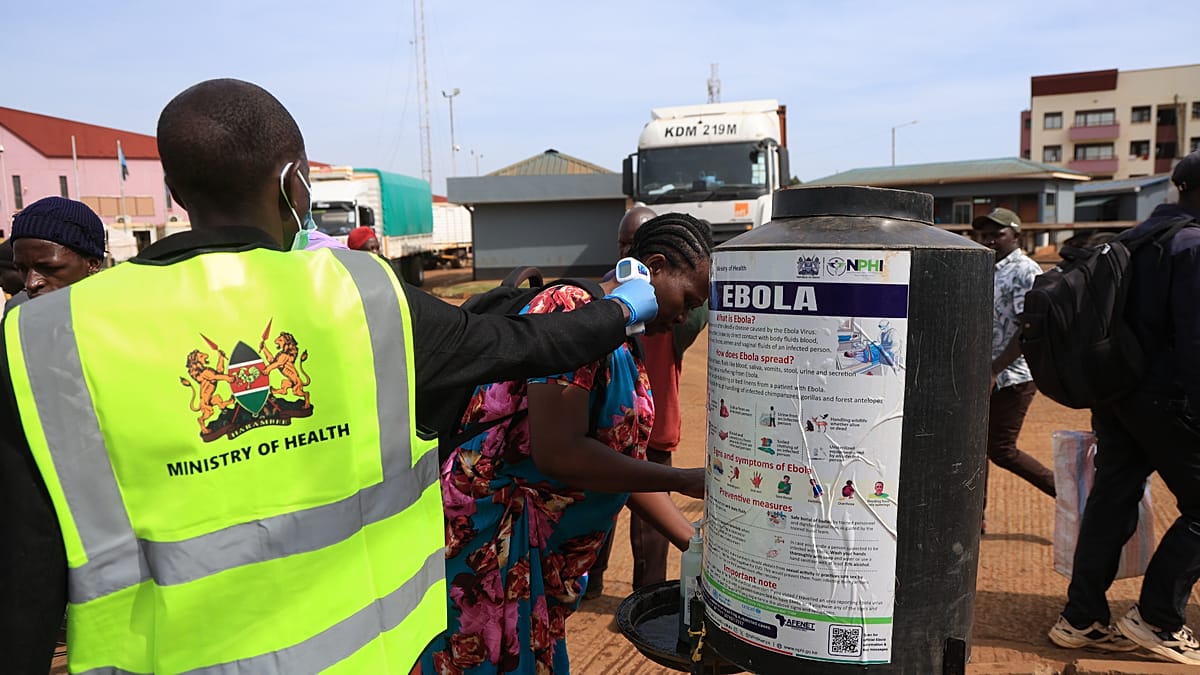
Despite the rising case count, Kenya has kept its borders open, with no restrictions on travel, trade, or public gatherings, in line with World Health Organization (WHO) guidance. However, the government is intensifying surveillance and community awareness efforts. Neighbouring Tanzania has tightened border screening, requiring health declarations and 21-day monitoring for travellers arriving from high-risk areas.
DRC outbreak reaches eighth province
Meanwhile, the Ebola outbreak in the DRC has now reached an eighth province. Over the past weekend, two new cases—including one death—were reported in Nord-Ubangi, a province that borders the Central African Republic and had previously been unaffected. Nord-Ubangi sits between Sud-Ubangi and Bas-Uele, the two most recently affected provinces, where recurring armed violence has displaced thousands and complicated containment efforts.
Authorities have recorded 9,455 cases and 4,561 deaths in what has become the fastest-growing Ebola outbreak in history. The spread into new areas underscores the challenges of controlling the virus in a region marked by insecurity and population movement.
"We see pockets of Ebola generally going down, but unfortunately geographically it's spreading out," said Mohamed Yakub Janabi, WHO Regional Director for Africa, in an interview with The Associated Press. Janabi noted that one of the biggest obstacles is persuading infected individuals to seek medical care, as some deaths occur in communities outside health centres.
The outbreak's persistence has drawn international attention, including from Europe. Germany has been training East African medics to bolster local response capacity, and European researchers are exploring how artificial intelligence can improve Ebola response and address broader healthcare challenges. These efforts reflect a growing recognition that the virus knows no borders, and that supporting affected regions is in Europe's own interest.
For Kenya, the new case is a reminder of the country's vulnerability as a regional transport hub. The government has urged citizens to remain vigilant and to report any suspected symptoms, while health workers continue to follow up with contacts of confirmed patients.
The situation in the DRC remains fluid, with health officials warning that the outbreak could persist for months. The WHO has called for sustained funding and cross-border cooperation to prevent further spread, particularly to neighbouring countries like South Sudan, Uganda, and Rwanda.
As the outbreak evolves, European health agencies are monitoring the situation closely, though no cases have been reported on the continent. The focus remains on containing the virus at its source and supporting local health systems that are often overwhelmed by the dual burden of Ebola and other endemic diseases.