In an unusual border incident, a 68-year-old Russian man swam down the Nemunas River from Russia's Kaliningrad exclave into neighbouring Lithuania on Thursday afternoon, hoping to be granted asylum. Instead, he was met by Lithuanian border guards on the riverbank, given dry clothing, and ultimately sent back to Russia.
The man told Lithuanian authorities he was fleeing persecution linked to his social media activity, according to the Lithuanian news portal Lrytas. However, after reviewing his account, border officials found inconsistencies and decided against allowing him entry.
Giedrius Mišutis, a spokesperson for Lithuania's State Border Guard Service, told Lrytas that the decision to return him was based on the "inconsistent" information he provided and "information concerning the threat posed by this person if he were to enter the EU." The service's press office confirmed to Euronews that he was given dry clothes after his swim, but declined to provide further details about the distance or duration of his river crossing.
An unusual route, but a monitored one
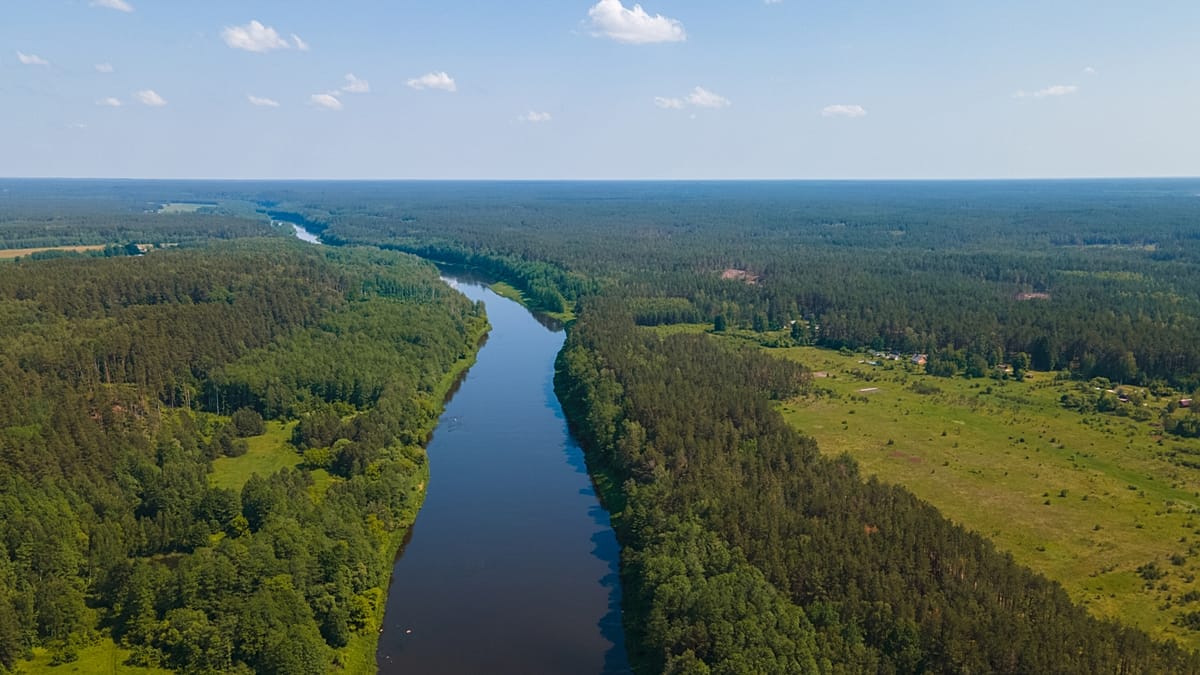
Attempts to enter Lithuania from Russia by swimming across the Nemunas are rare, but not unheard of. Lithuanian border guards continuously monitor this stretch of river using technical surveillance equipment, which allowed them to detect and respond to the man's arrival almost immediately.
The incident underscores the heightened security pressure along the EU's eastern frontier. Lithuania shares borders with Belarus, a close Russian ally, and with the heavily militarised Kaliningrad exclave, which sits between Lithuania and Poland. The region has seen repeated drone incursions; on Monday, a NATO fighter jet shot down a drone that had entered Lithuanian airspace from Belarus.
Since 2021, Vilnius has also faced what the EU has called the weaponisation of migration by Belarus and Russia, with thousands of migrants being directed towards the bloc's eastern borders. In response, Lithuania has reinforced surveillance, border infrastructure, and staffing along its frontier.
The broader context of Russian hybrid threats is increasingly on the agenda across Europe. French President Emmanuel Macron has recently called for a G7 energy summit to counter such threats, while Polish Prime Minister Donald Tusk has warned of Russian drone strikes on Poland and NATO allies. These incidents highlight the persistent pressure on the EU's eastern flank.
For the 68-year-old man, the outcome was a swift return to Russian territory. Lithuanian authorities did not specify whether he faced any charges or further consequences upon his return.