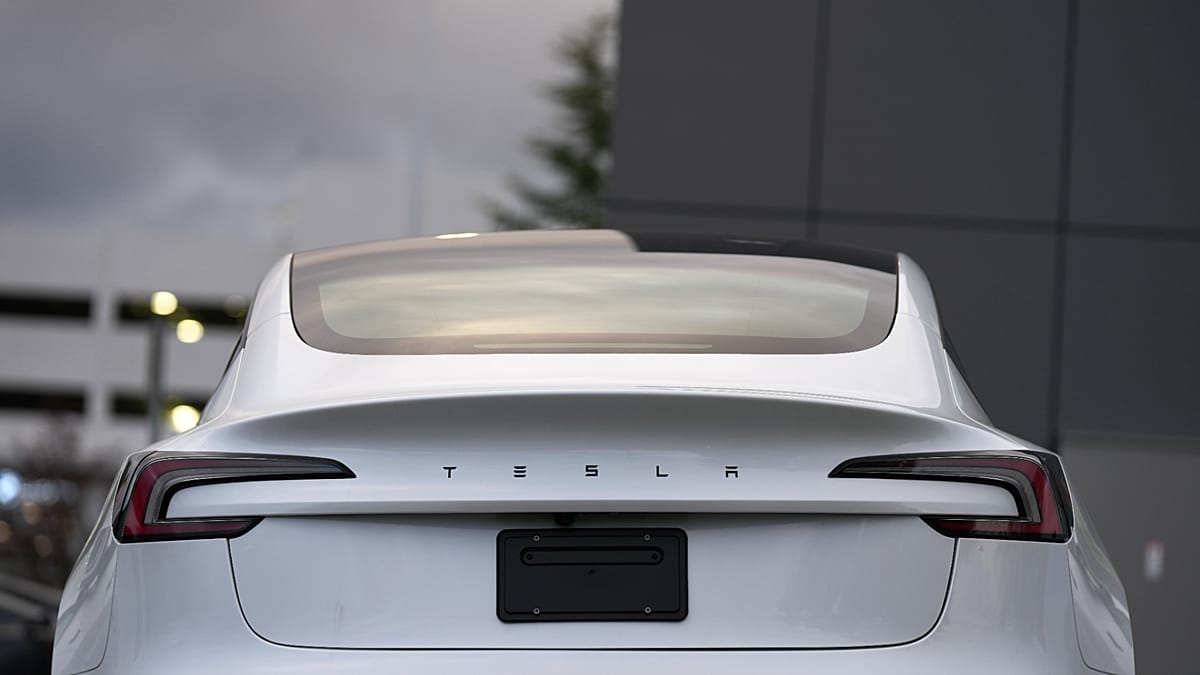
Elon Musk has once again made a bold prediction about the future of driving. Speaking at the Samson International Smart Mobility Summit in Tel Aviv, the Tesla CEO declared that within five to ten years, “probably 90% of all distance driven will be driven by the AI in a self-driving car.” He added that manually driving a car would become “quite a niche thing.”
While autonomous vehicle technology has advanced significantly since the acceleration of AI in 2022, Musk’s timeline remains highly optimistic. The path to widespread adoption is littered with technical, regulatory, and safety obstacles that make a fully driverless world unlikely before the mid-2030s—and even then, it will be concentrated in specific markets and use cases.
Technical Hurdles and ‘Long Tail’ Scenarios
One of the biggest challenges is handling unexpected situations—what Nvidia’s vice president of automotive, Ali Kani, calls “long tail scenarios.” These are rare but critical events that autonomous systems have not encountered before. For instance, last year a power outage in San Francisco caused Waymo robotaxis to malfunction at darkened traffic lights, leaving vehicles stranded for hours.
Even Tesla itself has faced setbacks. The company recalled over 200,000 vehicles in the United States due to issues with rearview camera images that could increase crash risk, according to the National Highway Traffic Safety Administration (NHTSA). Waymo also recalled around 3,800 robotaxis after discovering that its cars could enter flooded roads at high speeds.
These incidents underscore the difficulty of achieving Level 5 autonomy—fully driverless under all conditions—which the International Energy Agency says is “not currently in sight.”
Regulatory Fragmentation in Europe
In Europe, the rollout of autonomous driving is proceeding cautiously. Level 2 systems—where the driver remains responsible but the vehicle can steer, brake, and accelerate—are universally permitted. Level 3, which allows conditional automation under controlled conditions, has been approved in some member states. However, full regulatory clearance for higher levels depends on real-world performance and varies widely across the continent.
While some US states and China are racing ahead with robotaxis—Level 4 is already operational in several Chinese cities—Europe’s approach is more fragmented. The European Union is working on harmonised rules, but progress is slow. Trials are underway in cities like London, but the timeline for commercial deployment remains uncertain.
This cautious stance reflects a broader European emphasis on safety and public acceptance. As the Stockholm café run by AI manager Mona shows, Europeans are willing to experiment with automation, but they demand rigorous testing before widespread adoption.
Market Realities: Robotaxis and Niche Adoption
A 2025 report by the World Economic Forum projects that fully autonomous personal vehicles will remain a niche feature, appearing in only 4% of new cars by 2035. The closest thing to mainstream autonomy will be robotaxis and autonomous trucks, with the global robotaxi fleet expected to grow to between 700,000 and 3 million vehicles by 2035, concentrated in 40–80 cities.
China is expected to lead in adoption, driven by consumer appetite and strong domestic manufacturers. Europe, by contrast, is likely to see a slower, more regulated rollout. The continent’s diverse regulatory landscape and varying infrastructure readiness mean that autonomous vehicles will first appear in select urban areas, such as Munich, Paris, or Stockholm, before expanding.
Even then, the technology will face competition from other mobility solutions. Europe’s investment in public transport and cycling infrastructure, as well as the rise of battery storage and electric vehicle charging networks, may reduce the urgency for full autonomy.
Conclusion: A Decade of Incremental Progress
Musk’s vision of a world where 90% of driving is autonomous within a decade is not supported by current evidence. While partial automation is already improving safety and convenience, full autonomy faces technical, regulatory, and economic barriers that will take years to overcome. European policymakers and industry leaders are taking a measured approach, prioritising safety and public trust over speed.
For now, drivers in Europe should expect gradual improvements in driver-assistance features rather than a sudden shift to driverless cars. The road to autonomy is long, and it will be paved with incremental steps—not Musk’s dramatic leaps.