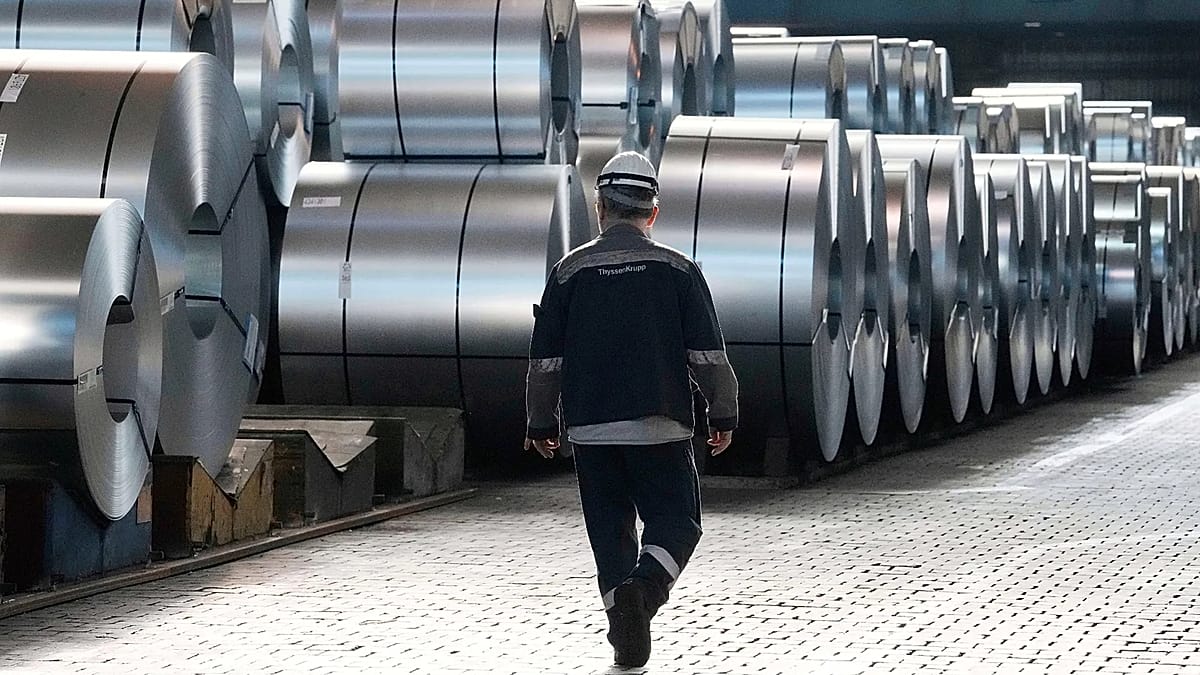
On Tuesday, the European Commission finalized a system of import quotas for steel, aiming to shield the bloc's market from a flood of foreign production. The measure, which takes effect on 1 July, sets a tariff-free ceiling of 18.3 million tonnes per year, with any imports beyond that level facing a 50 percent duty.
The decision comes as global steel overcapacity is projected to reach 721 million tonnes by 2027, according to the OECD—a volume that threatens jobs across the EU's steel sector. Much of the surplus originates in China, where state-backed mills continue to produce far more than domestic demand can absorb.
Preferential Access for Key Partners
Under the new rules, half of the annual quota—roughly 9.15 million tonnes—will be reserved for countries that have signed free trade agreements with the EU. These include the United Kingdom, Switzerland, India, and Ukraine, among others. Each will receive a country-specific allocation based on the average volume they exported to the EU between 2022 and 2024.
The move follows intense lobbying by the EU's closest allies, who feared that a blanket quota system would severely disrupt their own steel exports. The UK, Switzerland, and Ukraine had pressed the Commission for preferential treatment, arguing that their industries are deeply integrated with the European market.
“We are providing market participants with predictability through clear and transparent quota distribution rules, while applying a fair and objective methodology,” said EU Trade Commissioner Maroš Šefčovič in a statement.
Protectionist Pressures and US Tariffs
The EU's safeguard measures are partly a response to the United States' decision last year to impose 50 percent tariffs on steel imports. That move effectively diverted global surplus toward Europe, as producers sought alternative buyers.
“They built a wall around their market, steel was hitting that wall and was coming back to our market in greater numbers,” a senior EU official explained. “That is why we introduced a safeguard measure which followed an investigation.”
The EU already maintains more than 80 trade defense measures, most of them anti-dumping duties targeting cheap Chinese steel. The new quotas add another layer of protection, though the Commission insists they are designed to be predictable and non-discriminatory.
Brussels is also grappling with broader trade tensions. The bloc's reliance on imported animal feed, for instance, has been highlighted as a vulnerability in the context of global food security—a challenge that parallels the steel overcapacity issue in its exposure to external market shocks.
Impact on European Industry and Jobs
The steel sector employs roughly 300,000 people directly across the EU, with many more in downstream industries. The Commission estimates that without the quotas, the influx of cheap imports could undercut European producers, leading to plant closures and job losses.
Environmental considerations also play a role: European steelmakers are under pressure to decarbonize, and a surge of low-cost, high-emission steel from abroad would undermine those efforts. The quotas give domestic producers breathing room to invest in greener technologies.
Yet the system is not without critics. Some exporting nations argue that the quotas are protectionist and could trigger retaliatory measures. The EU, however, maintains that its approach is compliant with World Trade Organization rules, as it is based on historical trade flows and offers equal treatment to all partners with comparable agreements.
As the 1 July deadline approaches, steel companies across the continent are adjusting their supply chains. The new quota regime will be reviewed annually, with adjustments possible if market conditions change.