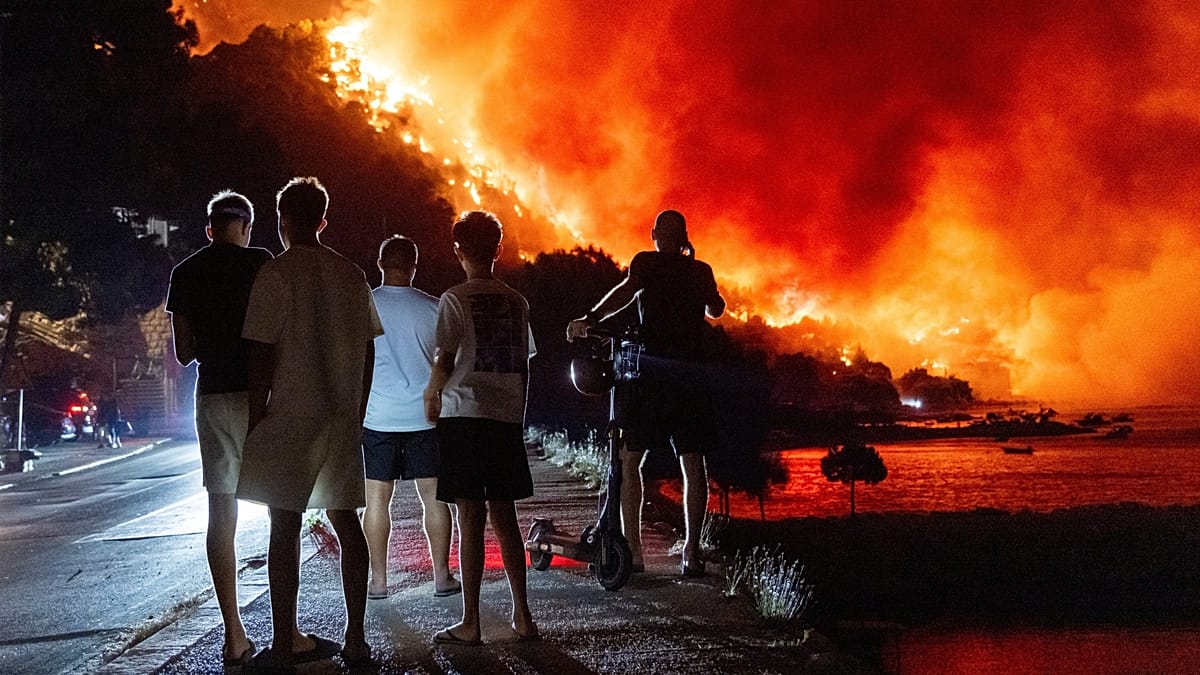
A wildfire raging along Croatia's Adriatic coast has left at least ten people in intensive care and dozens more injured, as firefighters struggled through the night against what officials described as one of the most severe blazes the country has ever faced. The fire, which broke out near the town of Omiš, forced the evacuation of around 2,000 people from nearby villages and caused extensive damage to homes, vehicles, and infrastructure.
By mid-morning, as authorities reopened access to the area, the scale of the destruction became visible. Reuters reporters saw the charred remains of several cars along roads leading into Omiš, some reduced to twisted metal by the intense heat. Several buildings were damaged, and some structures were completely destroyed.
Prime Minister Andrej Plenković visited the affected region on Friday, warning of the fire's ferocity and commending the efforts of emergency crews. "This fire spread at lightning speed," he told reporters. "What the firefighters managed to save is truly a miracle." He noted that the area is densely populated, with a permanent population of about 15,000, now swollen by an estimated 12,000 tourists during the peak summer season.
Hospital officials in Split, about 30 kilometres north of Omiš, said 40 people had been admitted for treatment, including a German and a Polish tourist. The injuries ranged from smoke inhalation to burns, with ten patients requiring intensive care.
Firefighters overwhelmed
Nearly 300 firefighters were deployed overnight, but the blaze often outpaced their efforts. Slavko Tucaković, Croatia's fire chief, described the fire as "one of the worst in Croatia's history." Speaking to national radio, he said, "It was frightening even to watch. Many houses, cafes, restaurants, cars, and boats that were on dry land were damaged."
Local media broadcast dramatic images of crews confronting walls of flames as they tried to protect homes and businesses. The Red Cross set up shelters in Omiš and nearby coastal towns, including Split and Makarska, to accommodate the displaced. Ana Stejskal, the Red Cross director in Omiš, told national broadcaster HRT that hundreds of tourists were among those evacuated. "People have a bed, a shower, a toilet and food, but it's difficult to predict how long this situation will last," said Tomislav Gojo, director of the Red Cross in Split.
By dawn, four Canadair water bombers were deployed, and authorities reported that the situation in Omiš had calmed. However, the aircraft were quickly redirected to a new blaze on the Pelješac Peninsula, about 70 kilometres to the south, where homes were under threat.
The wildfire is part of a broader pattern of extreme fire activity across the Balkans this summer. A prolonged heatwave has brought record-breaking temperatures and worsened drought conditions, creating tinderbox conditions. Emergency crews in Montenegro have been battling fires along its coast for several days, and fires were reported near Albania's capital, Tirana, on Thursday.
In Croatia, the heatwave has already shattered temperature records. Earlier this week, Split recorded 39.7°C, one of the highest temperatures ever measured in the city. The 2026 wildfire season is shaping up to be among the worst on record for Europe, with blazes also forcing evacuations in Greece and straining firefighting resources across the continent.
As the climate continues to warm, European countries are increasingly looking for innovative ways to combat wildfires. Some Swiss ski resorts, for example, are repurposing snowmaking pipes to fight fires, a sign of the growing need for adaptive measures. Meanwhile, the immediate focus in Croatia remains on containing the flames and caring for the injured.
Authorities have not yet determined the cause of the Omiš fire, but they have warned that dry conditions and strong winds could fuel further outbreaks. The Croatian Fire and Rescue Service said it was monitoring several other hotspots along the coast.
For the thousands of tourists who fled the area, the disruption is a stark reminder of the growing risks posed by extreme weather. Many have been left with little more than the clothes on their backs, relying on emergency shelters and the generosity of local communities.
As the firefighting aircraft moved south to Pelješac, residents in Omiš began to assess the damage. The full extent of the destruction is still being evaluated, but the emotional toll is already evident. "We have lost everything," one resident told local media, standing in front of the ruins of his family home.
The Croatian government has promised support for those affected, but the immediate priority remains the safety of residents and visitors. With temperatures expected to remain high over the coming days, the risk of new fires persists.