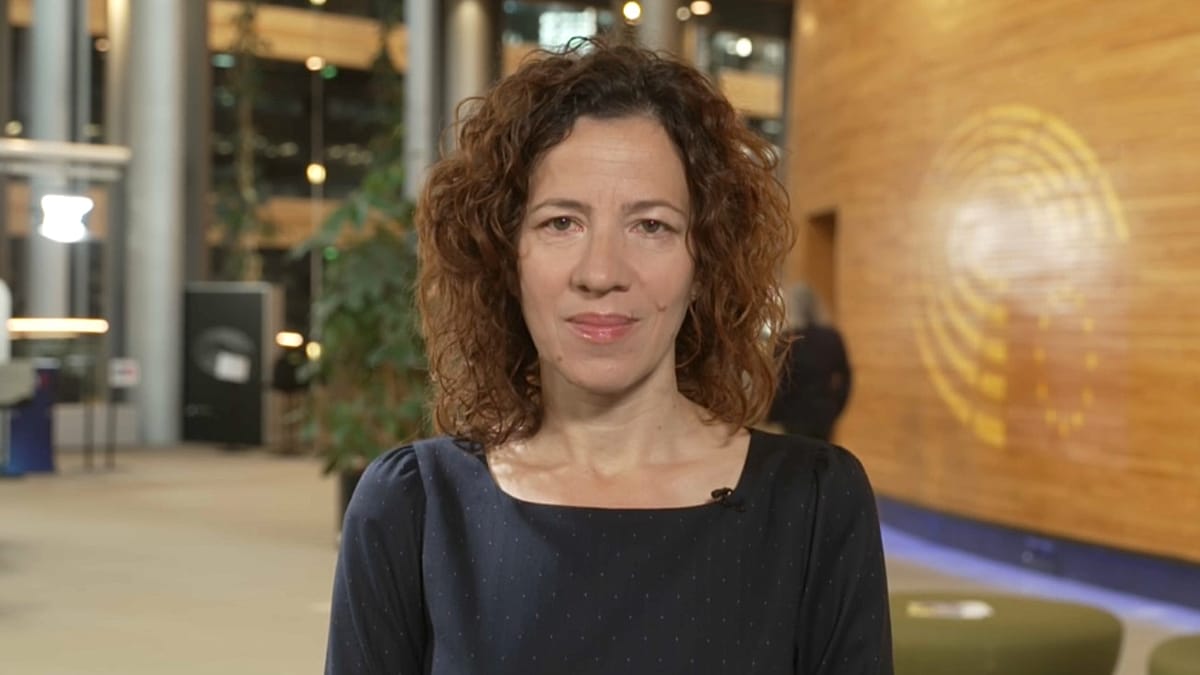
European Commission Vice-President Roxana Mînzatu has voiced unwavering confidence in Romania's pro-European trajectory, even as her own Social Democratic Party (PSD) joins forces with the far-right Alliance for the Union of Romanians (AUR) in an attempt to unseat the centrist government in Bucharest.
In an interview with Euronews, Mînzatu stated she is “absolutely counting on the pro-European stance of every member state,” a remark that comes amid broader concerns about eurosceptic currents in Eastern Europe. In neighbouring Bulgaria, Moscow-friendly President Rumen Radev is forming a government after his party's electoral victory earlier this month.
“The country I know best is one where people are very attached to the European project,” Mînzatu said, referring to Romania. “So I’m counting on that to remain the main driver of democracy, as it has always been.” She added that elections are “part of this process” and “part of the game,” underscoring that democracy is the EU's strongest asset.
Unusual Political Alliance in Bucharest
The PSD, a traditionally left-leaning party, has historically criticised cooperation between mainstream parties and eurosceptic fringe groups. Yet it has now allied with AUR, led by George Simion, to file a no-confidence motion against Prime Minister Ilie Bolojan's centrist coalition. The motion has garnered the necessary parliamentary support and is expected to be voted on next week.
This partnership has drawn sharp rebukes from EU figures. Romanian MEP Siegfried Mureșan, Vice-President of the European Parliament, argued that the alliance “confirms what many already know: the Romanian Socialists’ pro-European label is declarative, not real.”
Mînzatu, however, countered that strong public backing for the EU in countries like Romania and Bulgaria ensures governments remain “driven by the pro-European position of their own peoples.” She emphasised that the PSD's actions do not reflect a shift in the country's broader European orientation.
This political manoeuvring occurs against a backdrop of heightened security concerns in the region. Drone debris has previously hit a Romanian town as Russian strikes on Ukraine escalate, underscoring the geopolitical stakes for Bucharest.
EU Anti-Poverty Strategy on the Horizon
Beyond domestic politics, Mînzatu is set to unveil the European Union's first comprehensive anti-poverty strategy next week. The initiative targets the 93 million Europeans currently at risk of poverty or social exclusion, many of whom are “living from salary to salary” and experiencing in-work poverty.
“It’s important that we present the right tools to support people throughout their lives,” Mînzatu said, noting that the strategy will prioritise prevention. Key measures include a reinforced child guarantee to ensure children are not disadvantaged by their families' vulnerabilities, alongside improvements in education, healthcare, and support services.
Funding for the plan will draw on private investment, contributions from member states, and existing EU instruments such as the European Social Fund. The strategy aims to address structural inequalities that have been exacerbated by inflation and the cost-of-living crisis across the continent.
Mînzatu's dual focus—defending Romania's EU credentials while advancing a major social policy—reflects the complex role of European commissioners, who must balance national political realities with Brussels-wide responsibilities. As the no-confidence vote approaches, all eyes will be on Bucharest to see whether the PSD-AUR alliance can succeed—and what that would mean for Romania's place in the Union.