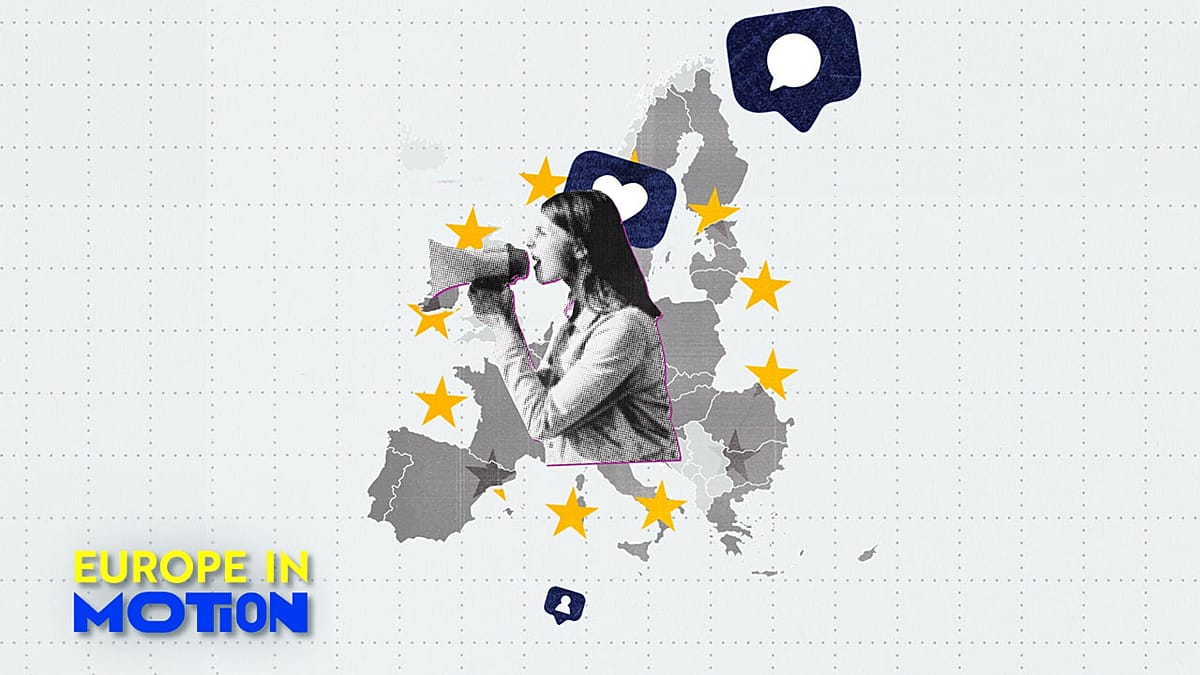
Online platforms are reshaping how Europe's younger generation engages with politics and civic life. According to fresh data from Eurostat, nearly one in four Europeans aged 16 to 29—roughly 24%—reported participating in online civic or political activities in 2025. This includes expressing opinions on political issues, joining online consultations, or casting votes digitally. By contrast, just over one-fifth of the general population did the same.
The figures underscore a generational shift: young people are not abandoning politics but redefining their involvement through digital channels. Carlotta Magoga, research and programmes officer at the European Partnership for Democracy (EPD), told European Pulse: "Rather than retreating from politics, young people are reimagining how democracy can function from the ground up." The EPD notes that traditional offline spaces—such as youth councils, forums, and summits—often feel like "pre-determined spaces that rarely allow for equal influence." Online environments, in contrast, offer flexibility and a platform for all voices.
Country-by-Country Breakdown
The data reveals stark national differences. Slovenia leads the EU with 49.4% of young people engaging online, followed by Latvia at 33.3% and the Netherlands at 31.3%. At the other end of the spectrum, Belgium recorded the lowest share at 12.3%, with Czechia at 14.3%, and Sweden and Greece both at 16.1%.
In 23 of the 27 EU member states, youth participation exceeded that of the general population. The largest gaps appeared in Slovenia (49.4% vs. 35.6% overall), Latvia (33.3% vs. 24.2%), and Italy (30.9% vs. 24.5%). Only in Finland and Cyprus did older generations outpace the young, while Luxembourg, Ireland, Croatia, and Malta saw equal engagement across age groups.
These patterns reflect broader trends in digital literacy and trust in online institutions. For instance, Estonia and Latvia have invested heavily in e-governance, which may explain higher youth participation in the Baltics. Meanwhile, Belgium's low figure could relate to its complex federal structure and fragmented media landscape.
The findings also resonate with ongoing debates about Europe's search for alternative social media platforms, as young users increasingly seek spaces beyond dominant US-based networks. The EU's recent age-verification system to protect children online may further shape how young Europeans engage safely in digital civic life.
As Europe grapples with geopolitical shifts and economic volatility, the online activism of its youth could prove pivotal. Whether through climate protests, digital petitions, or local e-consultations, young Europeans are carving out new democratic pathways—one click at a time.