Two months after the EU's Migration and Asylum Pact came into force, interior ministers have agreed to intensify enforcement. At a meeting of the Justice and Home Affairs Council on 1 October, they endorsed a package designed to speed up the return of migrants without the right to stay and to reinforce the bloc's external borders.
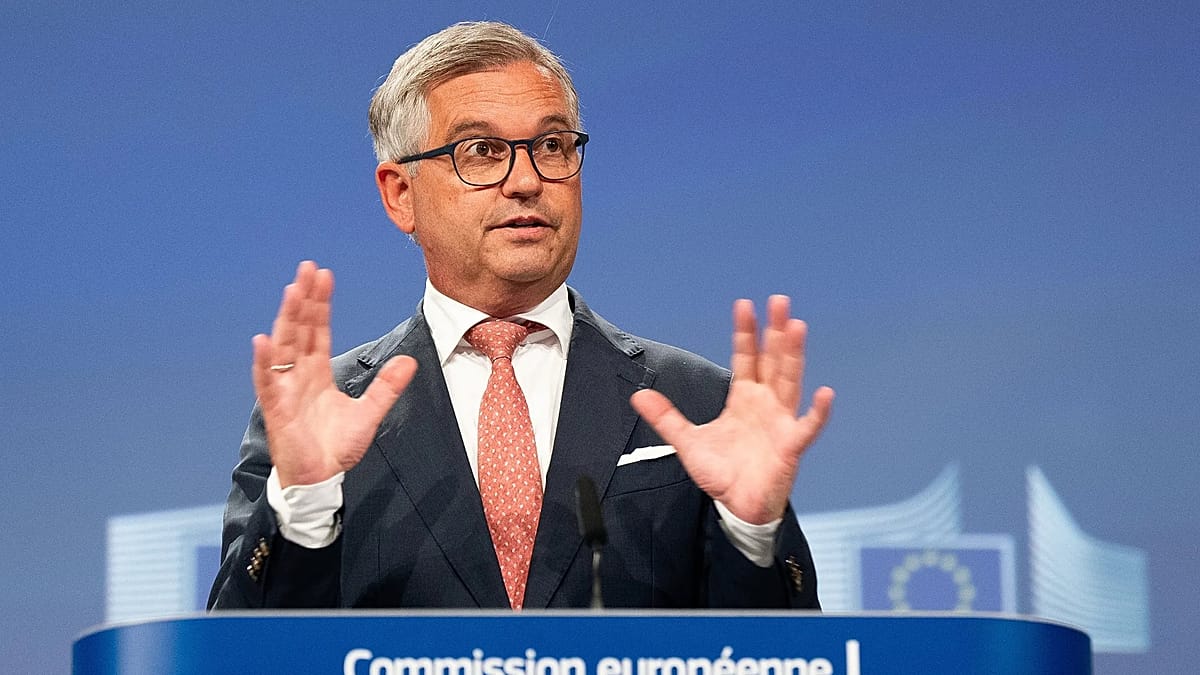
The agreement, steered by EU Commissioner for Justice and Home Affairs Magnus Brunner, builds on discussions held at the Munich Migration Conference on 26 September. It introduces a European Return Order that consolidates all elements of a return decision into a single document, easing cross-border cooperation and shortening administrative delays.
Member states also agreed to transfer migrants to detention facilities, including so-called 'return hubs' located outside the EU, to await deportation. The model draws on Italy's centres in Albania, and a group of five countries—Denmark, Germany, Greece, Austria, and the Netherlands—is pushing to establish the first hubs by 2027, with Uzbekistan, Rwanda, and Uganda mentioned as potential hosts.
The European Border and Coast Guard Agency (Frontex) will play a more prominent role in return operations, while a new European Emergency Response Framework aims to strengthen the bloc's capacity to manage sudden influxes.
Declining arrivals, rising criticism
The timing of the crackdown has raised eyebrows. Frontex data shows that detections of irregular border crossings at the EU's external borders fell by almost 40% in the first half of 2026 compared with the same period in 2025. The International Organization for Migration (IOM) reports that sea arrivals dropped to 60,000 by mid-September 2026, down from 98,040 the previous year.
The central Mediterranean route to Italy saw the steepest decline—arrivals fell by 55%, from 48,231 in 2025 to 21,393 in 2026. The Atlantic and Western Mediterranean routes also saw fewer arrivals, with 16,794 compared to 22,855 in 2025. Yet the human cost has worsened: fatalities rose from 284 in 2025 to at least 2,292 in 2026. The Libyan Coast Guard intercepted and returned 17,067 migrants to Libya between January and mid-September.
First-time asylum applications are at their lowest level since 2022. In June 2026, 37,075 people sought international protection, down from 53,025 in January 2022 and nearly 115,000 in October 2023, when requests peaked. Italy (9,660), France (9,165), Germany (4,265), and Greece (3,955) received the most applications, accounting for 73% of the total. The number of unaccompanied minors also fell, from 1,775 in 2025 to 1,105 in 2026.
Despite these declines, returns have not kept pace. In the second quarter of 2026, orders for non-EU citizens to leave fell by 12% compared with the same period in 2025. While returns to third countries rose by 9.7%, only 36,825 of the 110,335 orders issued were actually carried out.
Human rights groups have questioned the rationale for the new measures. Marta Welander, EU advocacy director at the International Rescue Committee (IRC), said it is 'difficult to justify these measures as a proportionate response to current migratory pressure and raises the question of whether they are instead being pursued for other political reasons.'
The IRC has warned that return hubs are 'counterproductive' and 'risk compounding the dangers people face.' Welander added that those sent to a third country with no durable legal status or protection could be pushed to attempt re-entry through irregular and more dangerous routes or fall back into the hands of smugglers.
The Pact in practice
The new measures are part of the broader Migration and Asylum Pact, which has been in force since 12 June 2026. The Pact introduces a common system for registering arrivals, checking identities, and deciding quickly on next steps. Border authorities must conduct security, health, and vulnerability checks, and governments must determine whether a person enters the asylum system, faces a faster border procedure, or is returned.
The system places much of this process at the external borders. People who arrive irregularly must undergo mandatory screenings before they formally enter the normal asylum procedure. The Pact also expands the use of Eurodac, the EU database that records information on asylum seekers and irregular migrants.
To address the uneven burden on frontline states like Italy, Greece, Spain, and Cyprus, the Pact creates a permanent solidarity mechanism. Other member states can contribute by relocating asylum seekers to their territories, paying €20,000 per non-relocated person into a centralised EU fund, or deploying staff and equipment to frontline states.
Implementation, however, remains uneven. The European Commission's first assessment after the Pact took effect noted progress in Spain, Cyprus, Greece, and Italy, particularly in preparing authorities to handle responsibility transfers, but also said some countries still need to take further practical steps.
The EU is also working with countries in North Africa, the Middle East, and elsewhere to reduce irregular migration before it reaches European shores, focusing on border management, migrant smuggling, returns, and readmission.
As the bloc tightens its approach, the debate over how to balance security with humanitarian obligations continues. The new measures, while aimed at efficiency, have yet to prove they can deliver faster returns without undermining the rights of those seeking protection. For now, the EU is pressing ahead, even as the numbers suggest the pressure may be easing.