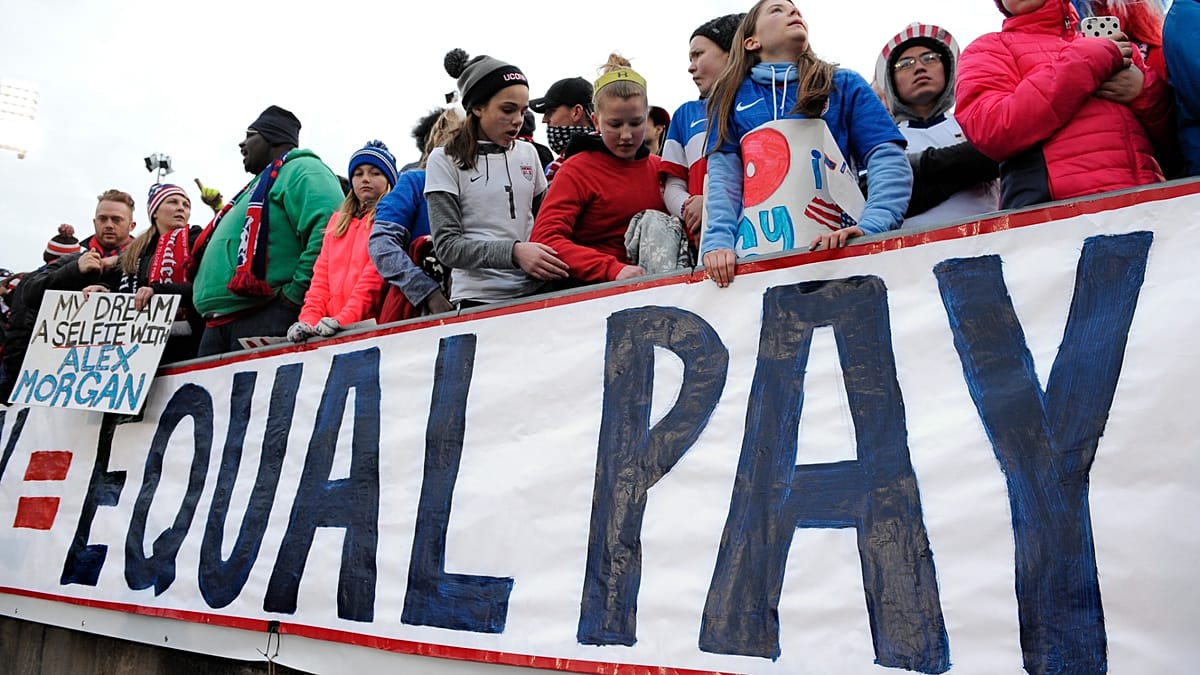
The European Union's Pay Transparency Directive, a cornerstone of the Gender Equality Strategy 2020–2025, came into effect with a transposition deadline of 7 June. Yet only Italy, Malta, Slovakia, and Lithuania have fully incorporated the rules into national law. Most member states missed the deadline, creating a patchwork of compliance across the continent.
The directive aims to dismantle the secrecy that has long surrounded salaries, a factor the European Commission identifies as the primary driver of the gender pay gap. Women in the EU earn on average 11.1% less per hour than men, and the gender pension gap stands at 25%, leaving older women at greater risk of poverty. Progress has been slow: the gap has narrowed by just 5.1 percentage points over ten years.
What the directive changes for workers
Under the new rules, job postings must include the starting salary or a pay range, and candidates can no longer be asked about their salary history. Workers have the right to request average pay data for colleagues doing the same job, broken down by gender, and to understand the criteria used to determine individual pay and career progression. Employers must respond within two months and inform workers annually of their right to this information.
“For years pay was set behind a veil. That veil didn't just hide gaps, it reproduced them,” said MEP Gabriele Bischoff, a German member of the S&D group. “Someone who was underpaid once carried that low salary from job to job, because every new employer asked, 'what are you earning now?', anchoring their offer to it.”
The directive shifts the burden of proof: if a pay gap exists, employers must justify it, rather than workers having to prove discrimination. “Information shifts power in other ways too,” Bischoff added. “When a worker can request the average pay for their role broken down by sex, and when the burden of proof flips to the employer, that can trigger change.”
Obligations for employers
Companies with at least 150 employees must report annually on their gender pay gap to national authorities. Those with unjustified gaps—not based on objective factors like specific skills or experience—face fines set by member states. Victims of pay discrimination are entitled to full compensation. The directive also requires gender-neutral job titles and recruitment processes.
Eva Hrncirova, the European Commission’s spokesperson for equality, noted that “investing in better pay-setting practices has clear benefits for employers. By elevating companies’ reputations, it helps to attract talent, lift performance through clearer career trajectories, and improve employee retention.”
The directive addresses systemic issues beyond individual pay. Women make up 66% of all EU part-time employees and account for 91% of childcare-related career breaks. Opaque pay structures have allowed employers to quietly stall salary progression for mothers returning to work. In female-dominated sectors like care and education, where women hold 76% of jobs, salaries are systemically undervalued, with no data to prove “work of equal value” to male-dominated fields.
The four early adopters—Italy, Malta, Slovakia, and Lithuania—now offer a glimpse of how the rules might function. In Lithuania, where the government is also grappling with healthcare workforce challenges, the directive adds another layer of transparency to public sector pay. Meanwhile, countries like Germany, France, and Spain have yet to transpose the directive, leaving workers in those nations without the same rights.
The Commission has warned that it may take legal action against member states that fail to implement the directive. For now, the gap between the four compliant countries and the rest of the EU underscores the uneven pace of progress toward equal pay.