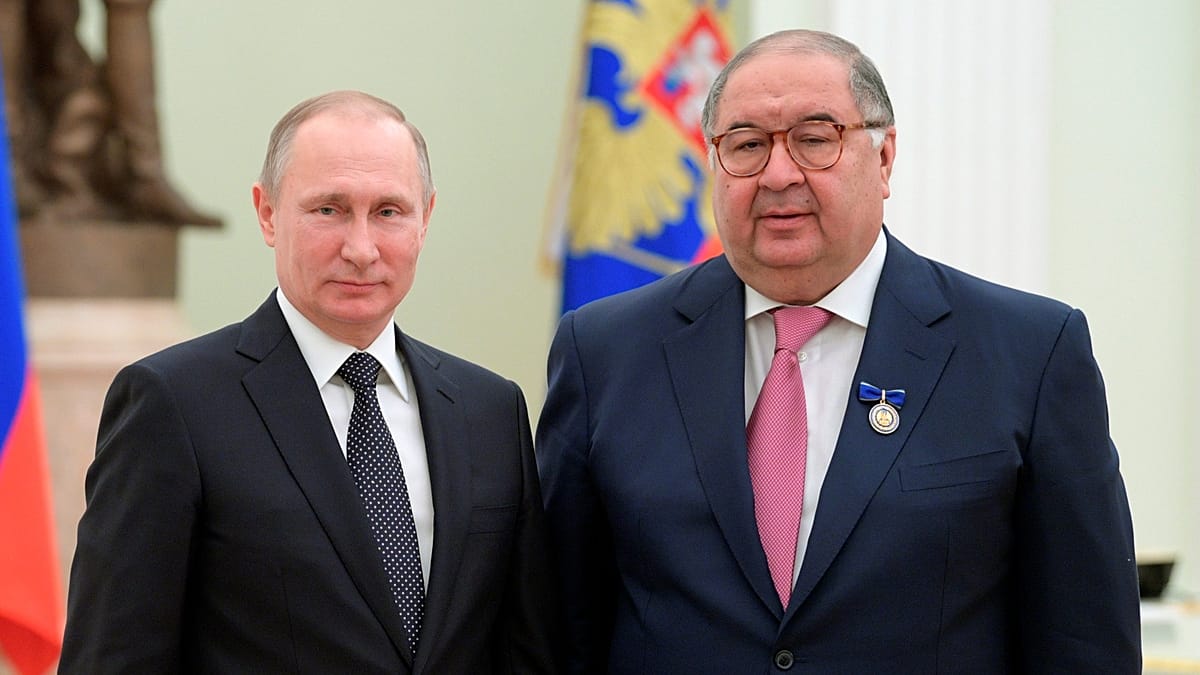
European Union ambassadors have agreed to extend the bloc's individual sanctions on Russia for an unprecedented 36 months, while simultaneously removing two prominent businessmen from the blacklist in a hard-fought compromise that left Kyiv furious and exposed the fragility of the EU's consensus on Russia.
The deal, sealed on Tuesday after two weeks of fraught negotiations, lifts the asset freeze and travel ban on Uzbek-Russian oligarch Alisher Usmanov and Russian businessman Mikhail Fridman. In exchange, the sanctions regime will now run until 2029 rather than being renewed every six months, a change designed to shield the listings from repeated veto threats and political horse-trading.
A prisoner release and a veto
France had invested significant political capital in securing Usmanov's removal, linking his delisting to a behind-the-scenes arrangement with Azerbaijan. According to diplomatic sources, Uzbek and French authorities reached an understanding under which Baku would release two French nationals from prison in return for Usmanov's removal from the EU list. Azerbaijani President Ilham Aliyev was expected to issue a pardon as part of the deal.
Paris has not confirmed the arrangement. French officials have cited only a "national security" concern and declined to elaborate, adding to the opacity surrounding the talks. France's foreign ministry still warns against travel to Azerbaijan, citing the "risk of arrest, arbitrary detention and unfair trial." Last year, an Azerbaijani court sentenced French water-management executive Anass Derraz to 12 years in prison on bribery charges. Earlier this year, French national Martin Ryan received a 10-year sentence for espionage. Both men and Paris reject the charges.
Fridman's removal followed a separate path. Slovakia vetoed his continued listing, and Luxembourg argued that if Usmanov was to be delisted, Fridman should be too. Fridman has filed a $16 billion claim against Luxembourg over his frozen assets.
Latvia holds out, then abstains
The compromise nearly collapsed. Latvia blocked the process on Monday, warning that it was not the moment to ease pressure on Moscow. The Baltic state relented on Tuesday afternoon, opting for a constructive abstention that allowed the unanimity required to proceed.
Ukrainian President Volodymyr Zelenskyy had publicly appealed to EU leaders to keep both men on the blacklist. In a message thanking Latvia for its opposition, he argued that the world needs "not a political delisting, but timely and unconditional rollover of individual sanctions, until Moscow engages in serious peace negotiations and takes concrete steps to end its war against Ukraine." He added: "Every Ukrainian family is counting on EU unity and solidarity."
His appeals did not shift the balance in the room. Member states concluded that France would refuse to abandon its demand on Usmanov regardless of the controversy. "No one is happy about this," one diplomat said. "But the consensus in the room was that it's better to maintain the rest of the listings under the regime and make sure we don't have to do this circus again any time soon."
The episode follows earlier warnings from Kyiv against exactly this kind of political delisting, and it came after Latvia had already blocked an earlier compromise. The Irish presidency of the EU Council, which chaired the talks, described the outcome as "difficult" but stressed that the 36-month renewal "enhances the durability and predictability of the EU sanctions framework."
What changes, what stays
The EU first sanctioned Usmanov in the early days of Russia's full-scale invasion of Ukraine, citing his close ties to President Vladimir Putin and his interests in key sectors of the Russian economy that generate substantial revenue for the state. The 73-year-old, whose fortune is estimated at $16.6 billion, has denied the allegations and challenged the measures in court. Uzbekistan and other Turkic states had lobbied EU institutions and several member states for two years to secure his removal.
The sanctions list still contains more than 2,600 individuals, organisations and entities accused of supporting Russia's war, including Putin himself. The longer renewal cycle means future delistings will be harder to force through, but it also removes the regular leverage that member states previously used to extract concessions. For now, the bloc has traded two high-profile names for three years of relative stability — a bargain that satisfied no one entirely, but one that kept the wider regime intact.