STRASBOURG — The European Parliament is bracing for a significant moment as Canadian Prime Minister Mark Carney prepares to address the chamber on Thursday. The speech comes just a day after European Commission President Ursula von der Leyen unveiled a proposal to create a novel "associate EU membership" status for Canada, a move that has already drawn sharp criticism from Washington.
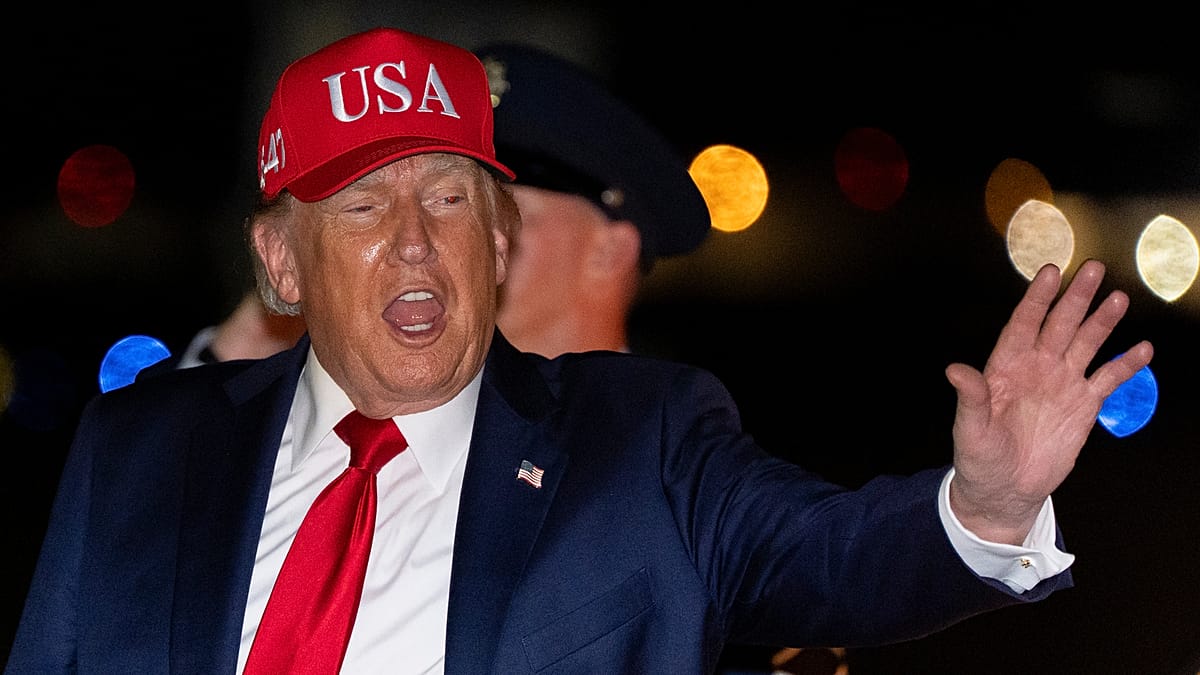
US President Donald Trump responded overnight, calling the invitation "hostile" and "laughable," and threatening "very serious tariffs" or even a complete halt to trade with Europe. The reaction has put Brussels in a delicate position, as the bloc has been careful not to take sides in the escalating trade dispute between Canada and the United States.
What would associate membership mean?
The concept of "associate membership" does not yet exist in EU law, and questions are mounting over its practical implications. Von der Leyen's announcement is widely seen as an aspirational political signal rather than a concrete legal framework. As Irish Deputy Prime Minister Simon Harris noted in Strasbourg, "the devil is always in the detail."
Several third countries already have association agreements with the EU, from the Western Balkans to Eastern Europe and the Middle East. But none hold the title of "associate member," a term that aligns with Carney's own pitch for a "unique alliance" with the bloc. The status could involve a preferential trade relationship building on the existing Comprehensive Economic and Trade Agreement (CETA), closer institutional cooperation, and a strengthened defence partnership. Talks are also ongoing about Canada joining EU programmes such as Erasmus+ and Horizon Europe, as reported by my colleague Luca Bertuzzi.
More clarity is expected after an EU-Canada summit in Montreal at the end of October, where both sides are likely to flesh out the details. EU leaders will also gather in Brussels in mid-October for a regular summit.
Carney's UK visit and defence cooperation
Carney arrived in Strasbourg late Wednesday after a quick trip to Manchester, where he met UK Prime Minister Andy Burnham. The two leaders, both supporters of Everton Football Club, held talks at the club's stadium. Defence cooperation was high on the agenda, with Canada formally applying to join the British-led Joint Expeditionary Force, a northern European military coalition.
The Canadian Prime Minister also met separately with von der Leyen and European Parliament President Roberta Metsola, who presented him with a steel combat helmet used by Canadian forces in France during the Second World War. "We have so much in common," Metsola told our EU Editor Maria Tadeo, adding that the move could "absolutely" open the door for other countries to seek associate status. "I think in the big picture, friends matter, and if we can do more things with our friends, then let's do them," she said.
Socialist MEP Tobias Cremer, author of a parliament report on EU-Canada cooperation, described the rapprochement as more than a "short-term honeymoon" during a dinner with reporters in Strasbourg.
Ceuta crisis divides the chamber
Meanwhile, the parliament is set to vote on a resolution concerning the "recent hybrid attacks and instrumentalisation of migrants" following the influx of 80,000 irregular migrants into the Spanish exclave of Ceuta last July. The political groups have failed to agree on a common text, with right-wing parties criticising the Spanish government and left-wing forces accusing the far right of exploiting the crisis. The deadlock could result in no resolution being adopted at all.
Even an exhibition in the parliament's corridors has become a political flashpoint. "Just EUman," a display promoted by a conservative MEP with a pro-life association, features images of a fetus developing during pregnancy. The Socialists and Democrats, the Left, and the Greens/EFA have called on Metsola to withdraw it, arguing it is part of a broader anti-choice campaign that questions access to abortion.
Von der Leyen's security architecture
Beyond the Canada proposal, von der Leyen used her annual speech to outline a new European security strategy. Key elements include a European Security Council, an emergency protocol, and a new strategic enabler initiative. The Security Council would be a special configuration of the EU leaders' summit, including partners such as Ukraine, the United Kingdom, Norway, and Canada.
Von der Leyen also called for an EU version of NATO's Article 4, which allows members to request emergency consultations when they feel threatened. Oana Lungescu, NATO's former spokesperson, told my colleagues Angela Skujins and Luca Bertuzzi that while closer EU-NATO cooperation is welcome, it is hard to see how this would deter Russia. "Protocols and playbooks already exist in both organisations," she said.
The Commission President also announced a new instrument to scale up Europe's "strategic enablers," including satellites, airlift, refuelling, and intelligence capabilities. These proposals are part of a broader effort to strengthen European defence in the face of growing hybrid threats.
As Carney takes the floor in Strasbourg, the EU's relationship with Canada appears set to deepen, but the path forward is fraught with political and practical challenges. The coming weeks will reveal whether the ambitious vision can be translated into concrete action.