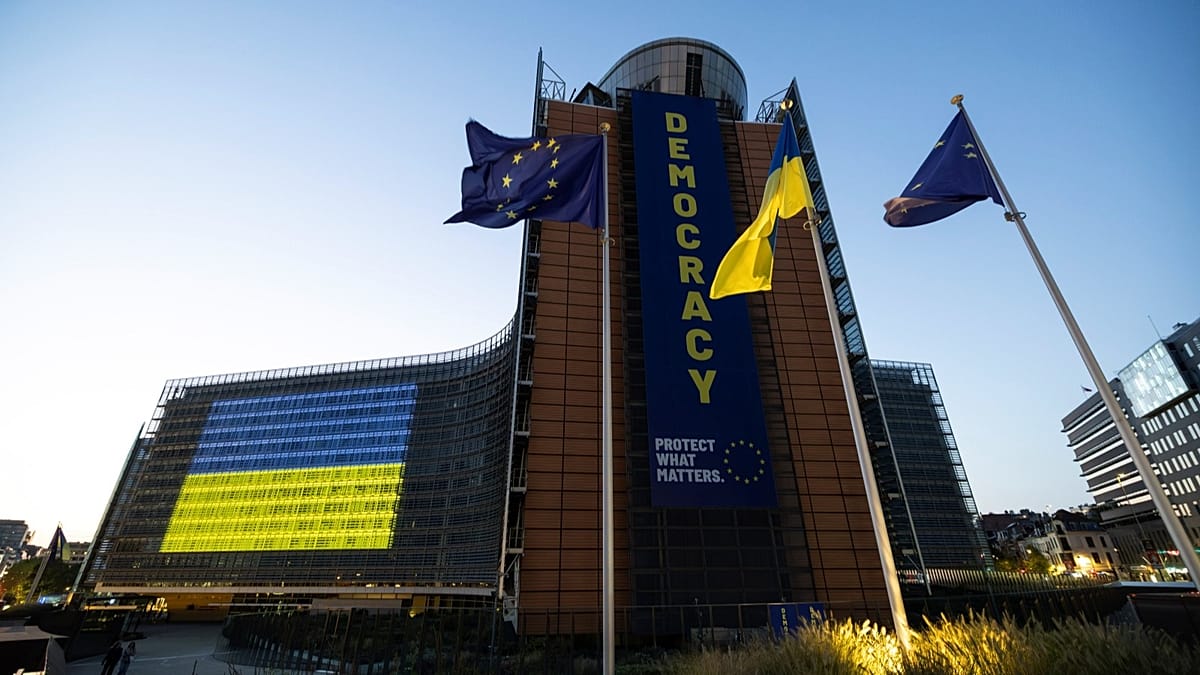
The European Union's decision to lift sanctions on two prominent Russian oligarchs has left a sour taste in Brussels, with diplomats questioning the bloc's resolve and the precedent it sets. Alisher Usmanov and Mikhail Fridman, both long-time Kremlin associates, were removed from the EU's sanctions list this week after years of legal challenges. The move comes as Russia intensifies its assault on Ukraine, a timing that has drawn sharp criticism from Kyiv.
Ukraine's foreign minister, Andrii Sybiha, did not mince words: "The decision to delist Usmanov and Fridman is shameful and unjustifiable. Moscow is celebrating because it got what it wanted: a sense of impunity, the humiliation of the EU, and division among Europeans."
In Brussels, officials are scrambling to manage the fallout. The bloc, which has prided itself on unwavering support for Ukraine, now faces awkward questions about its commitment. To mitigate the damage, member states agreed to extend the sanctions list of nearly 3,000 names for an unprecedented 36 months, aiming to prevent future vetoes. Yet the relief is tempered by a lingering unease.
"It was a low moment," one diplomat admitted. Another echoed, "No one is happy about this." Ireland, which brokered the fragile compromise, called the process "difficult."
France's controversial push
Most of the blame falls on France. Earlier this month, Paris unexpectedly joined Slovakia in requesting Usmanov's removal, citing "national security." The vague justification puzzled other envoys, but it soon emerged that the real motive was to secure the release of two French nationals detained in Azerbaijan. The day after Usmanov was delisted, Azerbaijan pardoned Martin Ryan, a French citizen sentenced to 10 years on espionage charges. France's foreign ministry welcomed the move as a "humanitarian gesture."
The episode underscores France's diplomatic weight in Brussels, despite its domestic political turmoil. Some diplomats believe Slovakia alone would never have succeeded in delisting Usmanov without French backing. Slovakia, which has a history of abrupt vetoes, had previously failed in similar attempts.
While there is sympathy for France's desire to free its citizens, the precedent is troubling. "The whole affair shows that unanimity hurts everyone, even France. We urgently need to push for a qualified majority in sanctions," said a third diplomat. "Unanimity made them vulnerable to blackmail."
The Usmanov saga is not an isolated incident. It reflects a broader strain in the EU's sanctions regime. In the spring, European Commission President Ursula von der Leyen proposed a ban on maritime services for Russian oil tankers, a measure designed to hit Moscow's revenue. But after the US-Israel conflict with Iran and the closure of the Strait of Hormuz, the idea lost momentum. The ban was approved in principle but never enforced, falling off the agenda.
Von der Leyen attempted to revive the pressure with a new sanctions package in June, vowing to "maintain the full intensity of our sanctions." Yet negotiations were chaotic, with Bulgaria vetoing sanctions on Patriarch Kirill, Germany and Portugal blocking restrictions on Russian fish imports, and France and Italy watering down a visa ban on Russian soldiers. Greece went further, seizing assets in a move that complicated the package.
The cumulative effect is a growing perception that the EU's resolve is weakening. As one analyst noted, sanctions are only as strong as the political will behind them. The Usmanov case, in particular, has raised fears that oligarchs might now see a path to buying their way off the list, undermining the entire regime.
For now, the EU is trying to project unity. The 36-month rollover is a sign of long-term commitment, but the cracks are visible. As Latvia's prime minister warned, cherry-picking sanctions could expose the EU's weakness. The coming months will test whether the bloc can restore confidence in its most powerful foreign policy tool.