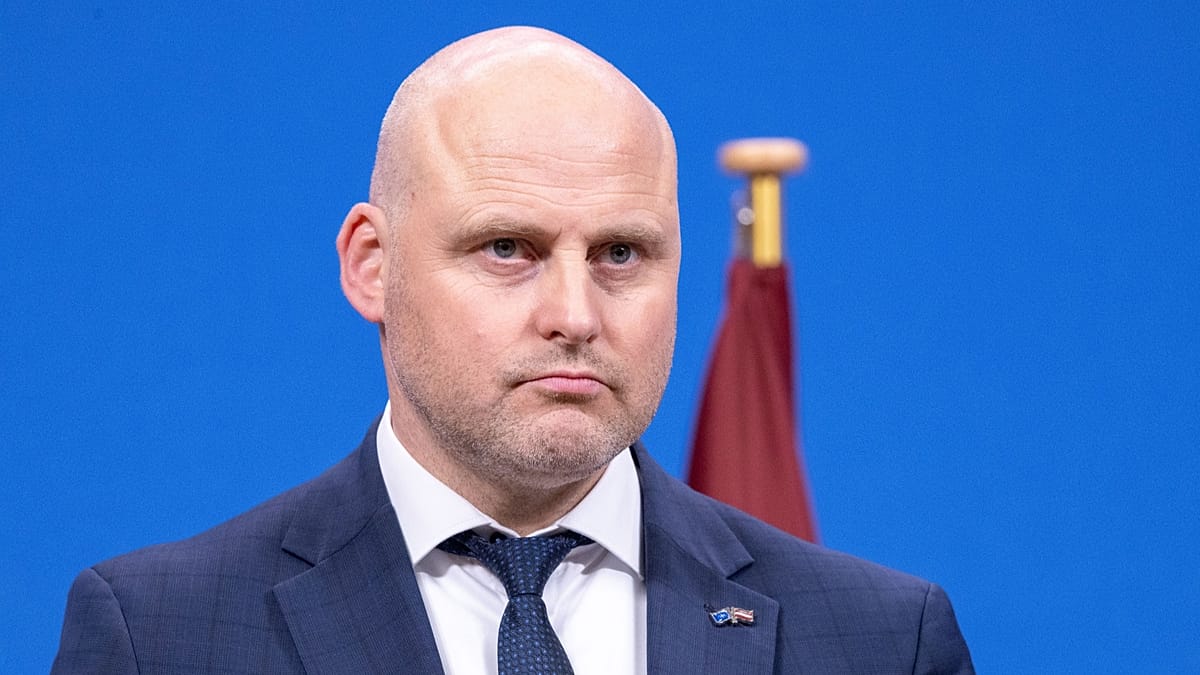
Latvian Prime Minister Andris Kulbergs has said that the European Union's decision to remove two prominent Russian businessmen from its sanctions list should not become a template for future negotiations, warning that such exemptions risk normalising Russia.
Speaking exclusively to Euronews, Kulbergs confirmed that Riga had "stood to the end" in opposing the delisting of Alisher Usmanov and Mikhail Fridman, but ultimately relented to avoid jeopardising the entire sanctions package.
"Either it is sports, what we've seen, either culture, and now one by one cherry-picking out of sanctions, that is not the way to go," he said. "That is normalising Russia."
A fraught compromise in Brussels
The delisting followed two weeks of difficult talks among EU ambassadors. France led the push to remove Usmanov as part of a prisoner release with Azerbaijan brokered by Uzbekistan, Usmanov's country of birth. Slovakia separately requested the removal of Fridman, while Luxembourg argued that if Usmanov were delisted, Fridman should be too — Fridman has filed a $16 billion claim against Luxembourg over his frozen assets.
The asset freezes and travel bans imposed on both men since 2022 will now be lifted. The sanctions list currently contains nearly 3,000 individuals, organisations and entities accused of supporting Russia's war in Ukraine, including Russian President Vladimir Putin.
Until now, the bloc had renewed its sanctions every six months, giving member states frequent opportunities to veto and extract concessions. The new 36-month extension is intended to offset the political cost of removing the two high-profile businessmen. Kulbergs welcomed the longer timeframe but said the episode left a troubling legacy.
"I'm worried about the playbook which it leaves. I don't think this is a very good example, because that gives a message. 'Oh, we arrest some politicians somewhere, and then we can ask for a sanctions package.' This is not a good playbook, and that's exactly why we froze it for 36 months. That's it. No discussion."
Latvia, together with fellow Baltic states Lithuania and Estonia, has long advocated maximum pressure on Russia. The country heads to parliamentary elections next month.
Before lifting its objection, Kulbergs spoke with French President Emmanuel Macron, whose government spearheaded the move to delist Usmanov. Paris has not acknowledged the prisoner release with Azerbaijan, citing "national security" grounds instead. Kulbergs said he could not know the reasoning behind other countries' positions.
Eastern flank eyes French nuclear umbrella
Kulbergs also suggested that Europe's eastern flank — including Latvia — could be well placed to join France's nuclear deterrence programme, given its vulnerability to Russian aggression.
"It's important for the eastern flank, for us, to have the coverage of their security," he said.
The United Kingdom, Germany, Poland, Sweden, the Netherlands, Belgium, Greece, Denmark and Norway have already signed up to the French initiative, which aims to deepen nuclear cooperation through joint exercises. Participating countries could potentially host French nuclear-capable aircraft on a temporary basis, though Paris would retain exclusive control over its arsenal, with the final decision on use resting with the French president.
The row over delistings has also drawn warnings from Kyiv. Ukraine has urged the EU against political removals from the sanctions regime, arguing that they undermine pressure on Moscow. The compromise reached this week may have averted an immediate crisis, but the debate over how the bloc balances national interests against collective resolve is far from settled.