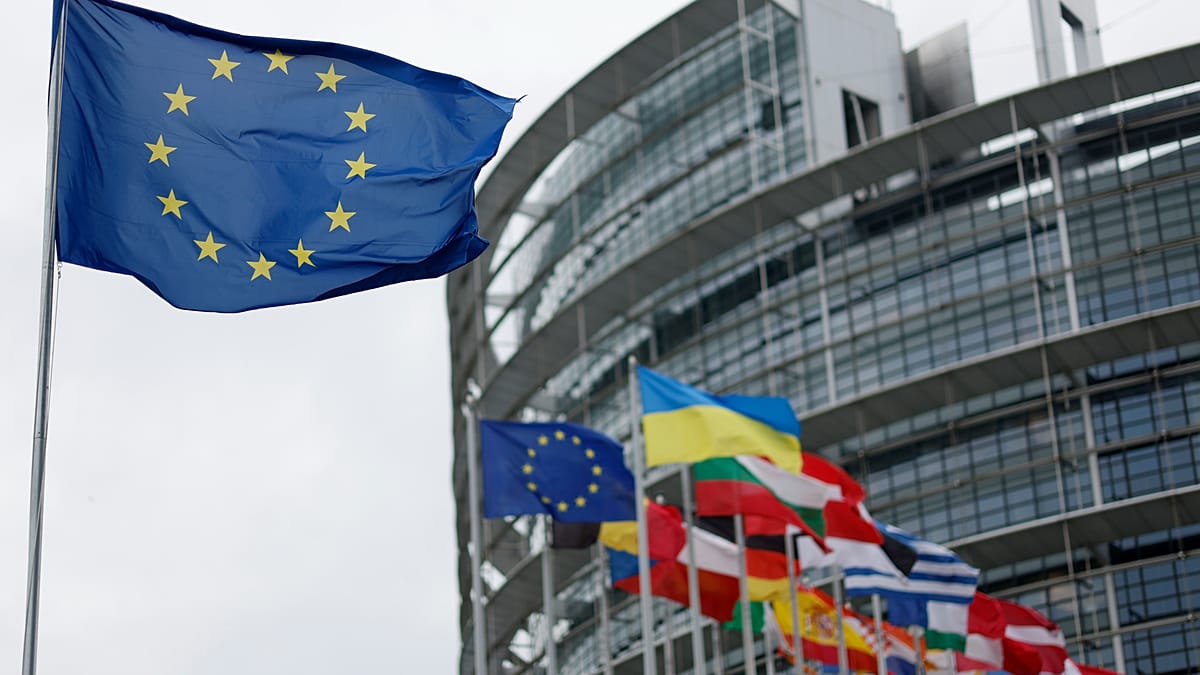
On 15 June, the Council of the European Union expanded its sanctions regime, adding 10 individuals and one entity accused of conducting hybrid manipulation and foreign interference activities on behalf of Russia. The move brings the total number of sanctioned individuals to 34 and entities to 47 since the latest round. Those targeted face asset freezes, and EU citizens and companies are prohibited from providing them with funds or financial assets.
Travel Influencer with a Hidden Agenda
Among the sanctioned individuals is Alexandra Jost, a Russian-American travel influencer who operates under the handle Sasha Meets Russia. Born in Hong Kong, Jost presents herself as a cultural ambassador, sharing content about Russian traditions and travel vlogs. However, the Council stated that she "built an extensive base of followers under the guise of cultural coverage, while focusing on pro-war and pro-Kremlin propaganda with regard to Ukraine, and supporting the Kremlin's political establishment and the Russian armed forces."
Jost's accounts on YouTube and Instagram were shut down in March 2025 for disseminating disinformation and supporting Russia's territorial claims. In one post, she claimed that "Crimea is Russia and soon all of Ukraine will be too." She has also referred to the war as a "special military operation" and falsely asserted that Ukraine is a dictatorship, ignoring the fact that Ukraine is under martial law due to the invasion, which prevents elections under its constitution.
In a video response on X, Jost defended her statements, asking, "Okay, where is the lie in that? What about it?" The EU noted that she produced content while being paid by TV-Novosti, the legal entity behind the sanctioned Russian state media outlet Russia Today. Despite her claims of being a patriot, the sanctions underscore the EU's determination to counter such influence operations.
PR Specialist and Bishop Also Targeted
Maria Dudko, director of the Russian public relations firm "Limitless" (Bezgranichnye), was also sanctioned. Unlike influencers who directly engage audiences, Dudko operates behind the scenes, managing Western influencers who echo Kremlin narratives and pro-war propaganda. Her organization is funded by the Russian government through the Presidential Foundation for Cultural Initiatives, which was also added to the sanctions list.
Bishop Georgiy Shevkunov, known as Tikhon Shevkunov and often referred to as Putin's "personal confessor," was sanctioned for systematically spreading pro-Kremlin disinformation. The Council stated that he "spreads claims of 'Nazism' in Ukraine, denies Ukraine's sovereignty, and justifies Russia's invasion of Ukraine as necessary, defensive and divinely sanctioned."
The EU's latest sanctions reflect a broader effort to combat disinformation that undermines European security. As uncensored AI chatbots spread disinformation across Europe, the bloc is increasingly targeting both individuals and entities that facilitate these operations. The inclusion of a bishop highlights the role of religious figures in legitimizing the Kremlin's narrative, while the targeting of a PR firm reveals the sophisticated infrastructure behind influence campaigns.
These measures are part of a sustained EU strategy to protect its information space. As disinformation accounts still profit on Facebook despite repeated bans, the sanctions aim to disrupt the financial and operational networks that enable such activities. The EU's actions also resonate beyond the bloc, as seen in cases like the British teen sanctioned by Moscow for exposing Russian crypto laundering, illustrating the cross-border nature of information warfare.