Since February 2022, the European Union has pursued an unprecedented campaign of economic sanctions aimed at crippling Russia's ability to wage war on Ukraine. After 20 rounds of carefully calibrated measures, the Kremlin's war machine continues to operate, but the first clear signs of strain are emerging in the Russian economy.
Russia's Ministry of Economic Development reported a 0.3% contraction in GDP between January and March 2025, the first quarterly decline since early 2023. The public deficit ballooned to $60 billion (€51 billion), exceeding the full-year target. Inflation remains stubbornly high at nearly 6%, despite a central bank interest rate of 14.5%. The stock market has lost ground since March, even as global indices rise. Meanwhile, the Central Bank has warned of acute labour shortages.
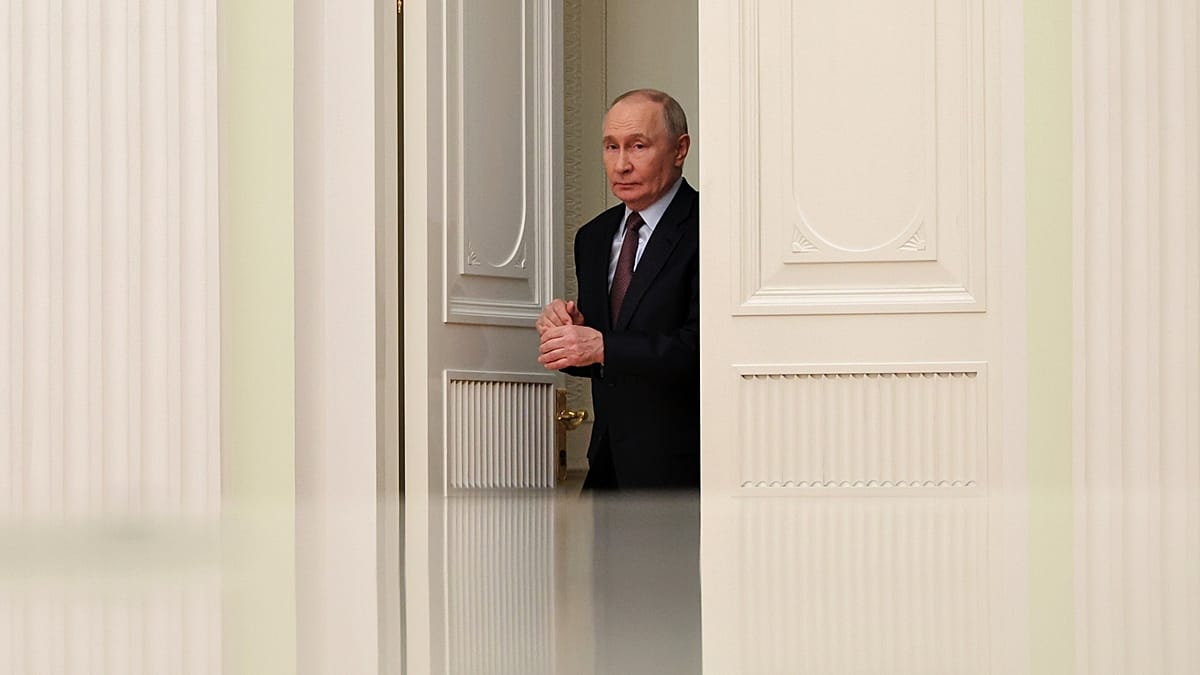
Even President Vladimir Putin has acknowledged the downturn. In a recent meeting, he asked his team to explain "why the trajectory of macroeconomic indicators is currently falling short of expectations" and to propose "additional measures aimed at restoring growth."
European Leaders Claim Victory
European officials have been quick to highlight these cracks. European Commission President Ursula von der Leyen stated, "Yes, the sanctions have a biting effect on the Russian economy. The consequences of Russia's war of choice are being paid for out of people's pockets." France's Foreign Minister Jean-Noël Barrot declared that "Russia's economy is sinking into crisis," urging the Kremlin to "open its eyes to its failure." Sweden's Finance Minister Elisabeth Svantesson concluded, "We are right" and "sanctions work."
The EU is now pushing G7 allies, particularly the United States, to impose a coordinated ban on maritime services for Russian oil tankers, aiming to raise transportation costs and reduce profits. This measure is currently on hold due to the energy disruption from the Strait of Hormuz closure, which gave Moscow a windfall of $19 billion (€16 billion) from oil sales in March, up from $9.7 billion (€8.2 billion) in February. Brussels wants to reverse this trend and drive down the global price of Urals crude, which had been declining before the Hormuz shutdown. Officials hope that a full ban, combined with a crackdown on the "shadow fleet" and Ukraine's long-range strikes on Russian oil facilities, will tighten the screws.
"What we see now is two things playing together: you see that Russia needs to spend a lot of money to keep its war effort going, and you see that sanctions bite and have an effect. The pain is felt more acutely," said a senior EU diplomat. "Do you see any willingness on the Russian side to engage in serious negotiations? I don't. So what we need to do is to increase the pressure further and further."
The Complex Reality of Sanctions
Declaring sanctions a success is a slippery slope. The EU and Western allies have made Russia the most sanctioned country in the world, with about $300 billion (€260 billion) in reserves immobilised and dozens of banks expelled from mainstream payment systems. Moscow has turned to the Chinese yuan and cryptocurrency platforms to bypass restrictions. The liquid assets of the National Welfare Fund, backed by hydrocarbon earnings, have largely dried up to cover deficits.
Export-import bans have deprived Russia of sophisticated goods and know-how, degrading its capacity to innovate. Russian firms have lost affluent European clients and now trade with lower-income markets. The Kremlin has imposed an all-consuming war economy.
Laura Solanko, a senior advisor at the Bank of Finland, notes that sanctions have transformed Russia "in multiple ways," even if it is not "very feasible" to separate the strain from sanctions from the strain of war policy. "Access to global financial markets is practically closed, meaning all funding, both for the government and for the private sector, has to be found from domestic sources. Invoicing currencies of foreign trade have changed, the banking sector has de-dollarised both assets and liabilities, and access to many high-tech goods and supplies is restricted. These are all additional costs for business."
Western intelligence services suspect Moscow is manipulating official data to hide the extent of its economic hardships. Central Bank Governor Elvira Nabiullina has publicly called for honesty in reporting.
The Russian economy is today less dynamic, less attractive, and less wealthy than before the full-scale invasion. But it is far from collapse. Russia has avoided a prolonged recession and a sovereign default, two worst-case scenarios European officials had feared. The war continues, and Moscow shows no willingness to negotiate. The EU's challenge is to maintain pressure without triggering unintended consequences that could destabilise global markets or escalate the conflict further.