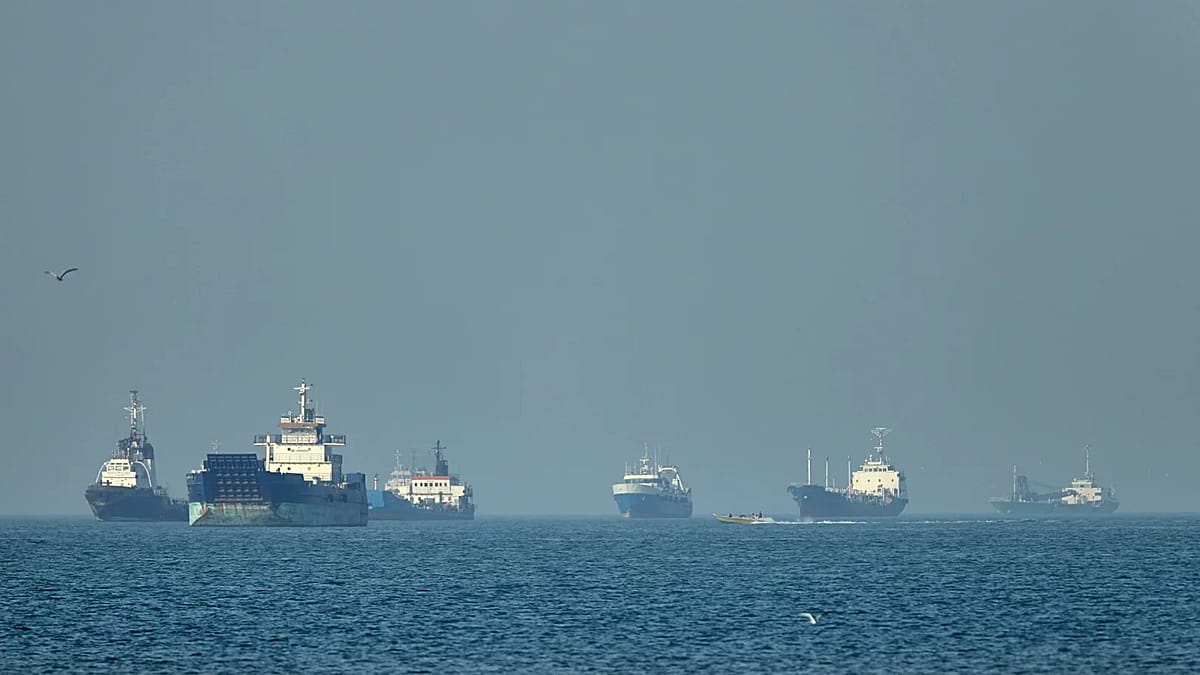
The United States has suspended its mission to escort commercial vessels through the Strait of Hormuz, barely a day after it began. President Donald Trump announced the pause on Wednesday, citing advances in negotiations with Tehran. The decision follows a request from Pakistan and other nations, though Trump stressed that the blockade of Iranian ports will “remain in full force.”
Diplomatic Signals Amid Military Clashes
Trump stated on his Truth Social account that “great progress has been made” toward a peace deal and that the escort operation “will be paused for a short period of time to see whether or not the agreement can be finalized and signed.” The announcement came after Secretary of State Marco Rubio said US offensive operations against Iran had concluded, but warned of a “devastating” response to any new Iranian attacks on shipping in the strategic waterway.
The Strait of Hormuz, a chokepoint for about a fifth of the world's oil supply, has seen renewed violence. On Monday, Iran fired missiles and drones at US forces, while Washington struck six Iranian boats it accused of threatening commercial shipping. The clashes mark the sharpest escalation since a month-long truce took effect on 8 April.
French shipping giant CMA CGM reported that one of its vessels, the Maltese-flagged CMA CGM San Antonio, was attacked in the strait on Tuesday. The company said crew members were injured and the ship damaged; the injured have been evacuated for treatment. The attack occurred a day after Trump launched the so-called “Project Freedom” escort operation.
Iranian Diplomacy in Beijing
Iranian Foreign Minister Abbas Araghchi travelled to Beijing on Wednesday for talks with his Chinese counterpart Wang Yi. China remains a key buyer of Iranian oil, defying US sanctions aimed at choking Tehran's revenue. Wang called for an end to hostilities in the Middle East and urged Washington and Tehran to reopen the Strait of Hormuz “as soon as possible.”
“China considers that a complete cessation of fighting must be achieved without delay, that it is even more unacceptable to restart hostilities, and that continuing to negotiate remains essential,” Wang said. Araghchi's visit comes days before Trump is scheduled to meet President Xi Jinping in China on 14–15 May, a trip delayed by the conflict.
The diplomatic push occurs against a backdrop of continued military posturing. Pentagon chief Pete Hegseth said the US is “not looking for a fight” but warned that any more Iranian attacks would face “overwhelming and devastating” force. Israel's air force chief Omer Tischler stated the military is ready to “deploy the entire air force eastward if required.”
For a second consecutive day, the United Arab Emirates claimed it intercepted missiles and drones from Iran on Tuesday, a report Tehran “categorically” denied. The war has battered the global economy, despite the ceasefire reached last month. European markets have been volatile, with oil prices fluctuating on peace hopes, as noted in Oil Drops on US-Iran Peace Hopes as AI Boom Lifts European Stocks.
Iran's President Masoud Pezeshkian said Tehran remains open to dialogue but rejected US “maximum pressure” demands as “impossible.” Trump, meanwhile, urged Iran to “do the smart thing” and make a deal, saying he does not want to kill more Iranians. The standoff continues to have significant implications for European energy security and trade routes, as highlighted in Iran Threatens European Military Bases as Hormuz Crisis Deepens.