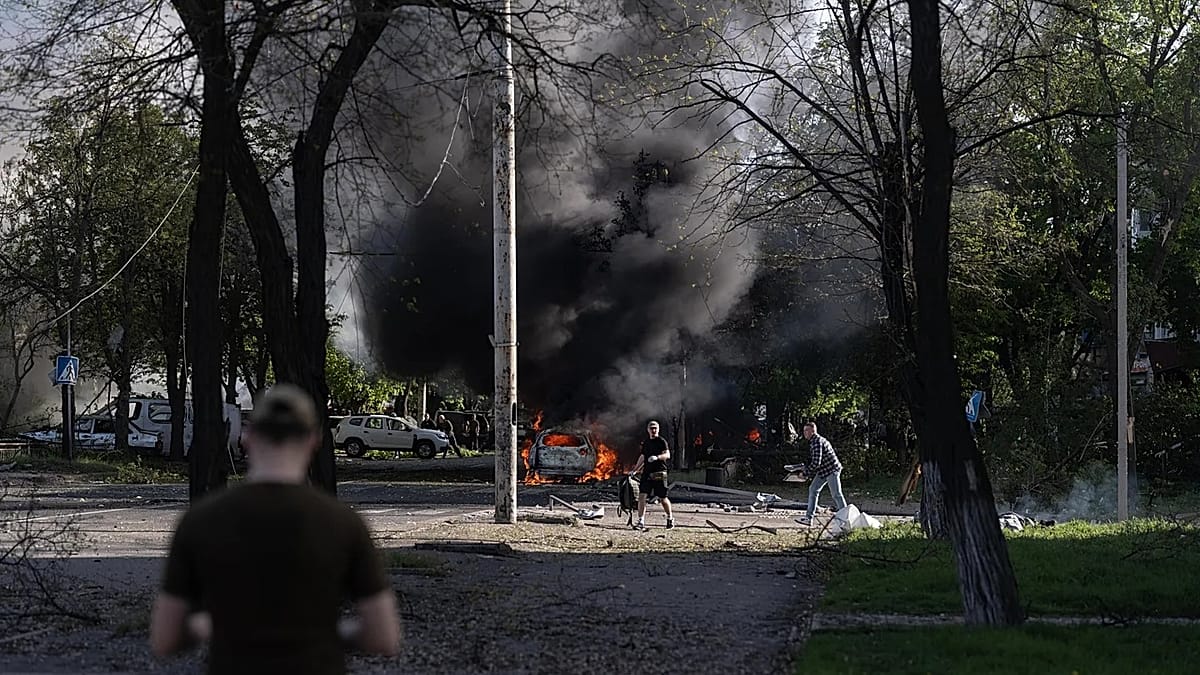
Ukraine’s foreign minister, Andrii Sybiha, accused Russia on Wednesday of violating a unilateral ceasefire declared by Kyiv, after Moscow launched a wave of air strikes involving 108 combat drones and three missiles across Ukrainian cities. The attack, which Sybiha described as a clear rejection of peace, came just days after both sides announced competing ceasefires ahead of Russia’s annual World War II victory celebrations on 9 May.
“This shows that Russia rejects peace and its fake calls for a ceasefire on May 9th have nothing to do with diplomacy. Putin only cares about military parades, not human lives,” Sybiha wrote on X, the social media platform. He urged Ukraine’s partners to increase pressure on Moscow, including through new sanctions, isolation, accountability for Russian crimes, and enhanced support for Ukraine in all areas.
Competing Ceasefires and a Parade Under Threat
On Monday, Moscow unilaterally announced a ceasefire to coincide with its Victory Day parade on 9 May, a date that has become a symbol of Russian military might since the full-scale invasion of Ukraine began in 2022. The Kremlin, however, ordered a scaled-back version of the parade this year, with no military hardware on display, amid fears that Ukrainian forces could target the event. Ukraine responded with its own ceasefire, starting earlier on 6 May, and condemned Moscow’s “cynicism” for continuing air strikes.
Ukrainian President Volodymyr Zelenskyy countered Moscow’s proposal by emphasizing that human life is more valuable than any anniversary celebration. “It is time for Russian leaders to take real steps to end their war, especially since Russia’s Defence Ministry believes it cannot hold a parade in Moscow without Ukraine’s goodwill,” Zelenskyy said, warning that Kyiv would “act reciprocally starting from that moment.”
Ukraine has already demonstrated its ability to strike deep inside Russian territory. On Tuesday, a critically important military-industrial complex in Cheboksary, approximately 1,000 kilometres east of Moscow, was hit. This follows a pattern of Ukrainian long-range strikes that have targeted Russian infrastructure far from the front lines.
The competing ceasefire announcements have created a tense standoff. While Moscow informed Washington about its unilateral ceasefire for 8–9 May, Kyiv’s counteroffer was seen as a direct challenge to the Kremlin’s narrative. The 9 May parade, traditionally a bombastic display of military strength, has since 2022 sought to link the Soviet victory over Nazi Germany with the invasion of Ukraine, a connection widely condemned by European leaders.
The European Union and NATO have consistently backed Ukraine’s right to self-defence, with many member states providing military aid and imposing sanctions on Russia. The latest attacks underscore the fragility of any ceasefire and the difficulty of achieving a diplomatic resolution while hostilities continue. As Russian strikes kill 18 in Ukraine, Zelenskyy has condemned the ceasefire cynicism, calling for a genuine halt to violence.
In a broader context, the conflict has also drawn in other regions. For instance, Gulf States on edge after first attack on UAE since April ceasefire highlights how instability can spread. Meanwhile, Ukraine continues to expose Russian war crimes, such as Russia's systematic abduction of Ukrainian children, which has been labelled a genocidal campaign by international bodies.
As the world watches the 9 May parade, the question remains whether Russia will honour any ceasefire or continue its military operations. For now, Ukraine’s foreign minister has made it clear that Moscow’s actions speak louder than its words, and the international community must respond with renewed resolve.