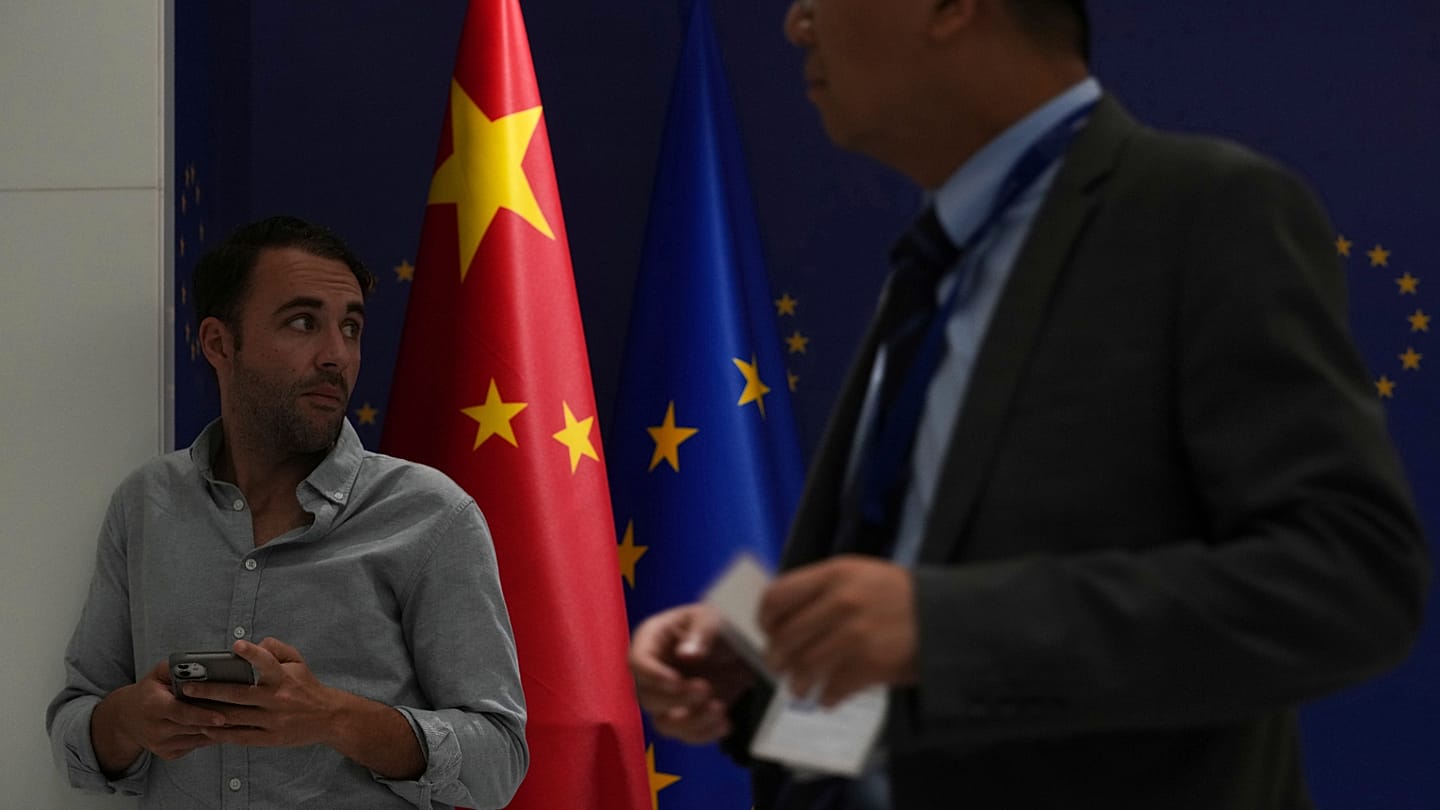
For years, European capitals have debated how to manage the continent's deepening economic entanglement with China. Now, Brussels is signalling that the status quo is no longer acceptable. The European Commission has concluded that current trade relations with Beijing are unsustainable, marking a notable shift in tone from an institution that has often favoured engagement over confrontation.
Yet translating that recognition into effective policy has proven difficult. A raft of EU laws and initiatives — from anti-coercion instruments to foreign subsidies screening — have so far failed to meaningfully rebalance the relationship. Instead, they have drawn sharp criticism from China, which views them as protectionist and discriminatory. The result is a standoff that risks escalating into a full-blown trade war.
Five Key Takeaways on the EU-China Trade Tensions
1. The EU's toolbox has not delivered. Despite introducing measures such as the International Procurement Instrument and the Foreign Subsidies Regulation, Brussels has struggled to gain leverage. Chinese state-owned enterprises continue to benefit from subsidies that undercut European competitors, while EU companies face growing barriers in sectors like renewable energy and electric vehicles.
2. Beijing is pushing back hard. China has retaliated with its own investigations into European brandy, pork, and dairy imports, targeting industries in France, Spain, and the Netherlands. These moves are widely seen as an attempt to divide EU member states and pressure Brussels into softening its stance.
3. Internal EU divisions remain a hurdle. While countries like France and Germany have grown more hawkish, others — notably Hungary — have resisted tougher measures. Budapest's recent diplomatic overtures to Beijing have complicated efforts to forge a unified EU approach. As Hungary unlocks €16.4 billion in EU funds after Magyar's Brussels breakthrough, the bloc's internal cohesion on China policy remains fragile.
4. The von der Leyen Commission is stepping up. Commission President Ursula von der Leyen has called for urgent talks on trade defence, and the EU is now weighing stricter trade measures against China. These could include anti-subsidy tariffs on Chinese electric vehicles, a move that would directly challenge Beijing's industrial strategy.
5. The stakes extend beyond trade. The EU-China relationship is increasingly intertwined with security concerns, from technology transfer to critical raw materials. European leaders are beginning to frame economic dependence on China as a strategic vulnerability, echoing the language used in debates about Russian energy imports.
France's Minister Delegate for Foreign Trade, Sophie Haddad, has been among the most vocal advocates for a tougher line. "Europe must use all tools to defend the trade order," she warned recently, urging the Commission to act decisively. Her comments reflect a growing consensus in Paris and Berlin that the era of naive engagement with China is over.
Yet the path forward is far from clear. The EU's own internal dynamics — including the need for unanimity on certain trade measures — mean that any significant escalation will require delicate diplomacy. Meanwhile, the closure of Galeries Lafayette's Beijing flagship after 13 years serves as a reminder that European businesses are already adjusting their strategies in response to a more hostile Chinese market.
Whether Europe is finally waking up to China may depend less on rhetoric in Brussels and more on whether member states can sustain a united front. For now, the continent remains a collection of twenty-seven distinct capitals, each with its own calculation of risk and reward.