The United States has launched a fresh wave of strikes against Iran, escalating tensions across the Middle East and stoking fears over the security of the Strait of Hormuz. The waterway, a critical chokepoint for global oil shipments, has seen a spike in insurance premiums and crude prices as traders price in the risk of supply disruptions. European capitals are watching closely, mindful of the continent's reliance on energy imports and the potential for a broader conflict that could draw in EU member states.
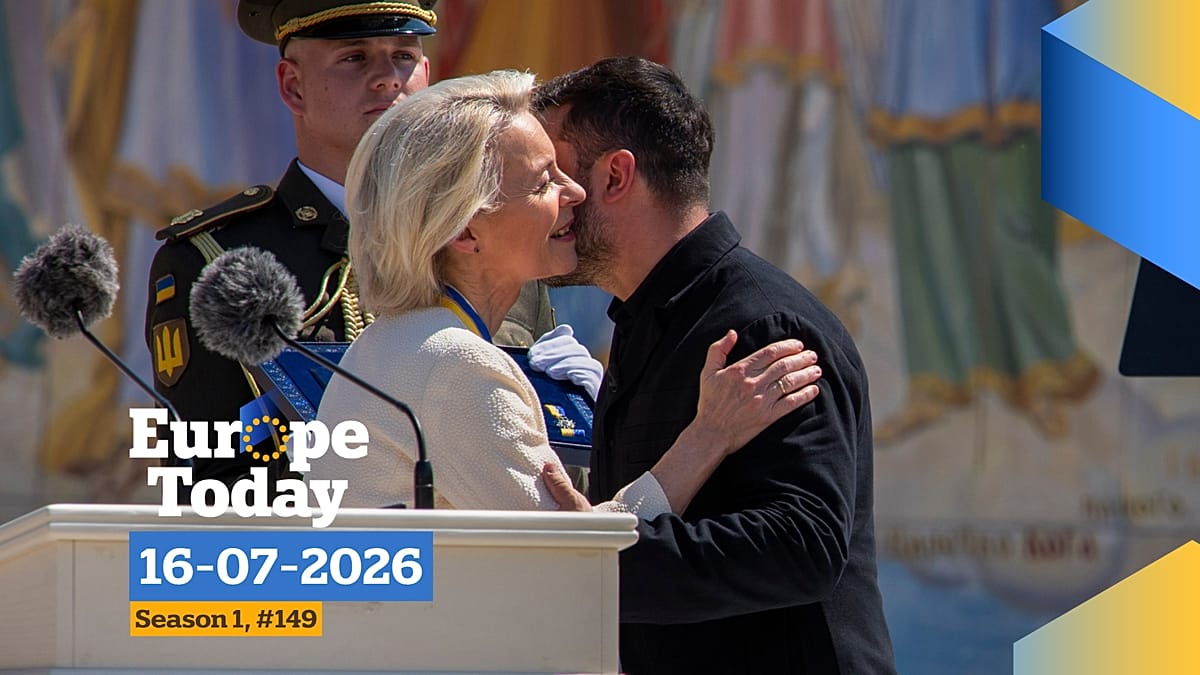
In a separate but equally consequential development, European Commission President Ursula von der Leyen traveled to Kyiv this week to cement a new defense partnership with Ukraine. The centerpiece of her visit was a joint drone production agreement, designed to bolster Ukraine's battlefield capabilities while deepening the EU's industrial integration with the war-torn country. The deal, signed in the Ukrainian capital, marks a significant step in the bloc's evolving role as a security actor on the continent.
EU-Ukraine Drone Pact Signals Shift in Defense Strategy
The agreement, which falls under the EU's broader defense cooperation framework, aims to co-develop and manufacture drones for both military and surveillance purposes. EU Defence Commissioner Andrius Kubilius, in an exclusive interview with European Pulse, described the pact as a "game-changer" for European security. "This is not just about supporting Ukraine today," Kubilius said. "It is about building a sustainable defense industrial base that serves the entire continent." The deal is expected to accelerate the transfer of technology and expertise, with production facilities planned in both Ukraine and select EU member states.
Von der Leyen's visit also advanced Ukraine's accession talks, with the Commission signaling that key chapters could be opened by mid-2025. The political momentum in Brussels remains strong, though some member states, including Hungary and Slovakia, have voiced reservations about fast-tracking membership while the war continues.
Meanwhile, the debate over Europe's own rearmament is intensifying. German MEP Nicolas Herbst, a member of the European Parliament's security committee, highlighted a sharp rise in conscientious objection applications across Germany and other EU countries. "As governments push for higher defense spending and mandatory military service discussions resurface, we are seeing a backlash from younger generations," Herbst said. "This is a democratic challenge that cannot be ignored."
The EU's "Chat Control" legislation, which aims to scan private communications for child sexual abuse material, has also sparked fierce debate. Simeon de Brouwer from the European Digital Rights Network (EDRi) warned that the proposal could undermine privacy protections. "The Commission's approach risks creating a surveillance infrastructure that could be abused," de Brouwer said. "We need a balanced solution that protects children without sacrificing fundamental rights."
On the sporting front, Argentina defeated England 2-1 in a tense World Cup semi-final, with Lionel Messi's side advancing to face Spain in the final. The match was marked by a heated atmosphere, with both sets of fans loudly booing the rival national anthems. For European viewers, the game underscored the continent's deep football rivalries and the global reach of the sport.
As Europe navigates these overlapping crises—from the Middle East to Ukraine, from defense policy to digital rights—the continent's leaders face a test of their ability to act cohesively. The drone deal with Ukraine is a tangible step, but the broader questions of energy security, military readiness, and civil liberties remain unresolved.