A sophisticated international crackdown is intensifying against the criminal networks trafficking European eels, a critically endangered species at the centre of a wildlife crime industry worth billions of euros annually. Despite a comprehensive EU export ban established in 2009, organised crime groups have built elaborate smuggling operations that span the continent and beyond, exploiting the species' catastrophic population decline.
From Suitcases to Smoked Fillets: The Trafficking Pipeline
Europol's long-running Operation LAKE, launched in 2015, has coordinated record seizures across multiple member states. The illicit pipeline often begins with the poaching of juvenile glass eels—transparent, finger-length specimens—from European rivers and coastal waters. Traffickers then transport them live, using methods ranging from concealed suitcases with oxygenated ice packs at airports like Madrid-Barajas or Paris-Charles de Gaulle, to mixed consignments hidden in legal cargo through clandestine facilities.
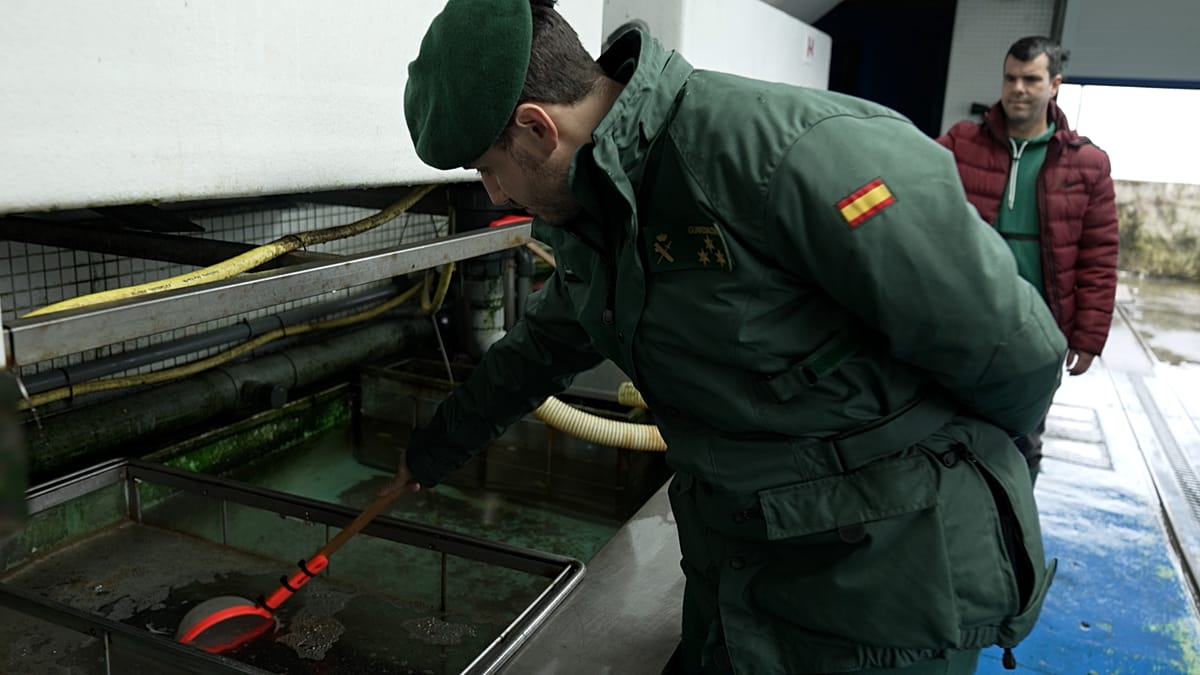
"They add ice to slow down their metabolism and inject oxygen so the glass eels can survive the trip to Asia. There, they are raised in fattening farms to produce eel fillets for consumption," explains Captain Daniel Barturen García of Spain's environmental police unit, SEPRONA. The economics are staggering: one kilogram containing thousands of glass eels can yield over a tonne of adult eels, driving Asian black market prices to €6,000 per kilogram. In peak years, the total illegal trade is estimated to be worth €2-3 billion.
DNA Technology: A Game Changer for Customs
A significant challenge for enforcement has been the near-impossibility of visually distinguishing between eel species at the juvenile stage, or when processed into products like smoked fillets. Traffickers exploit this with false declarations, often labelling European eels as legal American or Japanese species. This loophole is now closing, thanks to rapid DNA testing kits developed by private companies and European universities.
"In North America, while testing eel consignments, they found that a lot of what was imported as American eel or Japanese eel was, in fact, European eel, which was illegal," said Barend Janse Van Rensburg, Chief of the Enforcement Unit at the CITES Secretariat. The new technology can identify species within minutes, a process that previously took days. "DNA technology can also help authorities take that evidence to court. A seizure in itself is not always a success. You must find the people behind this illegal trade," Van Rensburg added.
This technological edge supports broader European efforts against complex financial crime, similar to the crackdowns on high-level fraud seen in Moldova.
A Borderless Criminal Enterprise
Europol and INTERPOL analyses reveal a highly structured, multinational industry. Roles are divided by nationality, covering fishing, storage, transport, and reception. Seizures have occurred far from traditional fishing grounds, implicating transit hubs in Cyprus, Morocco, and Senegal. The financial structures are equally complex.
"There are complex money-laundering structures, sometimes operating at the corporate level across several countries," explains Jose Adrian Sanchez Romero from INTERPOL's Environmental Security Sub-Directorate. One of INTERPOL's key missions is "to map these criminal networks" and "connect the countries where arrests take place with countries from where the financing comes, which are often the destination countries."
The core driver is biological: eels cannot be commercially bred in captivity. Asian aquaculture farms historically relied on the Japanese eel, but its sharp decline has redirected demand toward the critically endangered European species, listed as such by the International Union for Conservation of Nature (IUCN).
International Cooperation: The Enforcement Imperative
While intra-EU cooperation between agencies like Europol, OLAF, and the European Fisheries Control Agency has yielded results, the EU's 2022–2027 action plan against wildlife trafficking emphasises strengthening global partnerships. This includes source, consumer, and transit countries outside the bloc.
"We need to see more such efforts to tackle the scale, sophistication and complexity of smuggling operations," EU Commissioner for Environment Jessika Roswall told Euronews. This multilateral approach mirrors the EU's strategy in other domains of geopolitical tension, such as its coordinated financial and sanctions policy.
Recent diplomatic efforts underscore this focus. At the latest CITES conference (COP20) in Samarkand, Uzbekistan, parties adopted a resolution calling for enhanced international cooperation on eel trade management. Furthermore, last October in Bangkok, the EU participated in the 9th Wildlife Inter-Regional Enforcement (WIRE) Forum, organised by the UN Office on Drugs and Crime, facilitating closed-door exchanges between 35 countries across Asia, Africa, and Europe.
The fight against eel trafficking is part of a broader European commitment to environmental security and rule of law, requiring sustained investment in technology and cross-border policing. As these networks evolve, so must the international response, leveraging every tool from rapid DNA analysis to forensic finance tracking to protect a species on the brink.