Europe’s ambitious renewable energy targets are running headlong into a hard reality: the continent’s electricity grids were built for a different era. As wind and solar farms proliferate from the North Sea to the Mediterranean, a growing backlog of projects sits idle, waiting for permission to connect. The result is a paradox of plenty—clean electrons stranded before they can displace fossil fuels.
According to recent data from industry associations, over 1,000 gigawatts of renewable capacity are currently stuck in grid connection queues across the EU, the UK, and Switzerland. In Germany alone, the Bundesnetzagentur reports that more than 200 GW of wind and solar projects are awaiting grid access, with average wait times exceeding four years. In Spain, the situation is similarly acute: the Red Eléctrica de España has flagged that nearly 150 GW of proposed renewable capacity cannot be connected without major grid upgrades.
“Political ambitions mean nothing if clean electrons are stranded in connection queues,” said a senior official at WindEurope, the industry body representing turbine manufacturers and developers. The problem is not a lack of generation capacity but a lack of transmission infrastructure to move power from windy plains and sunny rooftops to cities and factories.
Why the Grid Is the Bottleneck
The European grid was designed in the mid-20th century around large, centralized power plants—coal, nuclear, and gas—located near demand centers. Renewable energy, by contrast, is often generated in remote areas: offshore wind in the North Sea, solar farms in the Spanish meseta, or hydropower in the Alps. Getting that power to where it is needed requires new high-voltage lines, transformer stations, and cross-border interconnectors.
Yet building new transmission infrastructure is slow. Permitting processes can take a decade, bogged down by environmental assessments, land-use disputes, and local opposition. In France, the construction of a new 400 kV line linking the Massif Central to Lyon has been delayed by over seven years due to legal challenges. In Italy, Terna, the grid operator, has struggled to expand capacity in the south, where solar potential is highest, because of bureaucratic hurdles.
Meanwhile, the pace of renewable deployment has accelerated dramatically. The EU installed a record 56 GW of solar capacity in 2023, and wind additions reached 17 GW. But the grid is not keeping up. The European Network of Transmission System Operators for Electricity (ENTSO-E) estimates that at least 50% of new renewable projects face connection delays of more than two years.
This mismatch has real economic consequences. When wind farms cannot connect, they cannot sell power, which undermines the business case for new investments. It also forces grid operators to curtail existing renewable generation during periods of low demand, paying compensation to producers while relying on fossil-fuel backup. In 2023, curtailment costs in Germany alone exceeded €800 million.
Immediate Fixes: Digitalization and Faster Permitting
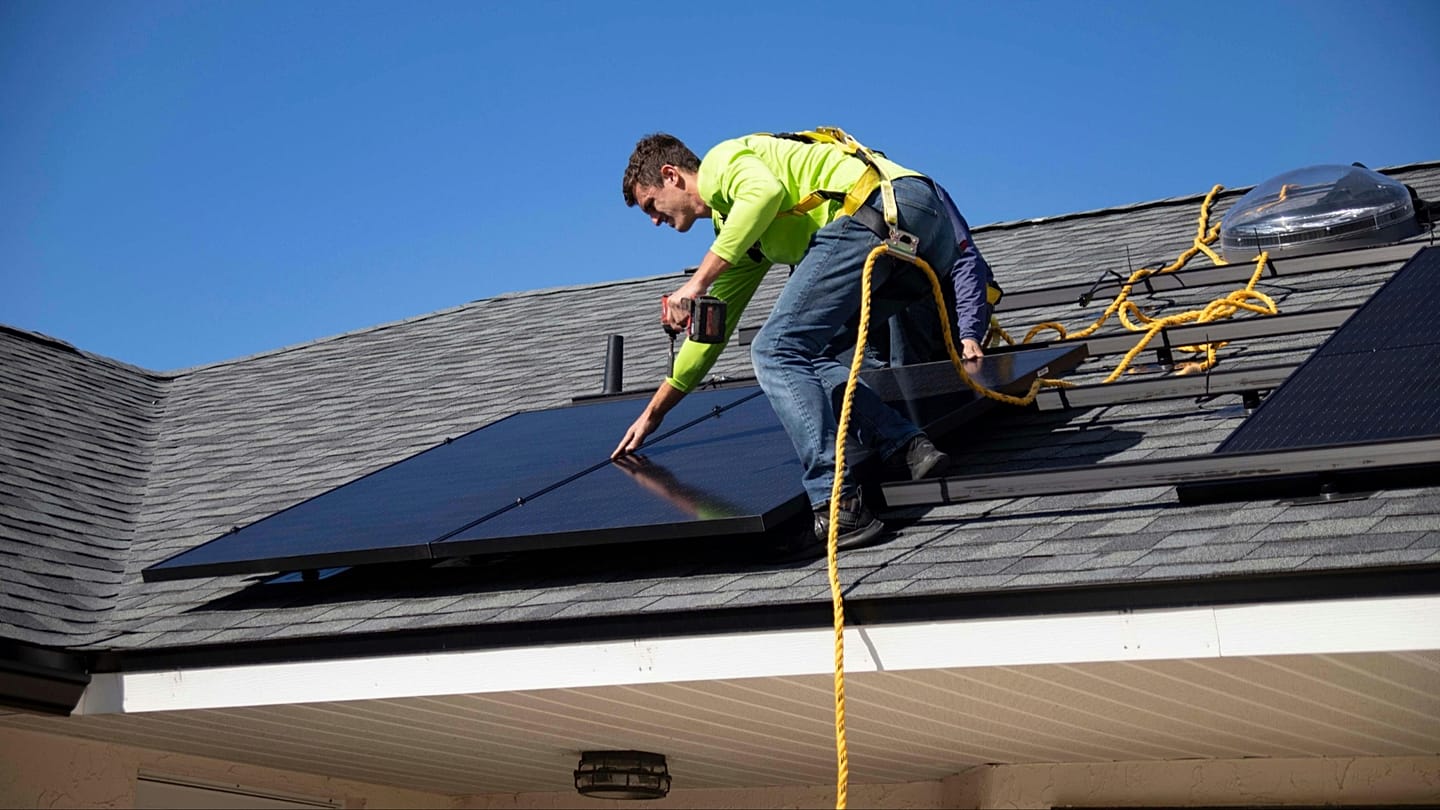
While building new lines is essential, it is a long-term solution. For the immediate term, experts point to several measures that could unclog the queue without waiting for steel and concrete. One is digitalizing grid management. Smart inverters, real-time monitoring, and dynamic line rating can increase the capacity of existing lines by 10–30%, according to a study by the European Commission’s Joint Research Centre.
Another is streamlining permitting for grid upgrades. The EU’s revised Renewable Energy Directive, adopted in 2023, designates renewable energy projects as being in the “overriding public interest,” which should speed up approvals. But implementation varies widely. In Poland, local authorities still require multiple environmental impact assessments for even minor grid reinforcements. In the Netherlands, grid operator TenneT has introduced a “first-ready, first-connected” system to prioritize projects that are most advanced, reducing speculative applications that clog the queue.
Storage also plays a role. Batteries can absorb excess renewable generation during peak hours and release it when the grid is congested. The EU recently signed a non-binding pact to triple energy storage capacity by 2030, but critics say the target lacks teeth. “Without binding mandates, storage will remain an afterthought,” said a spokesperson for SolarPower Europe.
Cross-border coordination is another lever. The North Sea Wind Power Hub, a joint project of Denmark, Germany, the Netherlands, and Belgium, aims to create an offshore grid that connects multiple wind farms and countries, reducing the need for separate onshore connections. But such initiatives are still in the planning phase.
The stakes are high. If Europe cannot fix its grid bottlenecks, it risks missing its 2030 climate targets—a 55% reduction in greenhouse gas emissions compared to 1990 levels. The European Commission has warned that grid investment needs to double to €60 billion per year to keep pace with renewable deployment. Yet member states have been slow to allocate funds, and national regulators often resist raising tariffs to pay for upgrades.
Meanwhile, the war in Ukraine has underscored the urgency of energy independence. As Ukraine’s new government grapples with an energy crisis, the lesson for the rest of Europe is clear: renewable power is only as valuable as the grid that delivers it. Without immediate action, the continent’s clean energy revolution will remain stuck in neutral.