European governments are moving quickly to contain the political and economic fallout from rising fuel prices after an attack on a key Saudi oil pipeline added fresh uncertainty to global energy markets. The 1,200-kilometre East-West pipeline, built to bypass the Strait of Hormuz, has been temporarily shut following strikes by Houthi and Iraqi forces, threatening as much as 4% of world supply if the disruption persists.
The incident comes on top of already tight conditions: Saudi crude output fell in August to its lowest level in over three decades, and Brent crude has recently traded above $113 a barrel. For European capitals, where voters are increasingly sensitive to the cost of living, the timing is awkward. France and Italy, both heading toward crucial elections in 2027, are particularly exposed.
France leans on diplomacy
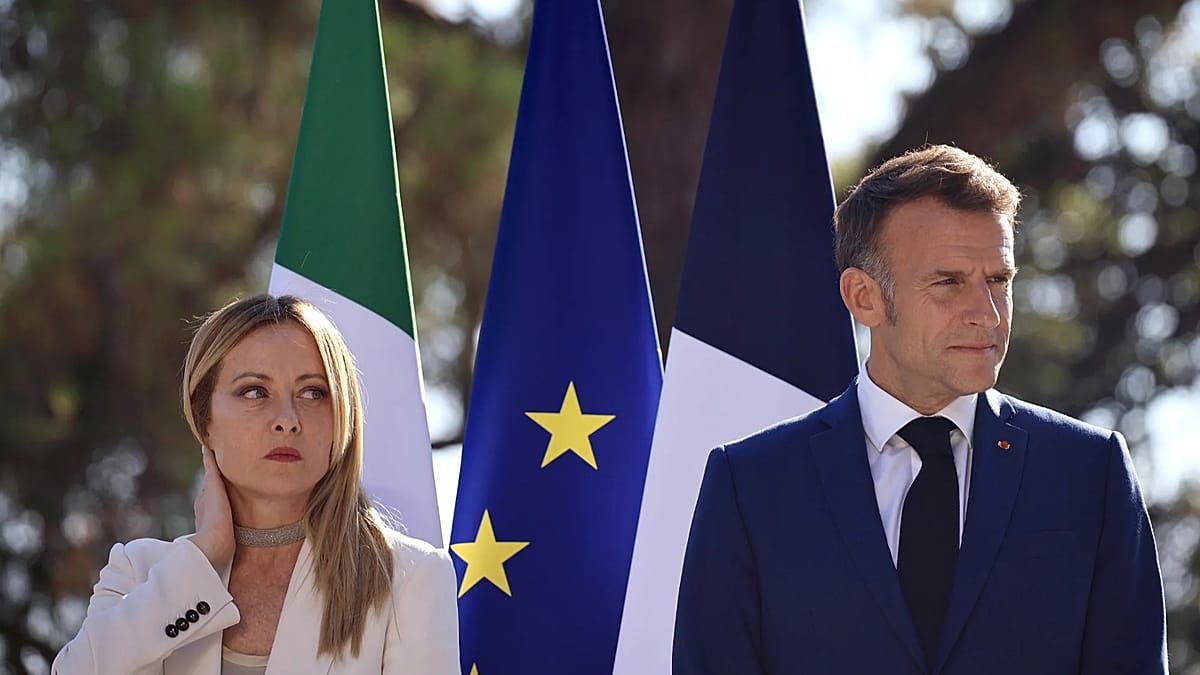
French President Emmanuel Macron has ordered a "mobilisation" to tackle fuel prices, while insisting that securing supply is a diplomatic priority. After talks with Iraq's prime minister this week, Macron argued that alternative routes around Hormuz and regional de-escalation are essential to protect French consumers.
"The priority: restoring freedom of navigation in the Strait of Hormuz, a vital artery for oil transit, protecting the energy infrastructure of our partners, and securing production. It's essential to guarantee our supplies. We're working with our coalition partners to ensure freedom of navigation in the Strait of Hormuz," Macron wrote on X.
French inflation reached 2.7% in August, with energy a major driver, and the government is under pressure to show it can shield households from further pain at the pump.
Italy scraps car tax, Spain doubles diesel cut
In Rome, Prime Minister Giorgia Meloni announced the abolition of the stamp duty on small and medium-powered cars, calling it one of the most hated taxes in Italy. The measure, she said, is "structural and permanent" and will remain beyond 2027. Meloni has also asked the European Commission to treat the energy crisis like a defence emergency and relax fiscal rules for member states.
Italy's August inflation accelerated to 3.3%, driven heavily by energy, and petrol and diesel prices have climbed sharply. Rome has also moved to accelerate domestic oil and gas projects, framing increased production as part of a broader energy-security response.
Spain, meanwhile, doubled its diesel tax cut to 20 cents a litre from September 1 after diesel prices jumped 15.7% in July, triggering an automatic mechanism in the government's anti-crisis package. Economy Minister Carlos Cuerpo is meeting social partners in Madrid on Thursday to assess the war's impact on Spain.
Germany promises relief, but limits remain
Chancellor Friedrich Merz has said Berlin will "soon" present measures to ease the impact of record fuel prices, which stood at €2.45 per litre on Thursday, according to the General German Automobile Club. But Germany, like other import-dependent nations, has little control over the underlying international price.
Merz also framed the problem as one requiring international coordination, warning that Houthi control around the Bab el-Mandeb Strait threatens Saudi and other regional oil exports and further tightens global energy markets.
"The Houthis now control strategic positions around the Bab el-Mandab Strait and are attacking energy facilities in Saudi Arabia; this further exacerbates the situation in international energy markets," Merz told a press conference on 14 September.
The chancellor's Christian Democrats are treading carefully after losing seats to the far-right Alternative for Germany in recent regional elections, making fuel prices a delicate political issue.
EU says no supply shortage, but prices are the problem
Asked whether Europe is approaching a potential supply shock, a European Commission spokesperson said the major crisis is pricing, not diesel shortages. No member state has raised security-of-supply concerns so far.
"There is no supply problem in the EU at the present time," Commission spokesperson Anna-Kaisa Itkonen told Euronews. "Demand for jet fuel and diesel in Europe continues to be met through higher EU refinery production, as well as alternative supplies from global markets."
However, Itkonen acknowledged that the evolution of the Middle East conflict, along with usual autumn and winter demand trends, could impact the coming weeks and months and further tighten markets. "We're not yet in a situation where we'll be tapping strategic resources, and we keep monitoring the situation alongside member states and the industry," she added.
The Commission has been encouraging EU countries to cushion prices through taxation and other measures. As the bloc watches Saudi Arabia's silence on shipment delays, the immediate concern is not empty tanks but the political cost of expensive fuel. With public transport costs also rising across many capitals, the pressure on household budgets is mounting.
For now, European leaders are hoping that diplomacy, tax tweaks, and a bit of luck will keep the situation from spiralling. But as the conflict in the Middle East shows no sign of abating, the risk of a prolonged period of high energy prices remains a central challenge for the continent.