As the United States prepares to host Russian and Ukrainian delegations in Abu Dhabi for talks on a potential ceasefire, European leaders are scrambling to ensure they are not sidelined from decisions that will shape the continent's security for decades. The two-day meeting, scheduled for 10–11 November, comes at a moment of heightened anxiety in European capitals that the Trump administration may strike a deal without meaningful input from Brussels or national governments.
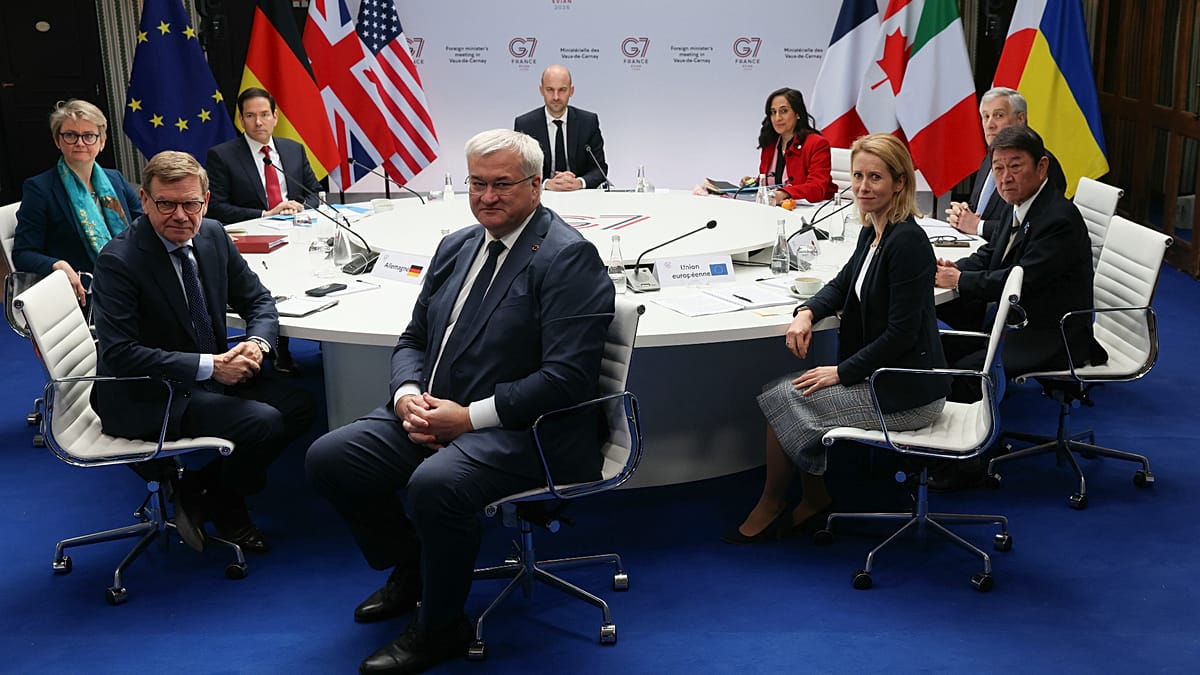
French Foreign Minister Jean-Noël Barrot said on Sunday that Europeans would be "well represented" at the Abu Dhabi discussions and that France would take part, though he declined to specify who would attend or in what capacity. His comments came as G7 foreign ministers gathered in Paris on Monday and Tuesday under France's presidency, with support for Ukraine—military, financial, and energy-related—high on the agenda, alongside the Middle East and other crises.
G7 meeting and European coordination
The G7 meeting is seen as a crucial opportunity for European ministers to align their positions before the Abu Dhabi talks. Ukraine's Foreign Minister Andrii Sybiha is expected to join the G7 session on Tuesday for a dedicated discussion on support for Kyiv and to prepare for the negotiations. The central concern for Europeans is not only defending Ukraine's sovereignty but also ensuring that any agreement addresses broader European security architecture, particularly after US President Donald Trump touted a major deal involving Ukraine and potentially all of Europe without offering specifics.
Behind the diplomatic flurry lies a growing fear in European capitals that decisions on the continent's security could be taken without them. Last week, Italian Prime Minister Giorgia Meloni called for a more coordinated European approach and a clear mandate for who will represent the EU in the talks. European Council President António Costa has agreed to put EU representation in the peace negotiations on the agenda of the informal EU leaders' meeting in Dublin on Friday.
Military exercises and donor conference
To demonstrate credibility, the Franco-British-led coalition of the willing is conducting a military exercise in Poland from today until 22 November, involving 2,800 troops from 11 countries. The exercise is a crucial test of the coalition's ability to provide security guarantees in a post-war Ukraine. On Monday, France will also host a donor conference with the European Bank for Reconstruction and Development and Ukrainian authorities to raise funds to repair the damaged Chernobyl containment structure.
The push for a European seat at the table comes as the human cost of the war continues to mount. Russian strikes on Ukraine overnight reportedly left more than 850,000 people without power across the country. President Volodymyr Zelenskyy reported a drone attack on Komyshuvakha, where rescuers have been conducting search operations following a bombing that killed at least 55 people on Monday.
Black Sea security concerns
European Commission President Ursula von der Leyen is traveling to Romania and Bulgaria this week to discuss Black Sea security, as Russian drone attacks on commercial shipping raise fears for the safety of maritime traffic and critical infrastructure. She will meet Romanian President Nicușor Dan and Prime Minister Luca Niculescu in Bucharest on Monday, then head to Bulgaria on Tuesday for talks with Prime Minister Rumen Radev and a visit to the Nikola Vaptsarov Naval Academy in Varna.
One proposal on the table is a Black Sea maritime security hub to improve surveillance, information-sharing, and protection of critical infrastructure. Romania and the Commission have already discussed phasing it in, with the aim of complementing NATO's military activities in the region. The trip underscores how the war has spilled into the Black Sea, exposing vulnerabilities in shipping routes close to EU and NATO territory.
As the Abu Dhabi talks approach, European leaders are walking a tightrope: they want to support Ukraine without being seen as obstructing peace efforts, but they are determined not to be relegated to the sidelines. The coming days will test whether Europe can translate its economic and military weight into a meaningful voice at the negotiating table.