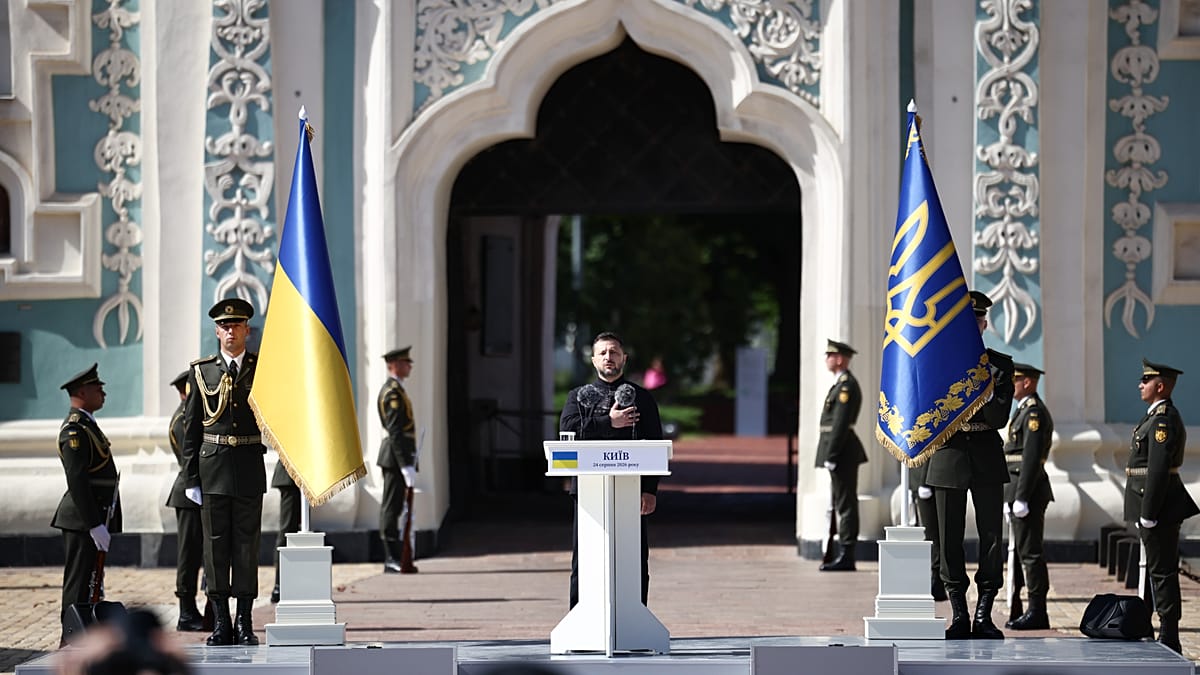
European leaders converged on Kyiv on Monday as Ukraine marked its 35th year of independence and the fifth anniversary of Russia's full-scale invasion—a milestone that seemed improbable when Russian columns approached the capital in February 2022.
UK Prime Minister Andy Burnham, making his first foreign trip since taking office, joined European Council President António Costa and other senior officials for talks with President Volodymyr Zelenskyy. The meetings also served as a session of the Coalition of the Willing, with French President Emmanuel Macron and German Chancellor Friedrich Merz participating remotely.
Kyiv has been pressing its allies for more air-defence interceptors ahead of the winter, and the European Union responded with a fresh €6.1 billion military assistance package, announced on the same day.
Solidarity and resolve
Speaking alongside Zelenskyy and Burnham, António Costa paid tribute to Ukrainians for the “courage and bravery” that he said “inspire the world.” He pledged continued support “as much as necessary for as long as necessary,” extending that commitment beyond the war to Ukraine's future EU membership.
“International law must prevail. Russia will not prevail,” Costa said. “The European Union cannot be neutral when international law is being violated. We are not neutral. We are Ukrainian supporters.”
Burnham drew a parallel between Ukraine's resistance and Britain's stand against Nazi Germany, telling Ukrainians: “My nation kept the flame of European freedom alive in the 20th century, you hold that flame in the 21st.” He also promised to help strengthen Ukraine's air defences. UK Defence Minister Luke Pollard confirmed that London would share technology to support domestic production of the long-range SCALP missile, saying: “We will stand with them for as long as it takes.”
Absence of US envoys
Notably missing from the commemorations were senior representatives of the Trump administration. Envoys Steve Witkoff and Jared Kushner did not travel to Kyiv, despite earlier speculation that the occasion might bring their first visit. Neither has set foot in Ukraine since taking leading roles in US diplomatic efforts, even as Witkoff has made eight trips to Moscow and met repeatedly with Russian officials.
Former US vice-president Mike Pence and Keith Kellogg, Trump's former special envoy for Ukraine, did attend events over the weekend, offering a counterpoint to the administration's absence.
The price of independence
In his Independence Day address, Zelenskyy recalled that 35 years ago, intelligence agencies doubted Ukraine could survive as a sovereign state, predicting it would fall back under Russian influence. He noted that Western assessments before the 2022 invasion suggested Kyiv could collapse within days.
“But Ukrainians restored the independence of their state, and we will definitely protect the independence of Ukraine. No doubt about it,” he said. “Ukrainians will not be cobblestones under the feet of tsars and rulers. Ukrainians will not submit. Ukrainians will not be bargaining chips in disputes between capitals. Ukrainians will not submit to what they do not believe in. And they will definitely not abandon their own dream – the dream of living independently.”
The commemorations also reflected the war's heavy toll. Zelenskyy and First Lady Olena Zelenska began the day honouring fallen defenders, and families of soldiers killed in action received posthumous state awards. There was no traditional military parade; instead, Ukraine showcased domestically produced drones and other defence technologies that have become central to its war effort.
A dangerous moment
The anniversary comes amid a severe escalation in Russian attacks. Moscow has intensified ballistic missile and drone strikes on Ukrainian cities, pushing civilian casualties to their highest levels since the early months of the invasion and exposing Ukraine's shortage of advanced interceptors. Zelenskyy said deliveries of Patriot missiles had fallen significantly even as Russian strikes increased.
European leaders' presence in Kyiv sends a clear signal of continued commitment, even as the United States steps back. The contrast underscores a shifting transatlantic dynamic, with Europe now bearing the primary burden of supporting Ukraine's defence and its long-term European integration.